
Last updated on: June 1, 2026
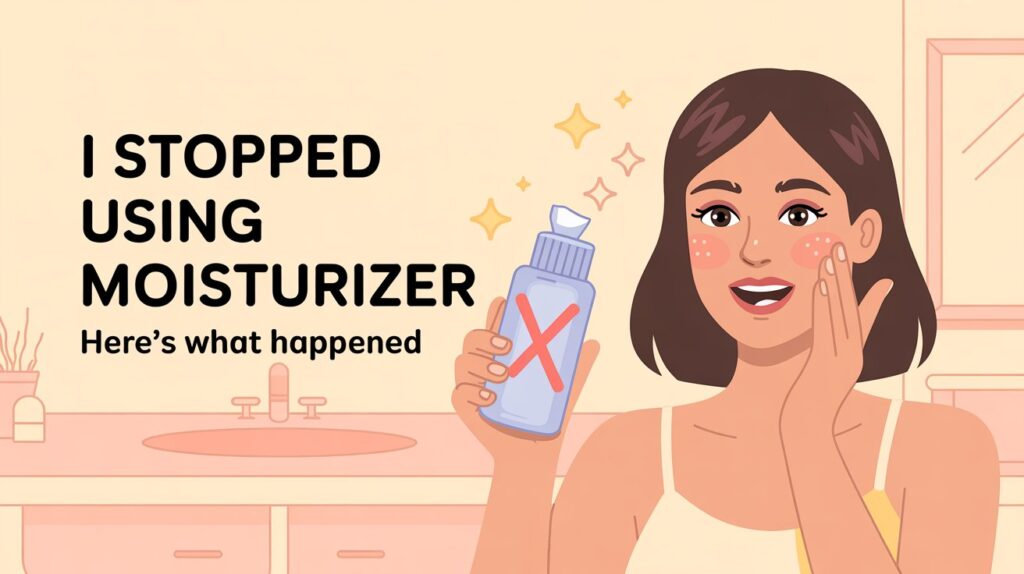
If you’ve ever wondered what would happen if you stopped using moisturizer, trust me — you’re not alone. I asked myself that same question one morning while staring at my bathroom shelf overflowing with creams, serums, and lotions I didn’t even remember buying. My skin was still dry in some areas, oily in others, and honestly, I was tired of guessing what it needed.
So, I did something a little bold.
I stopped using moisturizer completely.
I told myself I’d try it for just a week. But what happened over the next several weeks surprised me, frustrated me, and ultimately taught me more about my skin than any skincare video ever did. If you’re curious about your own routine and wondering whether your skin could survive without moisturizer, here’s exactly what happened when I tried it.
Week 1: The Chaos Nobody Warns You About
The first week was rough.
Like, really rough.
The first two days, my skin felt tight — the kind of tightness where you smile and feel like your cheeks might crack. My forehead looked dull, and my chin started to flake. I kept reaching for my moisturizer out of habit, and every time I stopped myself, I wondered if I was making a huge mistake.
You know that panic you feel when you try something new and your skin immediately freaks out?
Yep. That was me.
What I didn’t know then was that my skin was going through a “shock phase.” For years, I had trained it to rely on moisturizer instead of producing enough natural oils on its own. Removing that support sent my skin into temporary chaos.
Week 2: The Breakout Storm (Yes, It Gets Worse Before It Gets Better)
By week two, something unexpected happened.
My skin got oily — like midday-shine oily — even in places that were usually dry.
That extra oil also brought breakouts.
Small bumps along the jawline, a couple of whiteheads on my cheeks, and that one stubborn pimple that shows up right when you think things can’t get worse.
But here’s the surprising part:
The oil was my skin trying to help me. It was basically saying, “Fine, you’re not going to moisturize me? I’ll do it myself.”
Even though I hated how it looked, this was the first sign that my skin was starting to adjust.
Week 3–4: A Strange Turning Point
Around the third week, things finally started to shift in a good way.
My forehead stopped feeling tight.
The flaky spots around my nose calmed down.
And the excess oil? It balanced out more than I expected.
What shocked me the most was how my skin texture began to feel smoother and more even. I wasn’t glowing like I’d just had a facial, but I didn’t look dehydrated anymore. For the first time in years, my skin felt… normal. I didn’t realize how much I had been over-moisturizing, which was actually confusing my skin instead of helping it.
So, Does This Work for Everyone? Not Exactly.
Before you toss your moisturizer in the trash, here’s the part you should really think about:
not all skin reacts the same way.
Here’s what I learned:
If you have oily skin:
You might actually benefit from giving your skin space to regulate its own oil production. Moisturizer fasting (that’s what some people call it) can help reduce greasiness in the long run.
If you have combination skin:
You could see mixed results. Some areas might balance out, while others still feel tight.
If you have dry or sensitive skin:
Stopping moisturizer could make things worse and damage your skin barrier. Dry skin often struggles to produce its own oils.
If you have mature skin (40+):
Your skin naturally produces fewer lipids, so it usually needs the extra support.
Your skin type, your age, your climate — all of these play a big role. I live in a humid area, which definitely made this experiment easier. If you’re somewhere dry or cold, your experience might be totally different.
What I Used Instead (Because You Still Needs Something)
Let me be clear:
Stopping moisturizer doesn’t mean you stop caring for your skin.
In fact, I had to be more intentional with the rest of my routine. Here’s what helped me survive this experiment:
-
A gentle, hydrating cleanser
No stripping, no foaming that leaves your face squeaky and sad. -
A simple hydrating serum
Just something with glycerin or hyaluronic acid to give my skin water, not oil. -
Sunscreen — every single morning
Because skipping moisturizer is one thing, but skipping sunscreen is basically inviting skin damage. -
Occasional facial oil
Not a moisturizer, but sometimes enough to soothe the dryness without making my skin lazy.
I also cut back on retinol and exfoliating acids during the first few weeks. My skin was already stressed — it didn’t need more drama.
What Dermatologists Think (Yes, I Asked)
Some dermatologists actually support the idea of “skin fasting,” especially for women who use too many products or have chronically irritated skin. They believe giving your skin a break can help reset its natural functions.
But many also warn that moisturizer is important for most people, especially if you live in a dry climate or have a fragile barrier.
The biggest takeaway I heard?
Listen to your skin, not trends.
60 Days Later: The Honest Results
After two months without moisturizer, here’s the truth:
My skin became more balanced.
My pores looked smaller.
And I didn’t get that midday greasy shine as often.
But I’m not going to pretend everything was perfect. There were days when my skin felt tight, especially after washing my face. There were days when I missed the comfort of a rich cream. And there were times when skipping moisturizer felt like more work than just using a good one.
So now?
I’m somewhere in the middle. I don’t moisturize every day — some mornings I skip it completely. But I no longer layer multiple creams like I used to. I’ve found a balance that lets my skin breathe without abandoning it.
Should You Try It? Here’s Your Quick Guide
Try it if:
-
You have oily or combination skin
-
You feel like nothing is working
-
You want to simplify your routine
-
Your skin feels congested from heavy products
Avoid it if:
-
You have very dry or sensitive skin
-
You’re using strong actives like retinol daily
-
You live in a cold or dry climate
-
Your skin barrier is already damaged
If you try it, start slow:
-
Skip moisturizer some days, not all
-
Use gentle products
-
Stop immediately if your skin burns, stings, or cracks
The Final Takeaway
Stopping moisturizer taught me something I didn’t expect:
your skin is smarter than you think.
It knows how to protect you, repair itself, and adapt — when you give it space to do so. And sometimes, experimenting with your routine isn’t about “fixing” your skin but about understanding it.
You don’t have to stop using moisturizer forever.
You don’t even have to try it at all.
But knowing what your skin can do on its own is empowering — and honestly, kind of beautiful.