
Last updated on: June 12, 2026
Changing someone’s mind feels almost impossible these days. You’ve probably been there — trying to explain something, giving examples, sharing facts… and the other person still looks unconvinced. And the more you talk, the more they dig in.
It’s frustrating. But here’s the thing nobody told us growing up:
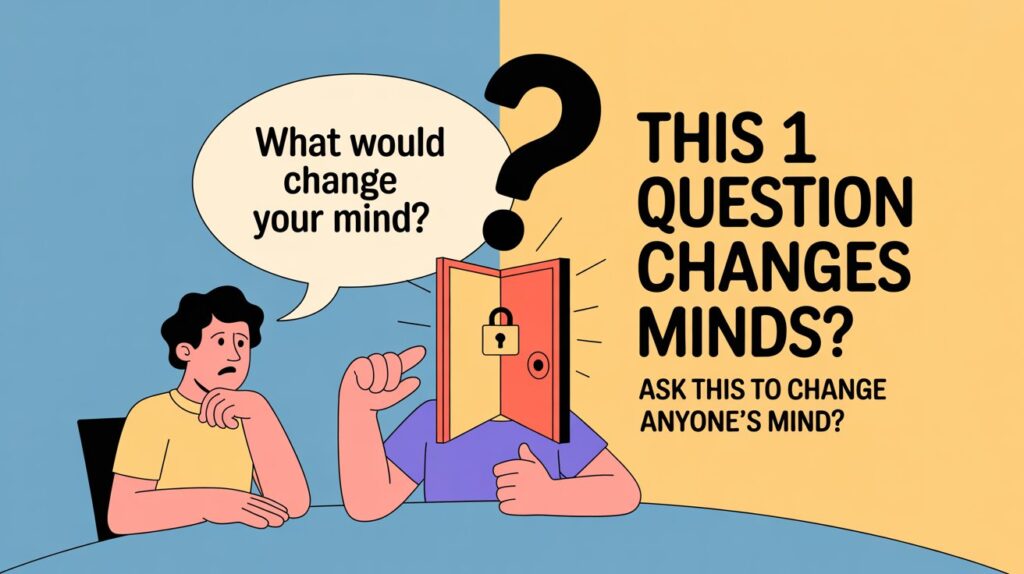
You can’t change someone’s mind by pushing harder — you change it by opening a small door.
And there’s one question that does exactly that.
But before we get to it, let’s understand why people resist new ideas so much.
Why Changing Someone’s Mind Is So Hard
If you’ve ever argued with someone and felt like you were talking to a wall, there’s actually a reason behind it. Most people don’t think with pure logic. We think with our feelings first, and then use logic to defend those feelings.
Here are some quiet forces affecting people’s beliefs:
1. Confirmation Bias
People naturally prefer information that supports what they already believe.
Anything new? They block it.
2. Protecting the Ego
Admitting “I was wrong” doesn’t feel small.
It feels like a personal loss — like losing a bit of who you are.
3. Identity-Based Thinking
Some beliefs aren’t just ideas.
They’re tied to identity, upbringing, values, or community.
So changing the belief can feel like betraying themselves or their group.
4. Emotions vs. Logic
Even smart people make emotional decisions first and logical ones later.
That’s why throwing facts at someone rarely works.
So if you’ve been struggling to change someone’s mind, trust me — the problem isn’t you. It’s how the human brain works.
The Real Problem? We Try to Win the Argument
Most of us approach disagreements like a boxing match.
We want to score points.
We want to prove we’re right.
We want to “fix” the other person.
But the moment someone feels attacked, judged, or looked down on, their mind shuts down. They’re not listening anymore — they’re defending themselves.
You can’t change someone’s mind when they feel unsafe.
So instead of debating harder, you need to do something softer but more powerful: give them control.
The One Question That Changes Everything
Here it is — the simple, disarming, almost magical question:
“What would change your mind about this?”
This question works because it flips the whole conversation around.
Suddenly…
There’s no pressure.
No fighting.
No proving.
No ego clash.
You’re not attacking their belief.
You’re asking about their thinking.
Why this question works
-
It makes them reflect instead of react.
-
It signals respect.
-
It removes threat.
-
It gives them control of the conversation.
-
It reveals how open or closed they really are.
It’s a small question, but it changes the entire atmosphere.
The Psychology Behind Why This Question Works
1. It Makes Them Think About Their Own Thinking
Most people never question why they believe something.
This question gently pushes them to look inward.
2. It Turns Off the “Fight Mode”
Arguments feel like attacks.
This question feels like curiosity.
3. It Reveals the Real Reason Behind Their Belief
Sometimes the belief isn’t about facts at all.
It’s about fear, values, or past experiences.
4. It Makes Them Feel Safe
People change only when they feel understood, not judged.
How People Usually Respond — And What It Means
When you ask, “What would change your mind?”, you’ll get one of three answers.
1. They Give You a Clear Condition
Example:
“If I saw proof that this actually works…”
“If someone I trust explained it…”
This is good news.
It means they’re open — just careful.
2. They Say, “Nothing will change my mind.”
This means the belief is emotional or identity-based.
Facts won’t help here.
Your best move is to step back, or shift to understanding their feelings.
3. They Don’t Know
This means they’ve never thought about it deeply.
A gentle follow-up question works well here:
“Is it about the idea, or how it makes you feel?”
How to Use This Question in Real Conversations
Asking the question is simple.
But how you ask matters even more.
Before Asking: Set the Right Tone
-
Don’t raise your voice
-
Don’t sound sarcastic
-
Don’t corner them
-
Keep your body language relaxed
-
Use a calm tone
How to Ask it Naturally
With a friend:
“I’m genuinely curious… what would change your mind about this?”
With a partner:
“I want to understand you better. What would make you see this differently?”
With a coworker:
“What would make this idea more convincing to you?”
In political conversations:
“I don’t want to argue — I want to understand. What would change your mind here?”
Helpful Follow-Up Questions
-
“Why does this matter to you?”
-
“What’s the biggest concern you have about this?”
-
“Can I share what would change my mind too?”
These questions keep the door open.
Examples: How This Question Works in Real Life
1. Relationship Argument
Your partner says: “You never listen to me.”
You respond:
“Okay… what would change your mind about that?”
Now they’ll tell you exactly what they need.
2. Workplace Conflict
Coworker disagrees with your idea.
Ask:
“What would make this idea more workable for you?”
Now it’s collaboration, not conflict.
3. Parenting
Teen says: “You’re too strict.”
Ask:
“What would make you feel I trust you more?”
Now you’re both solving a problem together.
4. Political Debate
Someone has a strong political opinion.
Ask:
“What would make you see this in another way?”
It removes the heat immediately.
Things That Will Backfire (Avoid These)
-
Don’t insult their intelligence
-
Don’t bring up past arguments
-
Don’t attack their values
-
Don’t push them into a corner
-
Don’t ask the question in a sarcastic tone
If you ask it with the wrong attitude, it’s useless.
Extra Strategies to Gently Shift Someone’s View
1. Feel First, Facts Second
Understand their feelings before sharing your facts.
2. Use Stories
Stories are less threatening than direct arguments.
3. Mirroring
Repeat their point calmly — it makes people feel heard.
4. Reframe Gently
“Another way to look at it might be…”
5. Listen More Than You Talk
Aim for 80% listening, 20% talking.
The Deep Truth: People Change When They Feel Understood
You can’t force a new idea into someone’s mind.
But you can create the right conditions for it to grow.
The one question —
“What would change your mind?”
— helps them drop their guard, think clearly, and reflect gently.
It’s simple.
It’s respectful.
And honestly, it works far better than arguing ever will.
Conclusion
Changing minds isn’t about winning a debate.
It’s about creating space for someone to rethink their own beliefs without feeling attacked.
The next time you’re in disagreement, try asking,
“What would change your mind about this?”
You might be surprised — not by the answer, but by how soft the whole conversation suddenly becomes.