
Last updated on: June 15, 2026
If you’re in your mid-20s, you might feel like aging shouldn’t be a worry yet. Honestly, I felt the same. But then I started noticing tiny changes — a fine line around my eyes when I laughed a little too hard, dullness after a few nights out, and the realization that sunscreen wasn’t just for beach days anymore.
Like many of us, I spend time scrolling through TikTok and Instagram, where skincare influencers are using retinol before they hit 22. The idea of preventing aging before the signs show up got stuck in my head. So, I decided to try a real anti-aging routine at 25.
Here’s everything that changed — the good, the bad, and what I wish someone had told me before I started.
Why Would Anyone Start Anti-Aging at 25?
There’s a surprising reason dermatologists recommend beginning early:
Your body starts losing collagen around 25. Collagen is what keeps your skin firm, smooth, and plump. So when it drops… wrinkles, fine lines, and sagging slowly begin.
That doesn’t mean you’re suddenly aging overnight. It just means your skin needs a little more love and support.
Plus, starting early can help you:
-
Slow down visible aging
-
Protect against sun and pollution damage
-
Keep your natural glow longer
Prevention > correction. It’s like brushing your teeth — you do it now so you don’t panic later.
Where My Skin Stood Before
Let me be honest: my skin wasn’t terrible. But it wasn’t amazing either.
Here were my concerns:
-
Early fine lines near my eyes
-
Uneven tone and texture
-
Occasional breakouts
-
A lack of that youthful bounce
Makeup didn’t sit smoothly sometimes, and when I woke up after a late night, my skin definitely looked tired. I wanted that fresh-faced look back — the one I took for granted at 19.
What My Anti-Aging Routine Included
I didn’t go crazy with 12 steps. I wanted something simple but powerful. Here’s what I used:
Morning Routine
Gentle cleanser
Vitamin C serum (for brightening + antioxidant protection)
Lightweight moisturizer
SPF 50 sunscreen — every. single. day.
Night Routine
Cleanser
Retinol (2–3 nights a week to start)
Hyaluronic acid for hydration
A thicker night cream
Peptides or niacinamide (optional but helpful)
If you take one thing away from this: SPF is the real anti-aging hero. I learned that quick.
Week 1: The Awkward Phase
Nobody tells you that retinol can be rude at first. My skin reacted with:
-
Redness
-
Slight peeling around my nose and chin
-
More breakouts before improving
I panicked, thinking, “Well, this is making me look older!”
But I learned two lessons:
-
Start retinol slowly (once a week and increase gradually)
-
Moisturizer is your new best friend
After about 10 days, my skin adjusted, and the irritation went away.
One Month In: The Glow Was Real
This is when I finally saw exciting changes:
More brightness
Softer skin texture
Less visible pores
Makeup blended beautifully
Even the tiny laugh lines under my eyes looked softer — not gone, but definitely smoother.
I started feeling more confident going makeup-free.
I also noticed mindset changes:
-
I was more consistent with self-care
-
My mornings felt more structured
-
I genuinely enjoyed pampering my skin
It wasn’t just skincare anymore — it was a routine that made me feel good.
Checking In With a Dermatologist
Just to make sure I was doing the right thing, I got a professional opinion.
Here’s what she told me:
You don’t need to aggressively “anti-age.” You just need smart protection and gentle collagen support.
She approved everything I was using and reminded me:
-
Do not skip sunscreen, especially with retinol
-
Hydration = youthful-looking skin
-
Consistency beats expensive products
It felt good knowing I wasn’t damaging my skin by trying to “fix” something that wasn’t broken.
The Downsides No One Brags About
Was it perfect? Not really. Here’s the real talk:
Side effects:
-
Retinol dryness if I used too much
-
Sensitivity when I stayed in the sun too long
-
A higher monthly skincare bill
Lifestyle changes:
-
I became that person who warns friends about sun exposure
-
Staying hydrated became non-negotiable
-
I double-cleansed on days I wore makeup
It required discipline — but honestly, it felt worth it.
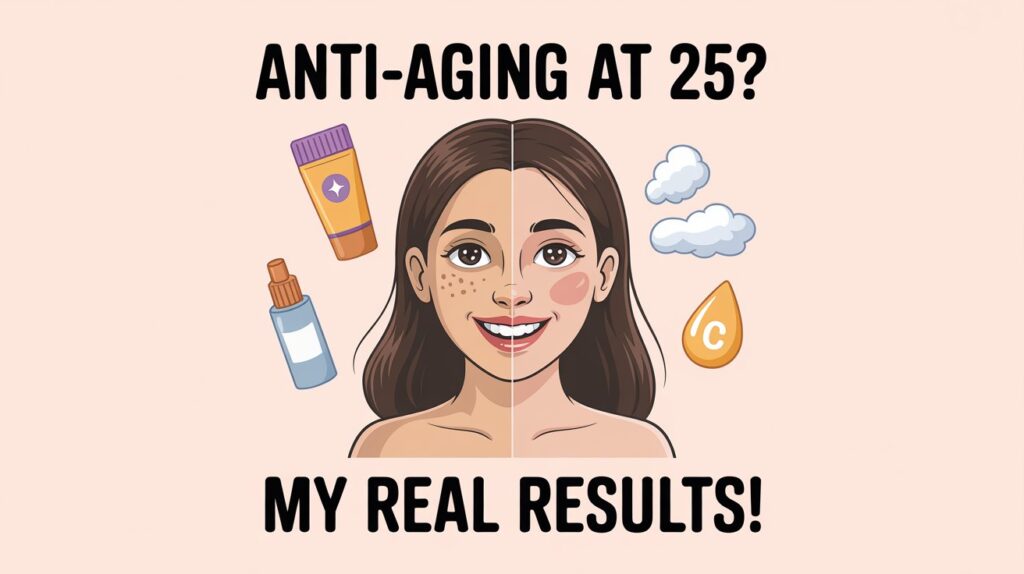
Three Months Later: Final Results
Here’s what I noticed long-term:
My skin looks healthier and younger
Texture is smoother and more even
No new fine lines have shown up
Dark spots have faded
My face feels more bouncy and hydrated
Did I erase aging? Of course not. But I’m maintaining what I have — and that’s the whole point.
The best change wasn’t just physical — it was emotional. When your skin feels good, you just feel better. You smile more, you show up confidently, and you don’t hide behind makeup.
Would I Recommend Starting Anti-Aging at 25?
YES — but with balance.
Don’t chase youth. Just take care of what you have so future-you will say “Thank you!”
Here’s who should consider an early routine:
-
You see early signs like fine lines or dullness
-
You spend a lot of time outdoors
-
You want to prevent damage before it appears
Here’s who doesn’t need to stress:
-
You’re not ready for active ingredients yet
-
Your skin is already sensitive or inflamed
-
You’re overwhelmed — skincare should never stress you out
Do what feels right for you.
Your Simple Starter Routine for Your 20s
If you’d like to dip a toe in, start here:
Morning
-
Cleanser
-
Vitamin C serum
-
Moisturizer
-
SPF — every day (even inside!)
Night
-
Cleanser
-
Retinol — 1–2x weekly at first
-
Moisturizer
-
Optional hydration boost (hyaluronic acid)
And some easy lifestyle upgrades:
-
Get 7–8 hours of sleep
-
Drink more water
-
Add antioxidant-rich foods
-
Manage stress when you can
Your skin responds to the life you live — not just the products you buy.
Final Thoughts
I started an anti-aging routine because I didn’t want to wait until I saw wrinkles to care about my skin. Three months later, I’m happier, more confident, and more connected to my self-care.
Aging isn’t something to fear. It’s something to respect.
You deserve to feel good in your skin — not someday in the future, but right now.
So if you’re 25 and thinking about anti-aging, trust me… you’re not too early. You’re actually right on time.