
Last updated on: June 8, 2026
You’ve probably seen it on your social media feed. A story so touching, so perfectly crafted that it makes you believe in the power of friendship all over again. It goes something like this: two friends, equally talented, competing for one spot in the academy of their dreams. One passes the ball to the other at the crucial moment. Sacrifice. Loyalty. Success. Redemption. It’s the kind of tale that hits you right in the heart.
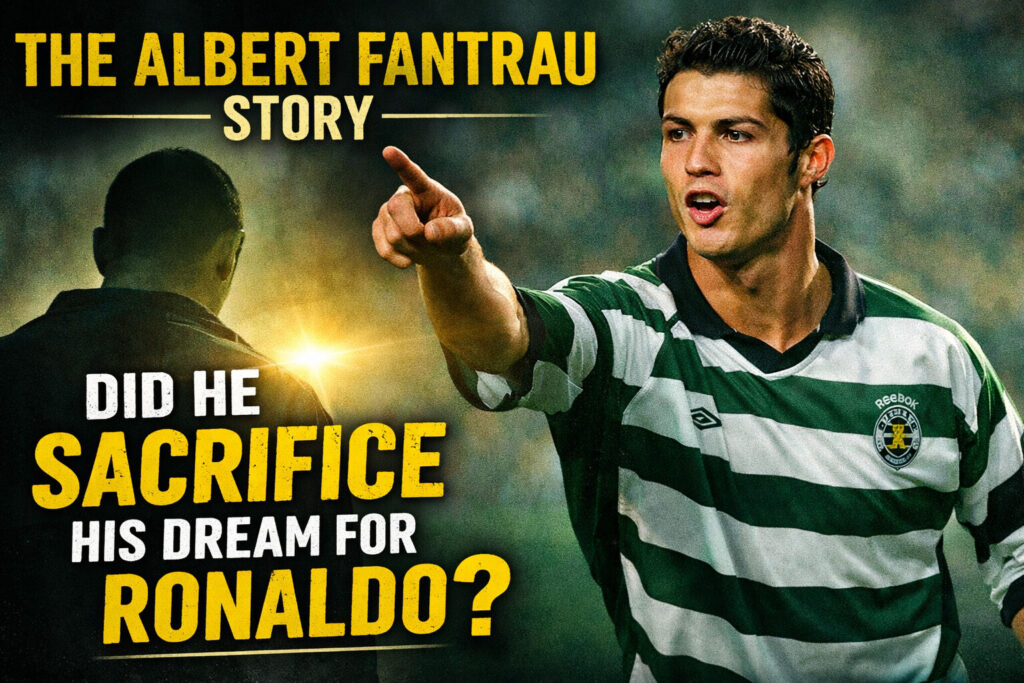
This is the Albert Fantrau story, and it has become one of the most shared, most debated, and most emotionally resonant myths in football. You’ll find it on Instagram, TikTok, Facebook, LinkedIn—anywhere people gather to celebrate human goodness and friendship. The story has been retold thousands of times, each time gaining more power, more detail, more… well, more everything except evidence.
The core claim is simple: Albert Fantrau, a childhood friend of Cristiano Ronaldo, stepped aside so that Ronaldo could have his shot at glory. He chose friendship over ambition. And the story concludes with beautiful redemption—Ronaldo, forever grateful, never forgot Fantrau and eventually rewarded his selflessness with wealth and comfort.
But here’s the thing: as you read through this article, you’re going to discover something uncomfortable. You’re going to learn that the story you believed, that you maybe even shared with your friends, might not be what it seems. That doesn’t make it worthless, though. In fact, understanding the difference between myth and reality teaches us something equally powerful about success, fame, and how legends are born.
This article will prove the story isn’t what we think. It will question the sources we trusted. And it will clarify what actually happened—which, if you’re open to it, is even more inspiring than the fairy tale.
Who Is Albert Fantrau?
If you search for Albert Fantrau on the internet, you’ll find something interesting: very little. You’ll find thousands of articles about him, millions of social media posts quoting him, countless YouTube videos telling his story. But actual information about who he is? That’s far harder to come by.
The limited public information available suggests that Albert Fantrau was supposedly a young footballer in Portugal who knew Ronaldo during childhood. He was often described as “the forgotten hero”—a player who had talent but whose dream ended with one decision on one day. He supposedly played for a local team in Madeira or in early-career academies in Portugal. He was Ronaldo’s contemporary, his friend, his competitor.
But here’s where the story gets fuzzy. If you ask for a photo of Albert Fantrau, you’ll struggle. If you want to know where he played after that famous match, the details get shaky. If you search for him in Portuguese youth football records, he’s hard to find. Why? Because the paper trail simply doesn’t exist in the way the story suggests it should.
The story first appeared online in the early 2010s, spreading rapidly through viral content on social media platforms. It gained momentum especially around 2015-2020, when content about Ronaldo’s life and career became extremely popular online. Every time Ronaldo achieved something new, every time he won another award or broke another record, the Fantrau story would resurface with renewed interest. People wanted to know: who was this mysterious friend?
The key detail that kept the myth alive was this: Fantrau never publicly spoke in detail about what happened. He remained silent, almost ghostlike. And that silence actually strengthened the myth rather than weakening it. In the world of internet stories, silence is sometimes read as confirmation. A man living quietly in Lisbon, never seeking attention, never going on talk shows—it all fit the narrative perfectly. He was humble. He was noble. He was exactly what you’d expect from someone who’d made such a selfless choice.
But what if that silence means something else entirely? What if it means the story isn’t quite as the internet has told it?
Cristiano Ronaldo’s Early Life in Madeira
To understand why the Fantrau story resonated so deeply, you need to know Ronaldo’s actual early life. Because his real story—the documented, verified story—is already powerful enough to inspire millions.
Cristiano was born on February 5, 1985, in Funchal, the capital of Madeira, a small island region of Portugal. Madeira isn’t wealthy. It’s not a place where opportunities fall into your lap. His father, José Dinís Dinis Aveiro, worked as a groundskeeper at a local stadium. His mother, Maria Dolores dos Santos, worked various jobs to help support the family. Football wasn’t a luxury in their home—it was an escape.
Growing up in poverty, young Cristiano saw football as the way out. And he was good. Really good. From the time he was very young, he stood out. By age ten, he had already won tournament after tournament, being named the best player in nearly every competition he entered. This wasn’t luck. This was raw talent meeting relentless dedication.
Around that same age, Ronaldo played for a youth team called Andorinha, where his father worked. He wasn’t just a player on the team—he was the standout. From 1992 to 1995, he developed there, building the foundation that would eventually change his life. Then came Nacional, another local club where he spent two years before his trial at Sporting CP in 1997.
The reason he was scouted, the reason bigger clubs noticed him, wasn’t because of any friend’s sacrifice. It was because he was undeniably talented. Ronaldo had something that scouts could see immediately: he was faster, more skilled, more aware than kids his age. He played against older boys regularly because his age group couldn’t challenge him properly. That’s not exaggeration—that’s what people who watched him actually say.
For Ronaldo, football wasn’t a hobby. It was his future. His entire family understood that. His parents made sacrifices so he could play, so he could travel to competitions, so he could be seen by the right people. This is the real sacrifice story of Ronaldo’s early life—it was made by his parents, not by a friend.
The Famous Claim: One Spot, Two Friends
Now let’s talk about what the internet says happened. Let’s examine the core of the Fantrau myth—the moment that supposedly changed everything.
The Academy Trial Story
According to the viral version, there was a trial at Sporting CP’s academy (or sometimes it’s described differently in different tellings). Ronaldo and Albert Fantrau, two young friends, both talented forwards, both dreaming of making it big, were being evaluated by a scout from the club. The scout had made an announcement: only one player could be selected. Whoever scored the most goals in the upcoming match would get the spot.
The game began. Ronaldo and Fantrau were on the same team. The pressure was on. Every goal mattered. Every chance was a potential turning point.
According to the story, Albert scored first—a good header. Then Ronaldo equalized. The match was tied, the stakes rising with every minute. Then, in the final moments, Albert got a clear chance. He was one-on-one with the goalkeeper. The net was open. All he had to do was shoot. He had the opportunity right there, in front of him. This was his moment. This was his future. This was his chance to prove he was good enough.
But he didn’t take the shot.
Instead, Albert passed the ball to Ronaldo, who was running nearby. Ronaldo scored, and with that goal, secured his place in the academy. Albert didn’t. The match ended. The scout made his decision. Ronaldo was in. Albert was out.
When Ronaldo asked his friend why he’d passed instead of shooting, Fantrau allegedly replied: “Because you’re better than me. You’re more disciplined. If you make it, you’ll go far. That’s why I passed the ball.”
Versions of the Story
Here’s where it gets interesting. If you read different versions of this story online, you’ll notice something: they don’t quite match.
In some versions, the match is described as a simple neighborhood game. In others, it’s an official academy trial. Sometimes it’s an Under-18 championship. The final score changes too—sometimes it’s 2-1, sometimes 3-0, sometimes the exact score isn’t mentioned at all. The details of Fantrau’s pass vary. The quote attributed to Albert changes slightly from one telling to another.
Sometimes the story includes a detail about journalists finding Albert years later in a luxurious house in Lisbon, driving a Mercedes, living a comfortable life. When they asked how he afforded it without a football career, he supposedly said it was all because of Ronaldo. Other versions skip this part entirely.
This inconsistency matters. Real, documented events usually have consistent details. Myths, on the other hand, evolve. They get better with each telling. They become more dramatic, more emotional, more perfectly structured. And that’s exactly what happened to the Fantrau story.
How Exaggeration Evolved Over Time
The story likely started from a kernel of truth or at least a plausible scenario. But as it spread on social media, with each share and repost, it got better. Creators added details. People added their own interpretations. By the time it had spread to millions of people, it had become polished, emotionally resonant, perfectly crafted for maximum impact.
You can actually trace how this worked. The story first appeared in written form around the early 2010s on various forums and social media pages. Then YouTube creators picked it up, adding dramatic music and emotional narration. Then it moved to Instagram, shortened into bite-sized posts with emotional captions like “Tag someone who would do this for you.” With each platform, with each new telling, the story got refined. The drama increased. The emotional payoff became sharper.
This is how internet myths grow. They start with something that could be true, maybe even something that has a grain of truth in it, and then they evolve through retelling until they become something more powerful than the original—but also less accurate.
Did Albert Fantrau Really Exist? Fact vs Fiction
This is the critical question. And the answer is complicated.
No Official Academy Records
The Sporting CP youth academy, one of Europe’s most prestigious, keeps records. It has documented the recruitment and development of countless players. Cristiano Ronaldo is extensively documented—there are records of his arrival, his development, his progression through different age groups. The academy system in Portugal is well-organized and professional. Such an important moment in a young player’s career would be documented.
Yet when researchers have tried to find official records of an Albert Fantrau-Cristiano Ronaldo trial match with the specific conditions described in the story, they come up empty. There’s no documentation of a trial where only one spot was available and determined by a single match. There’s no academy record naming a player named Albert Fantrau who was competing directly with Ronaldo for a spot.
Absence in Portuguese Youth Football Databases
Portugal’s youth football system is one of the most organized in the world. The Portuguese Football Federation maintains detailed records. Youth academies keep tabs on every player who’s come through their systems. Bigger clubs maintain archives. If you’re looking for a player who came through the Portuguese system and was talented enough to compete with Ronaldo at that level, you’d expect to find some trace of them.
But when professional researchers and fact-checkers have searched Portuguese youth football databases, the results are clear: there’s no record of an Albert Fantrau matching the description in the story. No academy files. No transfer records. No mention in any official capacity.
Journalistic Investigations and Fact-Checks
Several journalists and researchers have investigated this story over the years. One notable investigation was conducted by Walter Leonhardt, who looked into the original sources that reported on the Fantrau story. His finding? When he traced back who originally reported this story, he found something striking: there was no primary source. The story had been passed around so much that no one could point to where it actually came from.
The journalists who supposedly found Albert Fantrau at his house, asked him about the story, and documented his response? When you actually try to find those interviews, they don’t exist in any reliable form. There are no video interviews. There are no published pieces in major publications with Fantrau giving his side of the story. There’s just the story itself, repeated over and over, with no verifiable source.
Fact-checking websites and sports journalists who’ve examined the claim have concluded the same thing: there’s no credible evidence for this specific narrative of self-sacrifice.
Why Ronaldo Has Never Confirmed the Story
Here’s one of the biggest clues that something isn’t right: Cristiano Ronaldo has never actually confirmed this story in any verified, documented interview.
Think about that. If this incredibly emotional moment, where his friend made a life-altering sacrifice for him, actually happened, wouldn’t Ronaldo have mentioned it? Wouldn’t there be footage of him telling this story? In our age of social media and constant documentation, wouldn’t there be a TikTok, a YouTube video, an interview, something?
When you search for “Cristiano Ronaldo interview Albert Fantrau,” you’ll find YouTube videos, but nearly all of them are either AI-generated, dramatic retellings by third-party content creators, or compilations of the same unverified quotes. You won’t find Ronaldo himself on camera clearly stating this story. You won’t find a verified interview in a major publication where he tells this tale to a journalist.
The quotes attributed to him are usually generic enough that they could apply to many situations: “I have to thank my friend for my success” or “He believed in me when I needed it.” These kinds of statements could theoretically be real, but they’re not specific to the Fantrau story, and they certainly don’t appear to be from verified, documented interviews.
Meanwhile, Ronaldo has spoken extensively about his early life in interviews over the decades. He’s talked about his family, his drive, his determination, his early clubs. But he’s never, in any documented way, told the Albert Fantrau story.
Why the Story Feels True (Even If It May Not Be)
So why does this myth persist? Why does it have millions of believers? Why do you find yourself wanting it to be real?
Emotional Storytelling and Hero Sacrifice Archetype
The Albert Fantrau story works because it taps into a fundamental human narrative that we’ve been telling since the beginning of civilization: the hero’s sacrifice. It’s the same archetype you see in religious stories, in movies, in folklore across every culture. One person gives up their dream so another can flourish. One person sees something in another person and believes in it so much that they’re willing to sacrifice their own chance.
It’s beautiful. It’s noble. It’s the kind of story that makes you believe in humanity.
And here’s the thing: even if it’s not literally true about these two specific people, that doesn’t make the emotion behind it false. People do make sacrifices for each other. Friendships are powerful. The emotions in the story are real, even if the specific events might not be.
Cultural Love for Underdog Narratives
Humans love an underdog story. We love the idea that someone can recognize greatness in another person before the world does. We love the idea of mentorship, of older players helping younger ones, of established players creating opportunities for rising stars. The Fantrau story plays directly into this cultural desire.
And Portugal, in particular, has a strong tradition of storytelling around football and the power of football to change lives. Football is the national sport. The idea that Ronaldo’s path to greatness involved the help of a loyal friend fits into a larger cultural narrative about community, loyalty, and mutual support.
Why Fans Want the Story to Be Real
When you’re a fan of someone like Cristiano Ronaldo, you’re invested in more than just their athletic achievements. You want their character to match their talent. You want them to be not just skilled, but good. You want their success to be earned not just through practice and natural ability, but through good relationships, loyalty, and character.
The Fantrau story provides all of that. It suggests that Ronaldo, even as a young person, was humble enough to appreciate a friend’s sacrifice. It suggests he was generous enough to remember and repay that loyalty. It transforms him from just an amazing athlete into an amazing human being.
That’s a powerful thing to believe about someone you admire.
How Myths Grow Around Legendary Figures
Every legendary figure attracts myths. Think about historical figures you know well—whether in sports, politics, entertainment, or history. Chances are, there are stories about them that have become popular, repeated, believed by millions, that historians aren’t entirely sure about.
This happens because legendary people become larger than life in our minds. They become almost mythical. Once someone has achieved something so extraordinary, our brains naturally want to explain how they did it. We want to find the secret, the reason, the turning point. Myths fulfill that need.
For Ronaldo, a man who has broken virtually every record, won every major award, and dominated football for nearly two decades, myths naturally spring up. The Albert Fantrau story is just one of many stories told about him—some true, some partially true, some entirely fabricated.
Cristiano Ronaldo’s Actual Breakthrough Journey
Let’s talk about what we actually know happened. Because the real story, the documented story, is quite remarkable on its own.
Documented Path from Madeira to Lisbon
In 1997, when Cristiano Ronaldo was 12 years old, he traveled from Madeira to Lisbon for a three-day trial with Sporting CP. This wasn’t random. This wasn’t because of a single match or a friend’s intervention. This happened because Ronaldo’s talent had been noticed. He’d been winning tournaments and impressing scouts for years.
The trial wasn’t about one spot or one match determining everything. It was a proper evaluation of his abilities over three days. Sporting CP’s scouts assessed his technique, his speed, his football intelligence, his athleticism, and his potential for development.
And they signed him. Sporting CP paid £1,500 (approximately €22,500) for his rights to bring him from Madeira to their academy in Lisbon. For a club to invest that much in a 12-year-old, they had to be convinced of his extraordinary potential.
This moment was significant, yes. But it wasn’t decided by a friend’s pass in a crucial match. It was decided by professional scouts making a strategic investment in a talented young player.
Early Sacrifices Made by Ronaldo and His Family
What happened next was perhaps even more remarkable than any myth could be. At just 12 years old, Cristiano Ronaldo left his family. He left his home in Madeira. He left everything familiar and moved to Lisbon to live in the academy dormitory.
For a 12-year-old, that’s a huge sacrifice. Imagine being separated from your parents, your siblings, your hometown, because of a sport. Imagine sleeping in a dormitory, training multiple times a day, going to school in a new city, knowing that if you don’t succeed, you’ve disrupted your entire life.
That sacrifice was made by Ronaldo himself, yes. But it was also made by his family. His parents supported this decision. They understood that their son had a gift and that this opportunity was worth the separation.
This is the real sacrifice story of Ronaldo’s early career. It’s not about a friend giving up a spot. It’s about a young person and his family making an enormous commitment to pursue a dream.
Confirmed Coaches, Trials, and Performances
Over the next several years, Ronaldo progressed through Sporting CP’s academy system under documented coaches and mentors. There’s a clear record of his development. By age 16, he was promoted to Sporting’s professional first team by manager László Bölöni, who was impressed by his technical ability and dribbling.
Between 2002 and 2003, Ronaldo made his debut for Sporting’s first team. On September 29, 2002, he played in the Primeira Liga for the first time. On October 7, 2002, he scored two goals in a 3-0 victory. He was just 17 years old, already showing the talent that would eventually earn him a spot at Manchester United.
In August 2003, at age 18, Ronaldo played in a friendly match between Sporting CP and Manchester United. Sporting won 3-1, and Ronaldo impressed Alex Ferguson enough that Manchester United decided to sign him immediately rather than loan him back to Sporting as they’d originally planned. They paid £12 million—an England record for a teenager at the time.
Each of these milestones is documented. Each is part of the official record of his career progression.
No Recorded “One-Spot-Only” Scenario
Throughout all of this documented history, there’s no record of a match or trial where only one spot was available and determined by a single game. Modern academy recruitment, especially at a professional club like Sporting CP, doesn’t work that way.
Scouts watch players over time. They evaluate multiple dimensions of their ability. They consider potential for growth, character, family situation, and many other factors. The idea that a single match would determine whether a player gets an academy spot is not how professional football recruitment works—it wasn’t then, and it isn’t now.
How Legends Create Myths
To understand the Fantrau story better, it helps to understand how myths form around great athletes in general.
Comparison with Other Sports Myths
Every major sport has its myths. In basketball, there are stories about Michael Jordan’s competitive drive that are probably partially exaggerated. In baseball, legendary tales have grown up around Babe Ruth. In American football, stories about great coaches often become more legendary with retelling than the actual events were.
The Fantrau story is part of a long tradition of mythmaking around athletic greatness. Humans naturally want to explain extraordinary achievement through storytelling. We want there to be a reason, a moment, a turning point—something that explains how someone became so exceptional.
Why Ultra-Successful Athletes Attract Folklore
When someone achieves something as extraordinary as Ronaldo has achieved—winning five Ballon d’Ors, scoring over 890 goals in his career, playing at the highest level for two decades—our minds struggle to explain it. How does someone become so much better than everyone else? What’s the secret?
Myths try to answer that question. And myths that emphasize character traits (loyalty, humility, determination) are especially appealing because they suggest that greatness comes not just from talent, but from virtue.
The Fantrau story specifically emphasizes this: it suggests that Ronaldo’s rise to the top wasn’t just about his individual talent, but about his character. He had a friend who believed in him. He was humble enough to accept that help. He was loyal enough to remember his friend later. These are virtues we want to believe exist in someone we admire.
The Difference Between Symbolic Truth and Factual Truth
Here’s something important to understand: a story can be symbolically true even if it’s not factually true. What I mean is this: the Fantrau story, even if it didn’t happen literally, represents something true about Ronaldo and about success in general.
The core truth it represents is this: Ronaldo’s success was built on relationships. Whether or not a specific friend named Albert Fantrau made a specific sacrifice at a specific moment, Ronaldo clearly has benefited from the support of others. He had family support. He had coaches who believed in him. He had teammates and friends who supported his journey.
The story captures that truth in a narrative form, even if the specific details are fictional. That’s what makes it powerful and why it persists even as fact-checkers debunk it.
But there’s also something worth considering: should we build our beliefs about real people on fictional stories, even if those stories represent symbolic truths? That’s a question worth asking.
What Happened to Albert Fantrau?
One of the strangest aspects of the Fantrau story is what happened to him after that famous match (or trial, or championship, depending on which version you hear).
Claims That He “Lives Quietly” Today
According to the viral narrative, Albert Fantrau supposedly quit professional football after that match with the scout. His career ended before it really began. He never made it as a professional footballer. He never played for major clubs. He lived quietly in Lisbon, and when Ronaldo became famous, Ronaldo supposedly helped him out—buying him a house, a car, helping him establish a business.
In some versions of the story, journalists supposedly tracked him down and found him living in luxury, and when asked how he afforded it, he credited Ronaldo’s generosity. It’s a beautiful conclusion to the story: sacrifice rewarded, loyalty repaid, a fairy-tale ending.
No Interviews, Photos, or Confirmed Sightings
Here’s what’s notable about these claims: you can’t actually find them. There are no interviews with Albert Fantrau in major publications. There are no photos of him with Ronaldo. There are no confirmed sightings or direct statements from him to journalists.
What you do find are YouTube videos, blog posts, and social media accounts retelling the story. But these are all secondary sources talking about Fantrau, not Fantrau himself speaking.
When you try to trace the original source of these claims about him being found by journalists, about him having a house and a car, about him confirming the story to reporters—the trail goes cold. You can’t find the original interviews. You can’t find the original articles. You find references to these things, but not the things themselves.
Why Silence Strengthens Myth Rather Than Weakens It
Interestingly, Fantrau’s apparent silence actually strengthened the myth rather than weakening it. In the world of internet stories, silence can be interpreted as humility. A man who made a great sacrifice and then lived quietly, never seeking attention or reward, never going on talk shows to profit from his story—that fits perfectly with the narrative of someone with noble character.
If Fantrau had come forward and said “actually, that story isn’t true,” it might have killed the myth. But by remaining silent (or simply not being findable by journalists), he allowed the myth to grow. His absence became part of the story.
This is actually a common feature of internet myths: the mysterious figure at the center, impossible to reach, adds to the mystique.
The Real Childhood Friendship Story: José Semedo
If the Albert Fantrau story isn’t real, what is the actual story of Ronaldo’s key childhood friendship? The answer is José Semedo.
José Semedo arrived at Sporting CP’s academy around the same time as Ronaldo. He was also 12 years old when Ronaldo joined. While Ronaldo came from Madeira, Semedo came from Setúbal, a city about an hour away from Lisbon. Setúbal is not a wealthy area—in fact, it’s known for crime and poverty. Semedo came from a large, poor family of ten children.
When these two boys met at the academy, they instantly bonded. They were the only two players of their age at the academy, so they naturally became each other’s closest friend. They shared a room. They ate together. They trained together. They went through the early years of their football development as a team.
A Crucial Intervention
Here’s where the real sacrifice story comes in. After about two years at the academy, Sporting CP’s decision-makers decided to cancel Semedo’s residency. They were going to make him travel home every day—a one-hour journey—instead of living at the academy. This was essentially a way of easing him out, preparing to release him from the academy.
For Semedo, this was devastating. He came from a tough part of Setúbal riddled with poverty and crime. The academy wasn’t just a place to develop as a footballer—it was a safe haven from a dangerous neighborhood. Many of his childhood friends from Setúbal ended up in prison or victims of violence. Football, and the academy, had saved him.
When Ronaldo found out that Semedo was going to be released, he did something remarkable. He went to the academy director and said no. He said if Semedo had to leave, he would leave too.
More than that, he used his own status as the academy’s best prospect as leverage. According to Semedo’s account, Ronaldo told the director: “Because I’m the best player here, they have to look after me for me to keep doing well. I like you so much I don’t want to lose you.”
It was a bold move. Ronaldo was young, just a teenager, but he understood his own value. And he was willing to risk his own opportunity to protect his friend.
The director relented. Semedo was allowed to stay. They shared an extra bed in their room, shared their wardrobe space, and continued their journey together.
The Real Sacrifice
This is the actual sacrifice story. It wasn’t Semedo who made the sacrifice for Ronaldo (the way the Fantrau myth suggests). It was Ronaldo who made the sacrifice for Semedo.
Ronaldo could have accepted Semedo’s departure. Many players would have. But he didn’t. He intervened. He used his own status and potential as leverage to help his friend. He was willing to put his own career at risk to keep his closest friend safe.
This is documented. This is verified. This is from interviews with José Semedo himself, who is a real person with a real career as a professional footballer.
Semedo went on to have a successful career in Portuguese football and beyond. He played for clubs including Charlton Athletic and Sheffield Wednesday in England. He played over 400 games as a professional. He went on to become involved in management and has held executive positions in football.
And the friendship between Ronaldo and Semedo has remained strong throughout their lives. Semedo has spoken publicly about it in interviews. He’s written about it. He’s been open about how Ronaldo changed his life.
Why This Story Is More Powerful
Here’s the thing: the José Semedo story is actually more interesting than the Fantrau myth. It’s more complex. It shows Ronaldo not just as someone who benefits from friendship, but as someone who is willing to risk his own future for his friend. It shows leadership, courage, and loyalty at an age when most people are just focused on themselves.
It also shows that Ronaldo’s character isn’t just something we can infer from his professional success. It’s something that was demonstrated in his actual behavior toward the people around him.
The myth made Ronaldo look good because it showed a friend’s sacrifice for him. The reality makes Ronaldo look even better because it shows his sacrifice for a friend.
Ronaldo’s Career Reality (Without the Myth)
Let’s zoom out and look at Ronaldo’s actual career trajectory. It’s remarkable all on its own, without any need for myths to enhance it.
Rise Through Manchester United
After signing with Manchester United in 2003 at age 18, Ronaldo had to earn his place. He wasn’t immediately a star. Early on, he struggled with the physical demands of the English Premier League. He got injured. He had to adapt to a new league, a new country, a new language.
But over the next six years (2003-2009), Ronaldo transformed into one of the best players in the world under the guidance of Alex Ferguson. His athleticism, his technique, his work ethic all developed. By 2007-2008, he was at his peak, winning the Ballon d’Or (an award given to the best player in the world). He was scoring goals at an extraordinary rate.
Peak Years at Real Madrid
In 2009, Real Madrid signed Ronaldo for a then-record £80 million. This was his “dream club,” as he’d always said it would be. And for nine years (2009-2018), Ronaldo was the best version of himself. He won four Ballon d’Ors with Real Madrid. He was the top scorer in La Liga for multiple seasons. He won three Champions League titles with the club.
These were historically dominant seasons. Ronaldo was doing things that hadn’t been done before. He was breaking records. He was redefining what was possible at the highest level of football.
Continued Dominance with Juventus and Beyond
After Real Madrid, Ronaldo moved to Juventus in 2018 for €100 million at age 33. Many people thought his peak years were behind him. But he continued to score, to compete, to win. He proved that his success wasn’t dependent on being at one specific club or at one specific stage of his career.
Later, he moved to Manchester United again briefly, then to Saudi Arabia, continuing to play at a high level into his late 30s. The point is: his success has been consistent across decades, across multiple teams, across different leagues and different eras of football.
Why Ronaldo’s Success Does Not Require a Tragic Backstory
Here’s the key insight: Ronaldo became the greatest footballer of his generation through a combination of natural talent, relentless training, mental toughness, and opportunity. He didn’t need a myth to explain his rise. The actual explanation is sufficient.
Some people become great through unusual circumstances or because someone believed in them at a crucial moment. But Ronaldo became great because he had extraordinary talent, because he had family support, because he had access to top-level coaching, and because he had an almost inhuman work ethic.
The myth tried to add another layer to that explanation, but it wasn’t necessary. Ronaldo’s actual story is remarkable enough on its own.
What This Story Teaches Us About Success
Whether we believe the Albert Fantrau story or not, it has things to teach us about how we think about success, talent, and achievement.
Talent vs Opportunity
One lesson is about the importance of opportunity. Ronaldo had talent, yes. But talent alone isn’t enough. He needed access to a top-level academy. He needed good coaching. He needed to be seen by the right people at the right time. He needed to be evaluated fairly.
In the Fantrau myth, the implication is that the right opportunity was “given” to Ronaldo through a friend’s sacrifice. But in reality, Ronaldo’s talent was so obvious that opportunity found him. Scouts were looking for players like him. He was noticed because he was exceptional.
This matters because it highlights a truth about success: talent matters, but so does access and opportunity. Some talented people never get opportunities because they’re in the wrong place or born into the wrong circumstances. Ronaldo got opportunities partly because of his talent, but also partly because of luck—being born in a place where he had access to football, being noticed by the right scout, being able to travel to the trials that changed his life.
Hard Work vs Luck
Another lesson is about the balance between hard work and luck. The myth emphasizes luck (a friend’s kind gesture) as the turning point. But the reality emphasizes work: Ronaldo’s relentless practice, his dedication, his discipline.
From a young age, Ronaldo was known for training harder than his peers. José Semedo talks about midnight training sessions where they’d sneak into the gym, with Ronaldo strapping weights to his feet to improve his agility. This wasn’t a one-time effort. This was consistent, relentless dedication.
You need luck to succeed, yes. But you also need to be the kind of person who, when luck arrives, is prepared to take advantage of it. Ronaldo was that person.
Why Success Stories Are Rarely Simple
The Fantrau myth is attractive because it’s simple. One moment. One decision. One act of kindness. And boom—success follows.
But real success stories are rarely that simple. They involve dozens of factors. They involve family support, personal sacrifice, good timing, access to resources, natural ability, work ethic, mental toughness, dealing with setbacks, learning from failures, and countless other elements.
Ronaldo’s real story is more complex than the myth, but it’s also more interesting. It’s more human. It shows success as something that emerges from many different sources, not just one moment of sacrifice.
The Danger of Oversimplifying Greatness
When we tell mythologized versions of success stories, we risk oversimplifying them. We make them seem more like accidents or miracles and less like the product of complex, multifaceted effort.
This can be dangerous because it can mislead people about what success actually requires. If someone thinks they just need a good friend to believe in them, without realizing the role that their own work plays, they might not put in the effort necessary to succeed. If someone thinks success is determined by a single moment, they might not understand that it’s actually determined by countless moments and decisions.
The real story—the actual story—is more useful than the myth because it more accurately reflects how success actually happens.
Final Verdict: Truth, Myth, or Metaphor?
So where do we land on the Albert Fantrau story? Is it true? Is it false? Is it something in between?
What We Can Confidently Say
Here’s what we can confidently say: there is no documented evidence that the specific events described in the Fantrau story occurred as described. There’s no record of a trial where one spot was available. There’s no confirmation from Ronaldo himself. There’s no verifiable source for the key details of the story.
Someone named Albert Fantrau may have existed. Ronaldo may have known someone by that name. But the specific narrative of sacrifice and reward described in the viral story is not supported by evidence.
What Remains Unproven
What remains unproven is whether something similar to the Fantrau story happened, just not exactly as described. Maybe Ronaldo did have a friend who was also being evaluated by scouts. Maybe there was some kind of decision or moment involving two young players. But if such an event occurred, it wasn’t as dramatic or as decisive as the myth suggests.
Also unproven: whether Ronaldo ever met the people who created the myth online and confirmed the story. The interviews that supposedly happened? They don’t appear to exist in any verifiable form.
Why the Story Still Matters
But here’s the thing: the story still matters. Not because it’s literally true, but because it represents something true about human nature and about how we think about greatness.
The story matters because it shows that we want to believe in loyalty, in sacrifice, in friendship. We want to believe that great achievements are built on relationships and not just individual talent. We want to believe that people are kind to each other, that they help each other succeed, that they remember those who helped them.
These are good things to believe. The question is just: should we ground those beliefs in fictional stories, or should we ground them in real examples?
The Real Lesson Behind the Albert Fantrau Narrative
The real lesson isn’t about Albert Fantrau at all. It’s about José Semedo. It’s about how Ronaldo, as a teenager, was willing to put his own future at risk to help a friend. It’s about loyalty and friendship and sacrifice—but not Fantrau’s sacrifice. Ronaldo’s sacrifice.
If that’s the lesson we take from this story, we’ve learned something valuable. We’ve learned that success doesn’t require us to be selfish. It doesn’t require us to step on others to get ahead. It’s possible to be ambitious and kind at the same time. It’s possible to help your friends while also pursuing your own dreams.
That’s a message worth spreading. And unlike the Fantrau myth, it’s actually documented and real.
FAQs
Is Albert Fantrau real?
Albert Fantrau may have been a real person—someone Ronaldo knew. But the specific story about him sacrificing his academy spot for Ronaldo is not supported by evidence. There are no official records, no verified interviews, and no confirmation from Ronaldo himself.
Did Ronaldo confirm the story?
No verified confirmation exists. Ronaldo has never publicly told this story in any documented interview. Videos online claiming to show Ronaldo confirming the story are typically AI-generated or dramatic retellings by content creators, not actual interviews with Ronaldo.
Did someone give up their academy spot for Ronaldo?
Not in the way the Fantrau story describes. However, there’s a documented story of Ronaldo intervening to help his friend José Semedo stay at the academy. This is the opposite scenario: Ronaldo used his own status to help a friend, rather than a friend helping him.
Why is this story so popular?
The story taps into universal themes of friendship, sacrifice, and loyalty. It offers a simple, emotionally satisfying explanation for Ronaldo’s success. It also spread virally on social media, where it was reshared without fact-checking, allowing it to gain massive reach.
How do we know the Fantrau story isn’t true?
Several reasons: (1) No official academy records support it, (2) No verified interview exists where Ronaldo confirms it, (3) Ronaldo’s actual path to the academy is documented differently, (4) Modern academy recruitment doesn’t work the way the story describes, (5) Investigative journalists who’ve traced the story to its origins found no primary source for the key claims.
What’s the real story of Ronaldo’s friendship?
Ronaldo’s closest documented childhood friendship was with José Semedo, another young player at Sporting CP’s academy. When Semedo was going to be released, Ronaldo intervened with academy management and used his own status as leverage to keep Semedo there. They remained close friends throughout their lives.
Closing Thought
The Albert Fantrau story will probably continue to circulate on social media. It’s too good, too emotionally resonant, too perfectly structured to disappear just because fact-checkers have debunked it. Internet myths don’t die easily.
But now you know the difference between the myth and the reality. You can choose which story to believe, which story to share, which story to build your understanding of success on.
The myth tells you that Ronaldo succeeded because a friend believed in him. That’s nice, but incomplete.
The reality tells you something more complex and more useful: Ronaldo succeeded because he had extraordinary talent, because he had family support, because he had access to good coaching, because he was willing to work harder than his peers, and because he was the kind of person who valued loyalty and friendship enough to risk his own future for it.
That real story—the actual story—is powerful enough on its own. You don’t need myths to make Cristiano Ronaldo’s journey compelling. The truth is interesting enough.
Whether you choose to share the myth or the reality with others is up to you. But at least now you know the difference.