
Last updated on: June 19, 2026
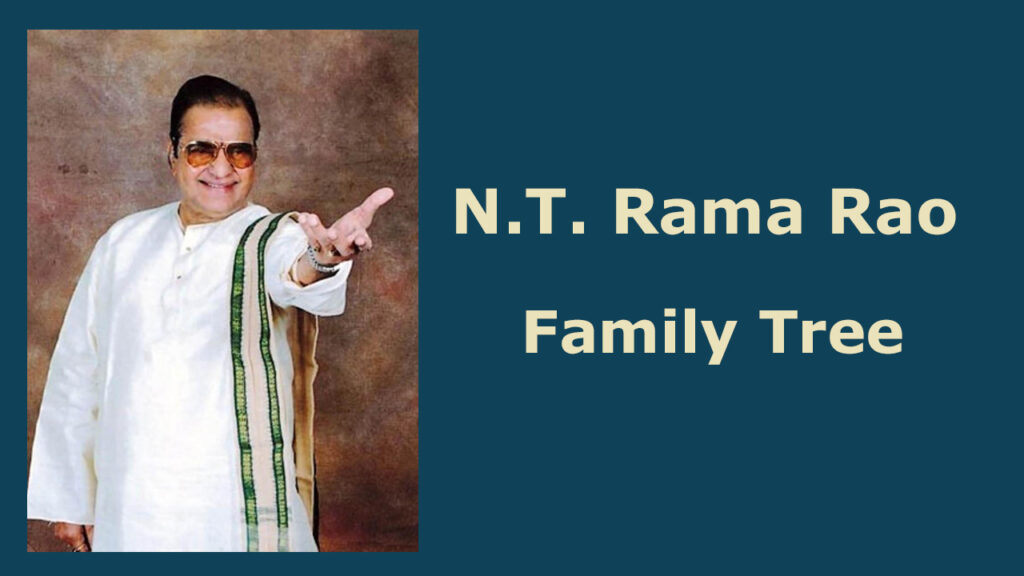
When you think about Telugu cinema and Andhra Pradesh politics, one name towers above all others—NTR. But here’s the thing: NTR isn’t just one person’s legacy anymore. It’s a dynasty. The Nandamuri family has shaped everything from the silver screen to the corridors of political power for over seven decades. Whether it’s blockbuster films that made generations weep or political movements that changed how a state thinks about itself, this family’s fingerprints are everywhere.
Why does this matter to you? Because understanding the NTR family tree isn’t just about celebrity gossip or political history. It’s about understanding how one man’s vision rippled through generations—creating actors, producers, filmmakers, and leaders who continue to influence millions today. The Nandamuri surname is more than just a name in Telugu culture. It represents a legacy of cinema that defined an entire industry, a political ideology that put Telugu pride on the map, and personal stories of ambition, conflict, and triumph that feel very human, very real.
This article takes you through three generations of this extraordinary family. You’ll meet NTR, the founder who seemed to do everything—act, direct, produce films, and then completely transform politics. You’ll understand how his marriages shaped his life and political destiny. You’ll discover his children who chose cinema, politics, or both. And you’ll see how his grandchildren, particularly Jr. NTR and Kalyan Ram, are writing their own chapters, sometimes stepping out of grandfather’s shadow, sometimes carrying it forward with pride.
Who Was N.T. Rama Rao? The Root of the Family Tree
Early Life and Rise from a Farming Village
Imagine being born in a tiny farming village in 1923 with no electricity, no running water, and no film industry to speak of. That was N.T. Rama Rao’s starting point. Born on May 28, 1923, in Nimmakuru village in Krishna district, Andhra Pradesh, he came from an ordinary farmer’s family. His parents gave him up for adoption to his uncle and aunt when he was very young—a common practice in those days when families wanted to help relatives who couldn’t have children.
Growing up, NTR wasn’t marked for stardom. He was a bright student, though. He studied in Vijayawada’s schools and eventually made it to intermediate college. But something happened in college that would change everything. While performing in a stage play where he played a female character, he caught the acting bug. But here’s what’s interesting about young NTR—he didn’t drop everything and chase dreams like some people do. He finished his studies first. He even got admitted to BA college and later qualified for a government job as a sub-registrar.
However, government work didn’t satisfy him. After just three weeks, he left because he found the job morally corrupt. That’s when he decided to try acting seriously. He got his first film role in 1949 in Mana Desam, though it was just a small part as a policeman. But he pushed for a hero’s role and got it in Palletoori Pilla in 1950.
The Rise as a Telugu Cinema Legend
What happened next was extraordinary. NTR didn’t just become a star—he became THE star. Between 1950 and his political entry in 1982, he appeared in over 300 films. Think about that for a moment. Three hundred films across 32 years. That’s nearly 10 films every year. He was in mythological films, historical epics, romantic dramas, social melodramas, and vigilante action films.
His breakthrough came with Pathala Bhairavi in 1951, which made him famous. But his true iconic status came from playing Lord Krishna. He played Krishna in 16 different films, and the role became so associated with him that people started treating him like a divine figure. Pilgrims would visit his house after visiting temples. Imagine that kind of cultural impact. His performance in Sri Venkateswara Mahatyam was so revered that many Telugu people genuinely saw him as more than just an actor—he was a cultural deity.
But NTR was more than just someone who looked good on screen. He was a director too. He wrote screenplays, produced films, and even started his own production studios—National Art Theater in 1953 and later Ramakrishna Cine Studios in 1976. He took risks with unconventional roles, like playing the demon king Ravana in Bhookailas (1958), which was unprecedented for a superstar at that time.
By the 1970s, his film choices shifted. He moved away from mythological roles and started choosing films with social messages—stories about ordinary poor men fighting a corrupt system. Films like Adavi Ramudu (1977), Driver Ramudu (1979), and Kondaveeti Simham (1981) connected with common people. He was giving voice to the voiceless through cinema.
The Political Entry: Why NTR is Called a Once-in-a-Generation Leader
Here’s where NTR’s story takes a dramatic turn. After decades of being solely a film star, he realized something. He’d reached the pinnacle of cinema—he had awards, fame, respect, money. But was he truly serving people? At age 59, when most people would have been thinking about retirement, NTR founded the Telugu Desam Party (TDP) on March 29, 1982, with the slogan “Self-respect of the Telugu people.”
The political establishment thought he was crazy. A film star starting a political party? But NTR saw something they didn’t. By 1982, Andhra Pradesh had been under Congress rule for 26 years. The state was marginalized at the national level. The Telugu language and Telugu pride were being compromised. Central governments had changed multiple Andhra Pradesh Chief Ministers rapidly—some say to keep the state weak and dependent.
NTR’s campaign in 1982-83 was unlike anything Telugu politics had ever seen. He took his Chevrolet van and converted it into what he called Chaitanya Ratham—the Chariot of Awakening. His son Harikrishna drove it. For nine months, NTR traveled across Andhra Pradesh covering 75,000 kilometers, eating and sleeping in that van, speaking to people about their problems, their dignity, their right to self-respect.
The results shocked everyone. In the January 1983 elections, the Telugu Desam Party won 199 of 294 seats. An entirely new political party, founded by a film actor, had swept to power. The Congress, which had ruled for 26 years, was decimated. NTR became Chief Minister in just nine months after founding the party. He remains the only Chief Minister of Andhra Pradesh who didn’t belong to the Congress Party until he arrived.
What made him a once-in-a-generation leader was his ability to connect cinema with politics. He used his star power responsibly. He campaigned on issues, not on personality alone. He brought policy innovations—like creating the Mandal system for decentralized administration, which is still used today across India. He started programs like subsidized rice distribution, pensions for landless poor people, housing for weaker sections, and midday meals for school children. These weren’t just slogans; they were actual welfare policies that improved millions of lives.
Between 1983 and 1995, NTR served as Chief Minister for three separate terms. He was a national figure, supporting various political movements. His legacy in politics is that he showed Indian cinema could produce credible, transformative political leaders.
NTR’s Marriages & Personal Life: The Heart of His Story
First Wife: Basavatarakam—The Invisible Force Behind the Legend
When you see old photographs of NTR and Basavatarakam together, you notice something. She rarely smiled for the camera. She was almost always in the background. That’s because Basavatarakam wasn’t interested in fame or public recognition. But make no mistake—she was the foundation upon which NTR’s extraordinary life was built.
NTR married Basavatarakam in 1942. She was his cousin, and she was young—he was even younger. People who knew them said NTR loved his wife deeply. His close associates recall that after her death, he would place her photograph next to his idols and worship it. Years after she passed away, NTR conducted service events in her memory. That kind of devotion doesn’t come from casual affection.
Basavatarakam gave NTR twelve children—eight sons and four daughters. While NTR was busy shooting films, traveling from set to set, building his career, Basavatarakam was managing a massive household. She raised the children with values and discipline. She supported NTR’s career transition into politics when he was 59 years old and could have simply retired. She did this without seeking the spotlight for herself.
One of their friends and film director, V.V. Raju, later shared stories about visiting their home. He said Basavatarakam would prepare delicious meals for guests. She would tell visiting directors when and how to behave—she had that kind of presence in the household. But she almost never came to the film sets. She preferred to work behind the scenes, raising children, managing the family, and yes, making secret charitable donations to people in need.
Basavatarakam died of cancer in 1985, at a time when NTR was still building TDP and consolidating power after his first term as Chief Minister. The Basavatarakam Indo-American Cancer Hospital & Research Institute in Hyderabad, one of the best cancer treatment centers in India, was built in her memory. It’s fitting, really—she’s remembered not through statues or movie premieres, but through an institution that heals thousands of people every year.
Second Wife: Lakshmi Parvathi—The Woman Who Divided a Dynasty
Now, this is where the story becomes complicated. It’s the kind of complexity that happens in real families, though usually not in public view.
In 1991, NTR met Lakshmi Parvathi. She was a college lecturer and author who approached him with the idea of writing his biography. She was young—about 37 years his junior. They spent time together working on the biography. Somewhere along the way, something shifted between them. What started as a professional relationship became personal.
In 1992, they got married secretly. Nobody knew about it for almost a year. Then, on September 10, 1993, at the 100th-day celebrations of his film Major Chandrakant in Tirupati, NTR did something shocking. In front of a large gathering, he called Lakshmi Parvathi to the stage and announced to the world that he’d married her. When asked by journalists why he’d done this, NTR gave a statement that became famous: “This is not out of vyamoham (lust) but due to daivikam (God’s grace).”
The public announcement created immediate controversy. To understand why, you need to know something about Indian society, especially in those days. Remarriage by older men was not uncommon, but for a political figure, it was unusual and often seen as undignified. More importantly, Lakshmi Parvathi was not from the film world or the political establishment. She was an outsider. And she was ambitious in ways that Basavatarakam had never been.
NTR’s own children opposed the marriage bitterly. Their concerns, as reported in various accounts, centered around two things: first, they worried about their inheritance and their mother’s memory; second, they feared that Lakshmi Parvathi would use her position to gain political power. Some of NTR’s sons reportedly told him things like, “Why can’t you marry a virgin?” (as if she were a commodity), according to biographers. Others questioned whether he was being manipulated.
But NTR was determined. He loved Lakshmi Parvathi, or at least he believed he did. He publicly defended his marriage, saying his wife wasn’t inferior to anyone in the party or family. This was actually quite progressive for 1993, especially from a man of his generation. But it created a chasm in the family that would never fully heal.
In 1994, NTR made a political comeback. The TDP, which had lost elections in 1989, won big in 1994. Lakshmi Parvathi had campaigned vigorously with NTR. She spoke at rallies. She gave public speeches peppered with quotes from ancient Telugu texts and scriptures. The media called her “Lucky Parvathi”—she’d brought luck back to NTR’s political fortunes.
But then came the coup.
The 1995 Coup: How a Family Divided Itself
In August 1995, less than a year after their triumphant election victory, NTR’s own family orchestrated a political coup against him. Led by his son-in-law N. Chandrababu Naidu (who was married to NTR’s daughter Bhuvaneshwari since 1981), multiple members of NTR’s own family joined forces to remove him as Chief Minister.
The pretext was Lakshmi Parvathi’s influence. The family claimed she was interfering in party matters and state administration. There were meetings, discussions, and ultimately an ultimatum: NTR would have to distance himself from his wife, or his family would move against him politically. NTR refused. He said his wife was not inferior and deserved respect.
So they moved forward with the coup. On August 26, 1995, with the support of over 160 members of the TDP-controlled assembly (many of them NTR’s own family members and allies), Chandrababu Naidu was sworn in as Chief Minister, replacing his father-in-law. NTR was humiliated. He, who had founded the TDP, who had brought it to power, was now sitting in the opposition.
Five months later, on January 18, 1996, NTR died of a heart attack. He was 72 years old. His health had already been declining, but many close to him believed the political betrayal hastened his death. Lakshmi Parvathi was devastated. She later claimed (though disputed by others) that the family’s treatment of NTR and the stress they caused him “claimed his life.” She would spend the next 30 years fighting against what she saw as betrayal by the Naidu family.
The marriage to Lakshmi Parvathi lasted only about three years, but its impact would define the Nandamuri family for decades. It created political rifts. It split loyalties. Some family members, like Nandamuri Balakrishna, sided completely with Chandrababu Naidu. Others, like Nandamuri Harikrishna, eventually rebelled against Naidu and formed their own political party. The wounds from this episode have still not completely healed, even 30 years later.
Children of NTR: Individual Legacies
Nandamuri Balakrishna: The Loyal Son of Cinema and Politics
If there’s one person who truly carried NTR’s legacy into the modern era, it’s his younger brother Balakrishna, fondly known as “Balayya.” Born on June 10, 1956, Balakrishna was destined for stardom from birth—his father was already a cinema legend when he was born.
But here’s what’s remarkable about Balakrishna: while many star kids would have rested on their father’s fame, Balakrishna actually built his own empire in Telugu cinema. He appeared in his first film as a child—Tatamma Kala (1974), acting alongside his father. That could have been the extent of his involvement, but he had other ideas.
In the 1980s, Balakrishna transitioned to lead roles. His early films like Sahasame Jeevitham, Janani Janmabhoomi, and Mangammagari Manavadu were commercially successful. But the film that really established him as a star on his own terms was Narasimha Naidu in 2001. It wasn’t just a hit—it broke box office records and showed that Balakrishna could carry films independently, without riding on his father’s name.
Over a career spanning 50 years, Balakrishna has acted in over 100 films. What’s his signature style? He’s known for being larger-than-life, over-the-top in the best possible way. He does films that are commercial entertainers—action-packed, emotionally intense, with incredible dialogue delivery. Films like Legend (2014) and Akhanda (2021) showcased him at his finest—powerful action sequences, mass appeal, and that unmistakable Balakrishna charisma that made him synonymous with a certain style of Telugu cinema.
But Balakrishna is more than just an actor. He’s also deeply involved in politics. Unlike many actor-politicians who treat their film and political careers separately, Balakrishna has used his films to communicate political messages. His films often have patriotic themes or social commentary. In real politics, he’s been a loyal supporter of the Telugu Desam Party. In 2014, after Andhra Pradesh was divided into two states, he contested elections from Hindupur constituency and won as a TDP candidate. He’s been re-elected and remains politically active.
In 2009, the Government of India honored Balakrishna with the Padma Bhushan, one of India’s highest civilian honors. The citation recognized his contributions to Telugu cinema and culture. That’s something special—a three-generation story where the grandfather founded an industry, the father dominated it for decades, and the son not only kept the tradition alive but took it to new heights.
When fans call him “Balayya,” they’re not just using a nickname. It’s a term of deep affection and respect. He’s the connection point between NTR’s legacy and modern Telugu cinema.
Nandamuri Harikrishna: The Complicated Middle Brother
If Balakrishna was the loyal son, Nandamuri Harikrishna was the complicated one. Born on September 2, 1956, just a few months after Balakrishna, Harikrishna had a different relationship with his father’s legacy.
In 1982-83, during NTR’s famous Chaitanya Ratham campaign, Harikrishna was the one who drove the van. Think about that—while his father was addressing crowds and changing the political landscape, his son was behind the wheel, literally driving the movement forward. It was an intimate, meaningful role in one of India’s most significant political campaigns.
Harikrishna appeared in some films early in his life—Sambaram in 1978, and later films like Khaidi No. 786 and Malliswari. But his real calling seemed to be in production rather than acting. Along with his son Kalyan Ram, he established the N.T.R. Arts production banner, which went on to produce many important Telugu films.
But Harikrishna’s most significant role was political. In 1995, when the internal TDP coup happened, Harikrishna initially sided with Chandrababu Naidu. He was elected to the Andhra Pradesh Assembly in 1996 and was given a cabinet position as Minister of Road Transport. But by 1999, he’d realized that Chandrababu Naidu wasn’t the right leader for the TDP. Harikrishna felt that Naidu was abandoning NTR’s core philosophy—that Telugu pride and people’s welfare came first.
So in 1999, Harikrishna did something bold and arguably foolish. He left the TDP and founded his own political party: the Anna Telugu Desam Party (ATDP). The party was meant to reclaim NTR’s original vision. But it failed spectacularly. ATDP didn’t win a single seat in the 1999 elections.
By 2006, Harikrishna had realized that trying to build a separate political force wasn’t going to work. He rejoined the TDP. In 2008, he was elected to the Rajya Sabha (the upper house of Parliament) as a TDP member. He served until 2014, when he resigned over the bifurcation issue of Andhra Pradesh.
Tragically, Harikrishna died in a road accident on August 29, 2018. He was 61 years old. His death was sudden and unexpected, cutting short what many felt was an unfinished political journey. But his legacy lives on through his children, particularly his two sons—Jr. NTR and Kalyan Ram—who’ve taken the family legacy into completely different directions.
Nandamuri Mohan Krishna: The Invisible Architect Behind the Scenes
Not every family member wants to be in front of the camera. Some prefer working behind the scenes, and that’s the story of Nandamuri Mohan Krishna.
Mohan Krishna became one of Telugu cinema’s most accomplished cinematographers (Directors of Photography). He made his breakthrough in 1983 with Chanda Sasanudu, where his father was acting. Subsequently, he worked on many important films, including his father’s own directorial projects like Anuraga Devata and Brahmarshi Viswamitra (1991).
What’s interesting about Mohan Krishna is that he received advanced training at film institutes and was even a gold medalist during his studies. He didn’t rely on family connections alone—he built a career based on technical skill and artistic vision. Beyond cinematography, he worked as a producer, distributor, and exhibitor in Telugu cinema.
Unlike his brothers who became public figures, Mohan Krishna preferred to stay away from the spotlight. He contributed significantly to Telugu cinema, but most audiences have never heard his name. That’s the nature of his work—he made others look good on screen.
Nandamuri Rama Krishna: The Producer Who Built Institutions
Nandamuri Rama Krishna Sr. was another son of NTR who made his mark in film production. He directed and produced several films in the 1970s. More significantly, NTR built Ramakrishna Cine Studios in 1976 in memory of his son (or as a tribute to him—accounts vary). The studio became a landmark facility in Hyderabad and was used to shoot many important Telugu films.
Ramakrishna Cine Studios was where Daana Veera Soora Karna (1977) was filmed—the very first film shot in NTR’s newly built studio. Over the decades, the studio produced major films and employed many people from the industry. It represents NTR’s commitment not just to cinema but to building infrastructure for Telugu cinema.
The Daughters of NTR: Beyond the Spotlight
NTR had four daughters. While they didn’t pursue careers in cinema or direct political roles, their lives and marriages had profound effects on both Telugu cinema and politics.
Nara Bhuvaneshwari, NTR’s third daughter, married Nara Chandrababu Naidu in 1981, even before NTR founded the TDP. This alliance proved to be transformative—Naidu rose through TDP ranks and became Chief Minister. Bhuvaneshwari had children, including Nara Lokesh, who is now a prominent political figure himself and married to Brahmani, daughter of Balakrishna. Through her, the Nandamuri and Nara families became deeply intertwined.
Daggubati Purandeswari married Daggubati Venkateswara Rao and had a remarkable political career of her own. She was elected to Parliament twice (from Bapatla and Visakhapatnam constituencies) as a Congress MP. Later, she served as a Union Minister in the UPA government and even held positions in the BJP. She became known as a strong, independent political voice—someone who carried her father’s political instincts but charted her own course.
Uma Maheswari and Garapati Lokeswari chose more private lives, though they were part of the influential family. Uma Maheswari tragically passed away in 2022.
Grandchildren of NTR: The New Generation Writing Their Own Stories
Jr. NTR (Tarak): From Child Actor to Global Star
The story of Jr. NTR—full name Nandamuri Taraka Rama Rao Jr., known to friends and family as Tarak—is perhaps the most inspiring narrative in the entire Nandamuri family tree. He represents how a younger generation can honor their family’s legacy while creating something entirely their own.
Born on May 20, 1983, to Nandamuri Harikrishna and Shalini (who was later divorced and remarried), Jr. NTR didn’t start as a film star. He started as a child actor. His first film appearance was in Brahmarshi Viswamitra (1991), where he played the young Lord Rama. He also appeared in Ramayanam (1996), a National Award-winning film, where he played Rama again.
But then something interesting happened. Jr. NTR didn’t jump directly into hero roles after growing up. Instead, he actually finished his education and trained properly. He studied at St. Paul’s School in Hyderabad and was serious about academics. When he finally decided to pursue acting seriously, he did so with intention, not just because of his surname.
His lead debut was in Ninnu Choodalani (1998), but the real turning point came with Student No. 1 (2001) and especially Aadi (2002). These films established him as an actor in his own right. Then came Simhadri (2003)—the film that made Jr. NTR a bona fide star. At just 20 years old, he became the youngest actor to deliver an industry hit in Telugu cinema. The film was the highest-grossing Telugu film of that year.
Through the 2000s and 2010s, Jr. NTR built an impressive filmography. He did action films, romantic dramas, and commercial entertainers. Films like Yamadonga (2007), Janatha Garage (2016), and Nannaku Prematho (2016) showed his range as an actor. But he was still largely known only within Telugu cinema circles.
Then 2022 happened. Director S.S. Rajamouli’s RRR released, and it changed Jr. NTR’s life forever.
RRR is a Telugu-language action film featuring Jr. NTR and N. Charan Teja Ram. It became a global phenomenon. When we say global, we mean it was watched and appreciated far beyond India. The film earned international film festival recognition. It won a Golden Globe nomination. It earned a Critics’ Choice Award. Most significantly, it became the first Indian film to win an Academy Award—the Oscar—when its song “Naatu Naatu” won Best Original Song in 2023.
The performance of Jr. NTR in RRR earned him international recognition. He was nominated for Best Actor in an Action Movie at the Critics’ Choice Super Awards—the first Indian actor to receive such recognition. The film made over ₹190 crore globally, making it one of the highest-grossing Indian films of all time.
More importantly, Jr. NTR was inducted as a member of the Academy of Motion Picture Arts and Sciences (AMPAS)—the organization that votes on the Oscars. At just 40 years old, he became a voting member of one of cinema’s most prestigious organizations.
What’s beautiful about Jr. NTR’s story is that he earned this on merit. Yes, he had the advantage of family name recognition and industry connections. But he trained as an actor, chose his films carefully after a point, and built a career based on his talent and hard work. When RRR succeeded, it wasn’t a surprise to people who’d been watching his work closely. It was the logical culmination of a career built on genuine acting ability.
Today, Jr. NTR is a Pan-India star. He’s not just famous in Telugu states—he’s recognized across India and increasingly around the world. Films like Devara: Part 1 (2024) continue to showcase his star power.
Nandamuri Kalyan Ram: The Producer-Actor of the New Era
If Jr. NTR is the actor of the new generation, Kalyan Ram is the producer. Born on July 5, 1978, to Nandamuri Harikrishna, Kalyan Ram is Jr. NTR’s older half-brother (they share the same father but different mothers).
Kalyan Ram’s journey is interesting because he didn’t follow the typical celebrity trajectory. After obtaining a degree in engineering from Coimbatore, he pursued a Master’s degree from the Illinois Institute of Technology in Chicago. His father had insisted that at least one family member get a post-graduate degree—and Kalyan Ram fulfilled that wish. While he was studying, the film industry was calling, but he completed his education first.
When Kalyan Ram finally entered the film industry, he did so as a producer first. In 2005, he established N.T.R. Arts—a production company named after his grandfather. The first film under this banner, Athanokkade (2005), was a critical and commercial success. It was also notable for introducing director Surender Reddy, who went on to become a major filmmaker in Telugu cinema.
But Kalyan Ram didn’t stop at production. He also began acting, though his film choices were quite different from his younger brother Jr. NTR. He chose action films and character-driven stories. Films like Hare Ram (2008), Jayeebhava (2009), and Kalyan Ram Kathi (2010) showcased different facets of his acting.
More recently, Kalyan Ram produced and starred in Bimbisara (2022), a fantasy action film that was well-received. He’s also involved in Advitha Creative Studios, a VFX company that provided special effects for major Telugu films like Legend (2014) and Nannaku Prematho (2016).
What’s different about Kalyan Ram’s path compared to Jr. NTR is that he’s chosen to build institutions (production companies, VFX studios) rather than pursue pure acting stardom. He’s interested in the business side of cinema. He’s educated, technically skilled, and thinks strategically about film production.
The relationship between the two brothers is interesting. They’re not in direct competition. Jr. NTR is the global superstar actor. Kalyan Ram is the producer and businessman. They support each other’s work—Kalyan Ram’s N.T.R. Arts has produced films starring Jr. NTR. They’ve essentially divided the family’s involvement in cinema into complementary roles.
The Extended Nandamuri Family & Political Connections: How Marriages Built Dynasties
The Nara Connection: From Son-in-Law to Chief Minister
One of the most fascinating aspects of the Nandamuri family story is how it extended beyond blood relations through strategic marriages. The most significant of these is the alliance with the Nara family through Chandrababu Naidu.
Before NTR even founded the Telugu Desam Party, his daughter Nara Bhuvaneshwari married Nara Chandrababu Naidu in 1981. At that time, Naidu was a minister in the Congress government—Minister of Cinematography, to be precise. NTR was impressed by Naidu’s work ethic and discipline. He liked that Naidu was self-made, not born into privilege.
After NTR founded the TDP and came to power, Naidu rose through the party ranks rapidly. He was ambitious and capable. In 1995, when the family coup happened, Naidu led the rebellion against his father-in-law. He became Chief Minister and has since served four separate terms as Chief Minister of Andhra Pradesh—a record. He remains the national president of the Telugu Desam Party.
The Nara-Nandamuri alliance created a political dynasty. Naidu’s son Nara Lokesh is now a prominent political figure and was recently inducted as Deputy Chief Minister. Lokesh is married to Brahmani, the daughter of Nandamuri Balakrishna, further cementing the alliance between the two families.
Another important daughter of NTR, Daggubati Purandeswari, married into the Daggubati family. She forged her own political career, serving as a Union Minister and MP from multiple constituencies. Through her, another influential South Indian family was connected to the Nandamuri legacy.
Political Influence Today
The current political landscape of Andhra Pradesh is essentially shaped by extended Nandamuri family connections. Chandrababu Naidu, married to an NTR daughter, is the Chief Minister. His son Lokesh is in the cabinet. His government includes multiple other family members or allies with Nandamuri connections.
On the other side, there are family members who’ve opposed Naidu’s leadership. This has created political complexity and internal competition, but it’s also kept the Nandamuri family’s involvement in Andhra Pradesh politics central and crucial.
NTR Family Tree Diagram: Understanding the Generations
To help you visualize how this sprawling family tree connects, here’s a simple breakdown:
GENERATION 1: The Founder
-
N.T. Rama Rao (1923-1996)
-
Married: Basavatarakam (1942-1985)
-
Children: Balakrishna, Harikrishna, Mohan Krishna, Rama Krishna, and others
-
-
GENERATION 2: The Children
-
Nandamuri Balakrishna (actor, politician)
-
Nandamuri Harikrishna (politician, producer) — married Shalini
-
Nandamuri Mohan Krishna (cinematographer)
-
Nandamuri Rama Krishna (producer)
-
Nara Bhuvaneshwari — married Chandrababu Naidu (politician)
-
Daggubati Purandeswari — married Daggubati Venkateswara Rao (politician)
-
And others
GENERATION 3: The Grandchildren
-
From Harikrishna:
-
N.T. Rama Rao Jr. (actor, “Jr. NTR”)
-
Nandamuri Kalyan Ram (producer, actor)
-
-
From Bhuvaneshwari & Chandrababu Naidu:
-
Nara Lokesh (politician, Deputy Chief Minister)
-
-
From Purandeswari:
-
Various children active in business and professional fields
-
GENERATION 4: The Great-Grandchildren
-
From Jr. NTR: Children who will likely be the next generation
-
Various children of other grandchildren in different professions
NTR Family’s Impact on Telugu Cinema: A Legacy Written in Film
When you think about Telugu cinema, you can’t separate it from the Nandamuri family. Here’s why:
NTR himself appeared in 300+ films over 45 years. That’s not just a career—that’s an entire era of cinema. His films shaped how Telugu audiences expected cinema to be made. His mythological roles set standards for that genre. His social drama films gave voice to common man struggles. His transition to commercial action films showed cinema could be both entertaining and meaningful.
Beyond NTR himself, his children and grandchildren have contributed significantly. Balakrishna has done over 100 films, many of which became classics or box office hits. Harikrishna produced films that helped new directors. Mohan Krishna’s cinematography brought visual beauty to Telugu films. Kalyan Ram’s production company N.T.R. Arts has produced multiple successful films and helped launch new talent.
Jr. NTR’s rise to international recognition through RRR has put Telugu cinema on the global map in a way it’s never been before. When an Indian film wins an Oscar and when a Telugu actor becomes a member of the Academy, it elevates the entire industry.
The Nandamuri family didn’t just participate in Telugu cinema—they essentially defined it for generations. From the 1950s to the 2020s, there’s rarely been a decade in Telugu cinema where a Nandamuri family member wasn’t producing, acting in, or shaping major films.
The NTR Family in Andhra Pradesh Politics: Shaping a State’s Destiny
If the Nandamuri family defined Telugu cinema, they equally defined Andhra Pradesh politics.
NTR’s founding of the Telugu Desam Party in 1982 fundamentally changed how Andhra Pradesh thinks about itself politically. Before TDP, Congress was the only national party that mattered in AP. After NTR’s victory in 1983, regional parties became viable. This inspired similar movements in other states. NTR showed that a regional party founded on regional pride could take on national powers and win.
The policies NTR implemented as Chief Minister—subsidized rice, pensions for the poor, decentralized administration through Mandals—became models that other states copied. His three terms as Chief Minister established Andhra Pradesh as a state with political agency, not just a state that followed national party directives.
After NTR, through Chandrababu Naidu (who is married to an NTR daughter), the Telugu Desam Party remained the dominant political force in Andhra Pradesh. Naidu, though not a Nandamuri by birth, became the inheritor of NTR’s political legacy through marriage. He served as Chief Minister multiple times and maintained TDP’s relevance for over 30 years.
Today, in 2024-2025, Chandrababu Naidu is the Chief Minister again, and his son Nara Lokesh (grandson-in-law of NTR, through marriage) is the Deputy Chief Minister. The political influence of the extended Nandamuri family remains dominant in Andhra Pradesh.
Controversies, Conflicts & Power Struggles: The Painful Parts of the Story
No family story is complete without addressing the difficult parts. The Nandamuri family, for all its achievements, has also experienced significant internal conflict.
The 1995 Coup: Family Against Family
The most significant controversy is the 1995 overthrow of NTR by his own family. It created a wound that has never fully healed. NTR was removed from power by members of his own family, including his son-in-law. While the stated reason was Lakshmi Parvathi’s interference, the deeper issue was a power struggle over who would inherit NTR’s political legacy.
This coup divided the family. Some members, like Balakrishna, sided completely with Chandrababu Naidu and remain loyal to him to this day. Others, like Harikrishna, eventually rebelled, forming their own political party.
The Lakshmi Parvathi Controversy
The marriage to Lakshmi Parvathi created a generational rift. NTR’s children felt betrayed that he married a woman 37 years younger, whom they saw as an outsider trying to exploit their father. Some accounts suggest family members even questioned whether NTR was being mentally manipulated.
After NTR’s death, Lakshmi Parvathi tried to claim political relevance. She later joined the YSRCP party, which opposed everything TDP stood for. This move was seen by many as a betrayal of NTR’s legacy. The conflict between Lakshmi Parvathi and the Naidu-dominated TDP continues even today, 30 years after NTR’s death.
Political Divisions
Different family members have supported different political ideologies. While Balakrishna has been a steadfast TDP supporter, other family members have been neutral or even supported other parties. This has created public divisions and awkward political moments.
For instance, when Chandrababu Naidu’s government was dismissed, some family members questioned whether it was the right decision. When bifurcation of Andhra Pradesh happened in 2014, different family members took different stances on the issue.
Struggles for Succession
There’s been ongoing tension about who represents NTR’s legacy today. Some family members believe Jr. NTR (as a grandchild) should be groomed for political leadership. Others believe Nara Lokesh (through marriage connection) is the rightful heir. Chandrababu Naidu has had to navigate between promoting his own son and acknowledging the wishes of NTR’s immediate descendants.
These conflicts, while painful, are also very human. They show that even families with tremendous resources and power face the same succession struggles, generational conflicts, and personal disappointments that all families experience.
Why the NTR Family Tree Still Matters Today
Cultural Relevance
The Nandamuri name carries cultural weight in Telugu-speaking regions. When a Nandamuri makes a film or enters politics, it carries added significance. This is because NTR, the patriarch, became a cultural icon—almost a deity in the eyes of many people. Anything associated with the Nandamuri name is seen as potentially carrying forward a legacy of cultural pride.
This isn’t just celebrity worship. It’s genuine cultural investment. People feel that the Nandamuri family represents Telugu pride, Telugu cinema, and Telugu political empowerment. When Jr. NTR succeeded in RRR, many Telugu people saw it as a validation of Telugu culture on the global stage.
Political Importance
The Nandamuri-Nara alliance remains central to Andhra Pradesh politics. Whether or not a Nandamuri family member is directly in power, their political influence shapes outcomes. Political parties seek their endorsement. Political leaders consult with them. The family name carries electoral weight.
This has both positive and negative implications. Positively, it means the family can advocate for policies they believe in. Negatively, it concentrates political power in the hands of a few families, which some might argue isn’t ideal for democratic governance.
Influence on Younger Generations
Across Telugu-speaking regions, the Nandamuri family story inspires younger people. The journey from a farming village to becoming a cinema legend to founding a political party that changed a state—it’s an aspirational narrative. Young filmmakers want to create cinema like Nandamuri films. Young political activists see NTR’s example as proof that outsiders can challenge established political structures.
Jr. NTR’s international success has made him a role model for Indian actors and artists aspiring to global recognition. The fact that he achieved it while maintaining his Telugu identity (he still primarily works in Telugu films) is particularly meaningful to his audience.
Frequently Asked Questions: Everything You Wanted to Know
How many children did N.T. Rama Rao have?
NTR had 12 children with his first wife Basavatarakam—8 sons and 4 daughters. The sons were Nandamuri Balakrishna, Nandamuri Harikrishna, Nandamuri Mohan Krishna, Nandamuri Rama Krishna Sr., and others. The daughters included Nara Bhuvaneshwari (who married Chandrababu Naidu), Daggubati Purandeswari, Uma Maheswari, and Garapati Lokeswari. With his second wife Lakshmi Parvathi (married 1992-1996), he had no children.
Is Jr. NTR the real grandson of N.T. Rama Rao?
Yes, absolutely. N.T. Rama Rao Jr., born Nandamuri Taraka Rama Rao Jr. in 1983, is the son of Nandamuri Harikrishna, who was NTR’s fourth son. This makes Jr. NTR a legitimate great-grandson of N.T. Rama Rao. (Note: The terminology can be confusing because NTR Sr. and Jr. share the same names. NTR Sr. was Nandamuri Taraka Rama Rao, and his grandson is also Nandamuri Taraka Rama Rao Jr.)
Who is the most powerful NTR family member today?
As of 2024-2025, the most politically powerful would be N. Chandrababu Naidu (married to NTR’s daughter), who is the Chief Minister of Andhra Pradesh. Among direct Nandamuri descendants, Nandamuri Balakrishna has significant influence as a senior actor, producer, and TDP politician. Jr. NTR is the most famous globally, but his involvement in politics remains minimal. Nara Lokesh (Chandrababu Naidu’s son, grandson-in-law of NTR) is the Deputy Chief Minister and represents the new generation of political leadership.
Can you explain the NTR family tree simply?
Sure. N.T. Rama Rao (the founder) had 12 children with his first wife Basavatarakam. His most famous son was Nandamuri Balakrishna (the actor). Another important son was Nandamuri Harikrishna, whose sons are N.T. Rama Rao Jr. (the internationally famous actor, known as Jr. NTR) and Nandamuri Kalyan Ram (the producer). NTR also had a daughter, Nara Bhuvaneshwari, who married Chandrababu Naidu, a major political figure. Through this marriage, the Nara and Nandamuri families became connected. That’s the basic outline—three generations, multiple branches, cinema on one side, politics on the other, all interconnected through marriages and family relationships.
A Legacy Beyond One Lifetime
Here’s the truth about the NTR family tree: it’s not just about one man anymore, even though it all started with N.T. Rama Rao.
NTR lived from 1923 to 1996—73 years of extraordinary achievements. But his impact extends far beyond his lifetime. A man who was born in a village with no electricity created cinema that moved millions. He showed that an outsider could challenge political establishments and win. He proved that film stars could be serious political leaders. He built industries, institutions, and legacies.
But here’s what makes it truly remarkable: those legacies continued after he died.
His sons didn’t just live off his name—they built their own careers. Balakrishna established himself as a standalone star and political figure. Harikrishna created production companies and fought for political causes he believed in. Mohan Krishna built a career as a respected cinematographer without seeking the spotlight.
His grandchildren took it even further. Jr. NTR didn’t just ride on the family name—he trained, worked hard, and eventually reached the global stage. Kalyan Ram built production infrastructure and business institutions.
The Nandamuri name still carries weight in Telugu cinema and Andhra Pradesh politics because multiple generations of people with that name have done meaningful work. It’s not nostalgia or inherited privilege alone. It’s actual contribution, actual achievement, across decades and generations.
Of course, there were conflicts. There was the 1995 coup. There were family divisions over Lakshmi Parvathi. There were political disagreements and succession struggles. Real families are messy. Real legacies involve pain as well as pride.
But the fact that the family survived these conflicts, that members of the family who disagreed politically still respected each other’s achievements, that they found ways to contribute in different areas (cinema, production, politics, business)—that’s what makes the Nandamuri dynasty resilient.
When you study the NTR family tree, you’re not just learning about celebrities. You’re learning about how legacies are built, how power transfers across generations, how family relationships shape political and cultural outcomes, and how individuals in privileged positions can choose to use their influence for good.
The Nandamuri family’s story is far from over. Jr. NTR is only 42 years old. He has decades ahead of him. His children will be the fourth generation. Nara Lokesh is building his political career. Kalyan Ram continues to produce and act. The story is still being written.
What will that story be? That depends on the choices they make, the values they carry forward, and whether they remain true to the ideals that N.T. Rama Rao established over 70 years ago—that cinema and politics should serve the people, that Telugu culture deserves respect and pride, and that one individual with vision and determination can create change that lasts for generations.
In that way, the NTR family tree is more than just a lineage. It’s a living testament to what’s possible when talent, ambition, and values combine across time.
The NTR family remains one of the most influential dynasties in Indian cinema and politics. Their story reflects the transformative power of individual leadership, the complexity of family dynamics even in successful families, and the enduring impact of cultural icons on society. As they move forward, the world watches to see what the next chapters of this remarkable family saga will be.