
Last updated on: June 5, 2026
Mahatma Gandhi is remembered as the “Father of the Nation,” but his life as a husband, father, and grandfather was far more complicated than the simple image on your school textbook. His public life was built on sacrifice and discipline; his private life often demanded the same harsh standards from his wife Kasturba and their four sons. That pressure led to deep hurt, especially with his eldest son Harilal, whose story is one of rebellion, addiction, and heartbreak. At the same time, Gandhi’s values of truth, non‑violence, and service travelled quietly down the generations. Today, his descendants live in India, South Africa, the US, and beyond, working as activists, scholars, doctors, business leaders, and public servants.
Gandhi (1869–1948) and Kasturba had four sons: Harilal, Manilal, Ramdas, and Devdas. From them, the family has now reached at least the sixth and seventh generations, with grandchildren, great‑grandchildren, and even great‑great‑grandchildren still active in public life. There is no official count, but between all four branches the number of living blood descendants is almost certainly in the dozens and very likely in the hundreds. They are spread across states like Maharashtra, Gujarat, Delhi, and Karnataka in India, and across countries like South Africa, the US, and the UK.
One thing many people get wrong (maybe you have wondered this too): Mahatma Gandhi has no blood or marital connection to the Nehru–Gandhi political family of Jawaharlal Nehru, Indira, Rajiv, Sonia, Rahul, and Priyanka. That “Gandhi” surname came into that family through Feroze Ghandy, who changed his surname’s spelling to “Gandhi”; it has nothing to do with Mahatma Gandhi’s bloodline.
This complete guide walks you generation by generation through Gandhi’s family tree — from his ancestors in Porbandar to his four sons, his grandchildren, and some of his most visible living descendants. As you read, you will see how very human this famous family is: full of conflict, love, weakness, and courage — just like any other.
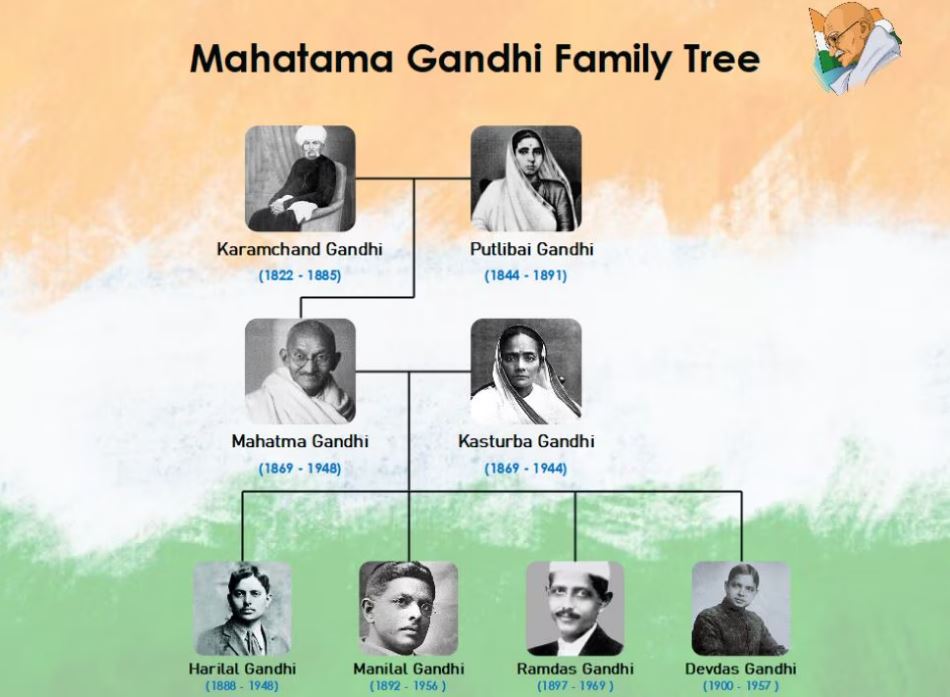
Ancestors and Early Family Roots (Porbandar to Rajkot)
You can understand Gandhi’s later choices much better if you first see where he came from.
Modh Bania roots and Diwan tradition
Mahatma Gandhi was born on 2 October 1869 in Porbandar, Gujarat, into a Gujarati Hindu Modh Bania (merchant) community. The Gandhis were originally grocers, but for several generations they had moved into administration, serving as ministers and prime ministers (Diwans) in small princely states in Kathiawar.
His own autobiography notes proudly that “for three generations from my grandfather, they have been prime ministers in several Kathiawad States.” Over time, this tradition of public service shaped the family’s sense of duty, honesty, and loyalty to the ruler — ideas that later turned into Gandhi’s loyalty to truth and conscience.
Uttamchand “Ota” Gandhi and Laxmiba
Gandhi’s grandfather, Uttamchand Gandhi (often called “Ota Gandhi”), served as Diwan of Porbandar and later of Junagadh. When palace intrigues forced him out of Porbandar, he took refuge in Junagadh. There, in a famous incident, he greeted the Nawab with his left hand. When asked why he was being “disrespectful”, he replied that his right hand was already pledged to Porbandar.
This small story, which Gandhi himself repeats, shows the family’s fierce sense of integrity and loyalty. Uttamchand’s wife, Laxmiba, is less written about, but she stands at the root of the modern Gandhi line as the mother of Karamchand “Kaba” Gandhi.
Karamchand “Kaba” Gandhi and Putlibai
Karamchand Uttamchand “Kaba” Gandhi (1822–1885) followed his father into public service and became Diwan of Porbandar and later of Rajkot and Wankaner. He had little formal education but was respected as a shrewd and fair administrator — kind and generous, but also quick‑tempered. He married four times; his first three wives either died young or left no surviving children. His fourth wife, Putlibai, was Gandhi’s mother.
Putlibai came from a deeply religious Vaishnava background. Gandhi remembered her as a woman of fasting, prayer, and devotion, who would visit temples daily and take vows for the health and success of family members. Her gentle piety strongly influenced his later experiments with truth, non‑violence, vegetarianism, and self‑discipline.
Gandhi’s siblings and early influences
Mohandas was the youngest of four children born to Karamchand and Putlibai: elder brothers Laxmidas and Karsandas, and sister Raliatbehn. Laxmidas worked as a government servant, Karsandas supported Gandhi’s education, and Raliatbehn helped raise the youngest boy.
From this home, young Mohan absorbed three powerful influences:
-
Administrative culture: watching his father and relatives serve as Diwans and officials taught him about power, justice, and corruption from inside the system.
-
Religious devotion: from his mother he absorbed a life of prayer, fasting, and moral vows.
-
Gujarati Hindu tradition: caste discipline, respect for elders, frugality, and a strong sense of family honour were part of his daily life.
Marriage to Kasturba Gandhi and Family Life
Mohan and Kasturba were married in May 1883 in Porbandar when he was just 13 and she was 14, in an arranged child marriage typical of their time. Gandhi later wrote with disarming honesty that, as children, they understood marriage mainly as new clothes, sweets, and family celebrations — not as a solemn commitment. Their first child, born in 1885, died soon after birth, a trauma that deeply affected them both.
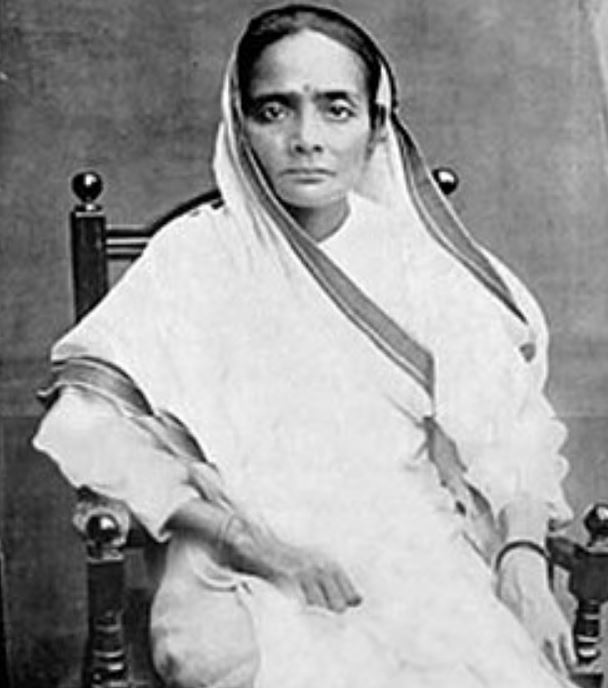
Over time, their relationship matured from a passionate, sometimes quarrelsome young couple into a strong partnership. Kasturba (often called “Ba”) was not formally educated, but she was mentally tough and independent. She joined Gandhi in South Africa, where he experimented with communal living at the Phoenix Settlement and Tolstoy Farm, and she took part in protests against unjust laws there. Later, in India, she was repeatedly jailed for participating in satyagraha campaigns. Today, India observes National Safe Motherhood Day on her birthday, 11 April, to honour her contribution.
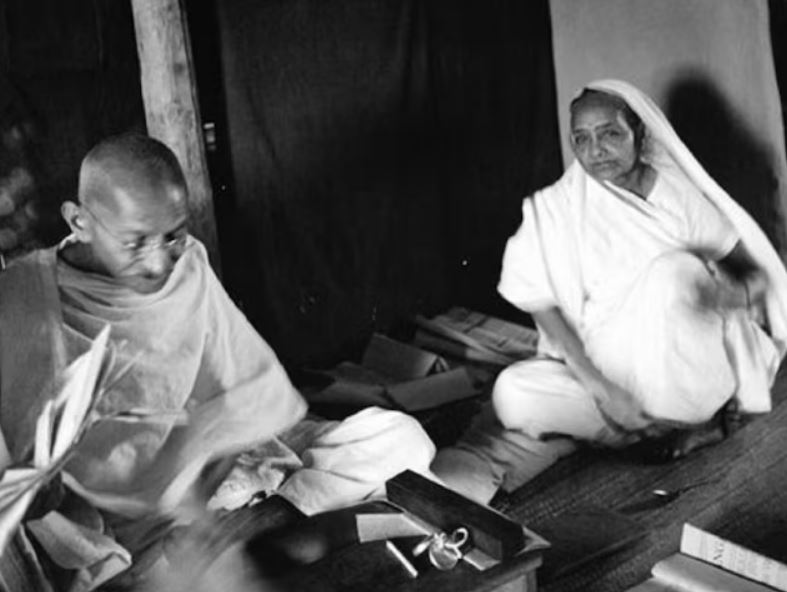
Family life for the Gandhis centred around ashrams — first in South Africa, then at Sabarmati and Sevagram in India. Life there was simple and strict: shared chores, early rising, manual labour, spinning, and prayer. The children grew up as part of a large ashram “family” rather than in a private home, which later created tension. Gandhi’s decision to adopt brahmacharya (celibacy) from 1906, even while married, shaped the emotional climate of the household. His sons often felt that their father belonged more to the nation than to them.
Kasturba, meanwhile, carried a heavy load — supporting her husband’s ideals, raising four sons in a Spartan environment, managing the emotional fallout of Gandhi’s choices, and facing prison and ill‑health. She died in detention at the Aga Khan Palace in Pune in 1944, with Gandhi by her side.
Mahatma Gandhi’s Four Sons: The Core Family Tree
Gandhi and Kasturba’s four surviving sons each reacted differently to their father’s towering personality. Their lives form the “trunk” of the modern Gandhi family tree.
Harilal Gandhi (1888–1948) – the rebellious eldest
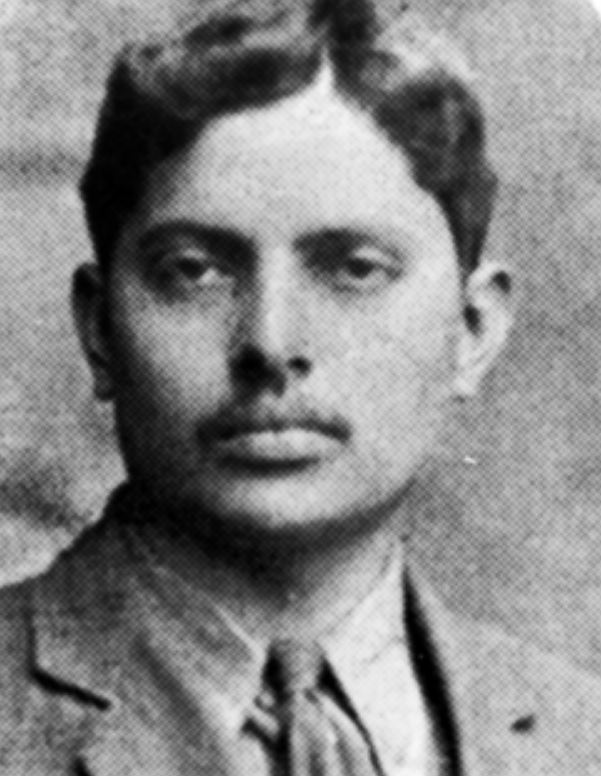
Harilal Mohandas Gandhi, born in 1888 in India, was Gandhi’s eldest son. As a young man he took part in satyagraha campaigns and was jailed multiple times between 1908 and 1911, earning the nickname “Chhote (Little) Gandhi”. But his biggest dream was to study law in England like his father. Gandhi refused, believing Western education was not necessary for India’s freedom struggle. Their clash over this issue poisoned the relationship.
In 1906, Harilal married Gulab Gandhi. They had five children: Rani (also called Rami or Ranibehn), Manu, and three sons — Kantilal, Rasiklal, and Shantilal. The two younger sons died early. Harilal’s wife died in the 1918 influenza pandemic, and he never fully recovered from the loss. He drifted into alcoholism, financial trouble, and public scandals. In 1936, he converted to Islam, taking the name Abdullah Gandhi, then, at Kasturba’s request, returned to Hinduism through the Arya Samaj later that same year.
Harilal and Gandhi were often estranged. Harilal appeared at his father’s funeral in such poor condition that few recognised him. He died of tuberculosis in a Bombay municipal hospital in June 1948, only a few months after Gandhi’s assassination.
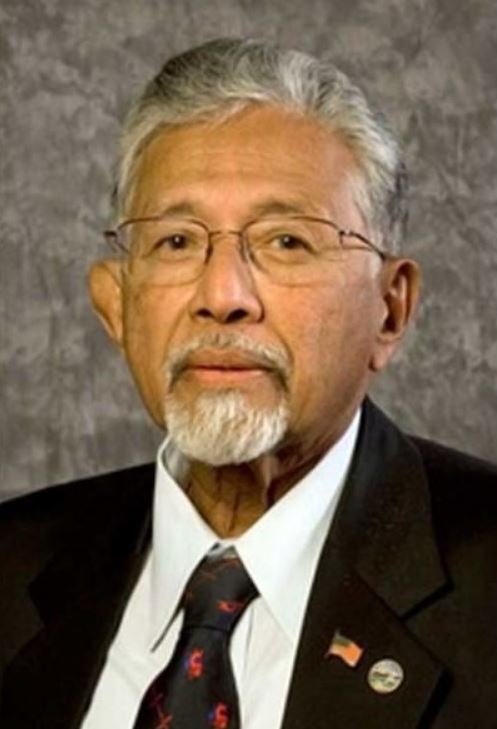
From Harilal’s line, one of the most visible descendants is Dr. Shanti Gandhi, son of Kantilal. Shanti became a cardiovascular surgeon in the US, settling in Topeka, Kansas, and later served as a Republican member of the Kansas House of Representatives from 2013 to 2015.
Manilal Gandhi (1892–1956) – the South Africa pillar
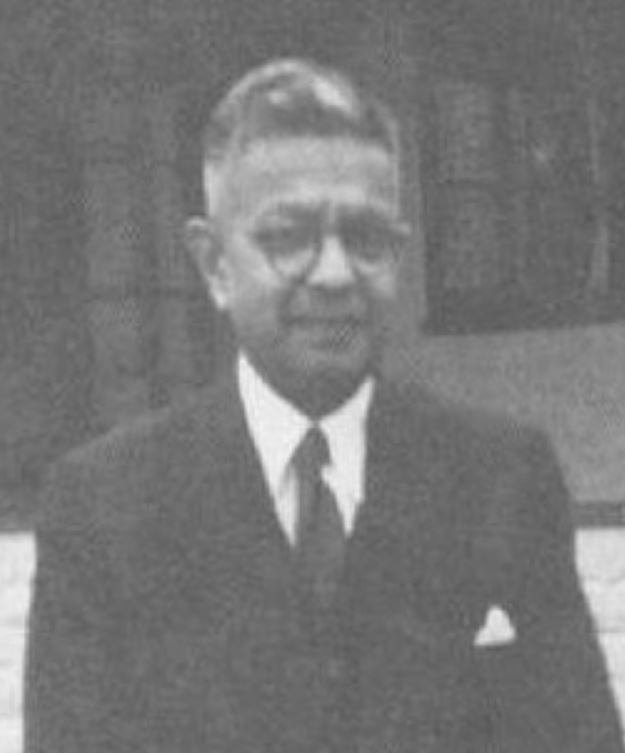
Manilal Mohandas Gandhi, born in 1892, is often seen as the son who most faithfully carried his father’s public mission. He spent much of his life in South Africa, where he took over as editor of Indian Opinion, the Gujarati‑English weekly founded by Gandhi at Phoenix Settlement. He participated in multiple satyagrahas, including the famous 1930 Salt March in India, for which he was jailed.
In 1927 he married Sushila Mashruwala. They had three children: elder daughter Sita (later Sita Dhupelia, born 1928), son Arun Manilal Gandhi (1934–2023), and younger daughter Ela Gandhi (born 1940).
-
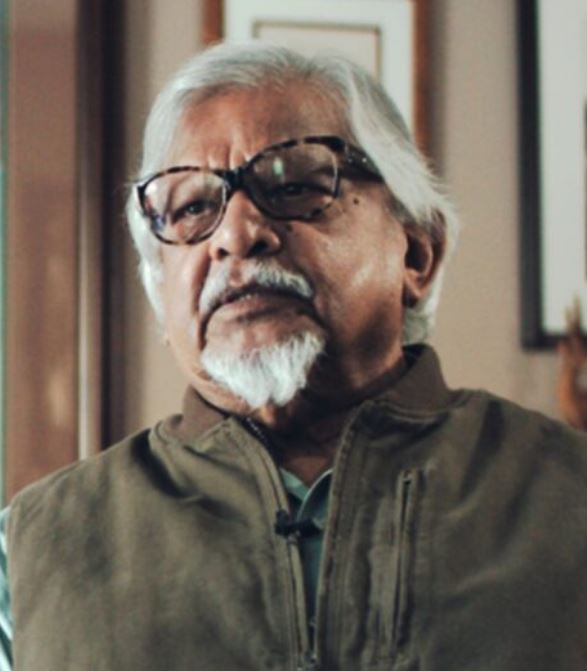
Arun Manilal Gandhi became a noted writer and peace activist. He founded the M.K. Gandhi Institute for Nonviolence in the US and later the Gandhi Institute at the University of Rochester. He and his wife Sunanda had two children, Tushar and Archana.
-
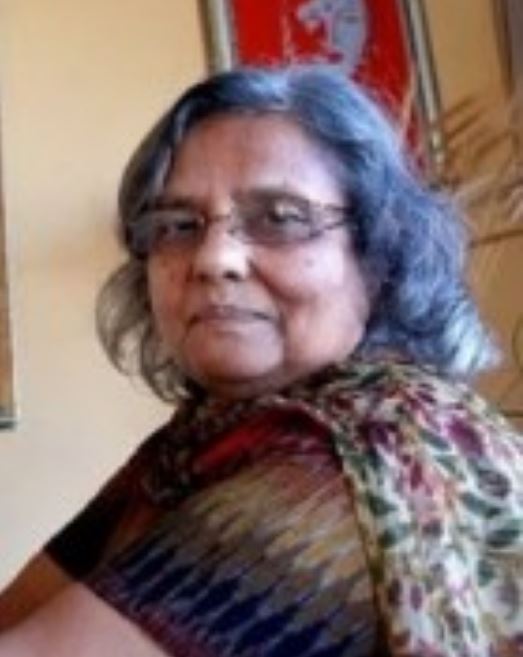
Ela Gandhi remained in South Africa and became a leading anti‑apartheid activist, serving as a Member of Parliament for the African National Congress from 1994 to 2004, and later founding the Gandhi Development Trust.
-
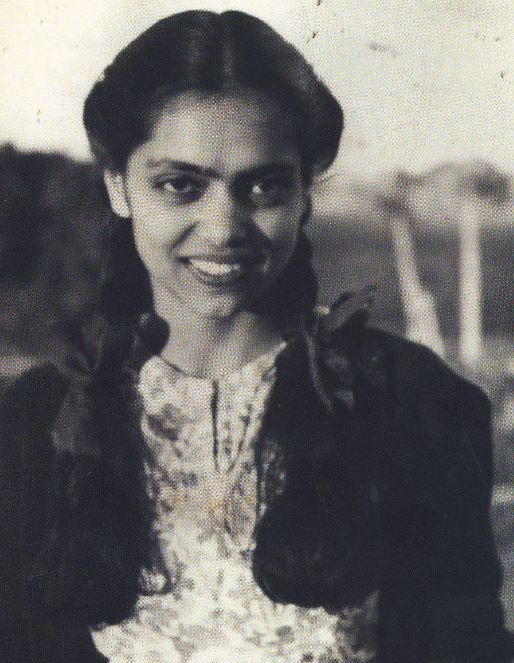
Sita’s line includes Kirti Menon, an activist and education policy expert based in Johannesburg, who serves as Senior Director at the University of Johannesburg and chairs the Gandhi Centenary Committee.
Ramdas Gandhi (1897–1969) – the quieter freedom fighter
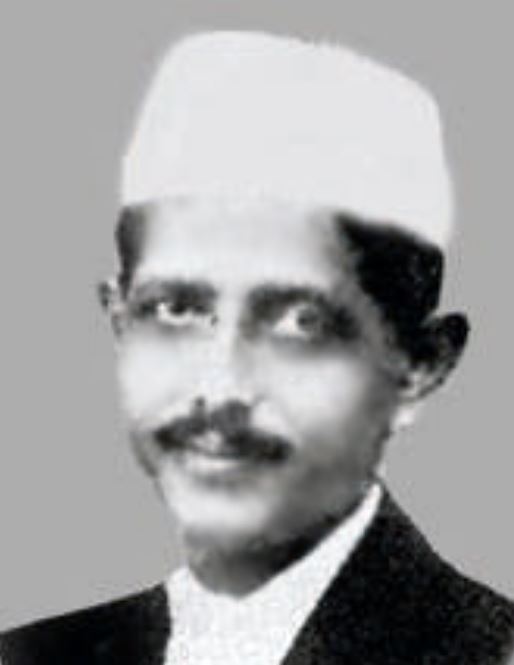
Ramdas Gandhi, born in South Africa in 1897, was Gandhi’s third son. He took part in the freedom movement and joined several of his father’s marches and jail terms, but he never enjoyed the ascetic, communal lifestyle of the ashrams. Multiple imprisonments damaged his health, and he preferred a more private life outside politics, though he remained deeply loyal to his father.
Ramdas married Nirmala. They had three children: Sumitra, Kanu, and Usha.
-
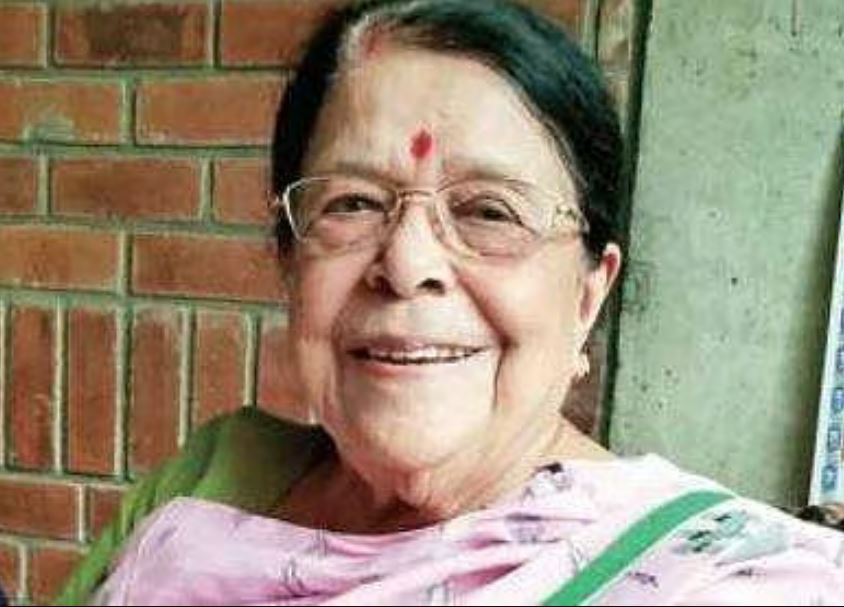
Sumitra Gandhi Kulkarni (born 1929 at Sabarmati Ashram) studied history and law, joined the Indian Administrative Service, and later became a Member of the Rajya Sabha (1972–1978).
-
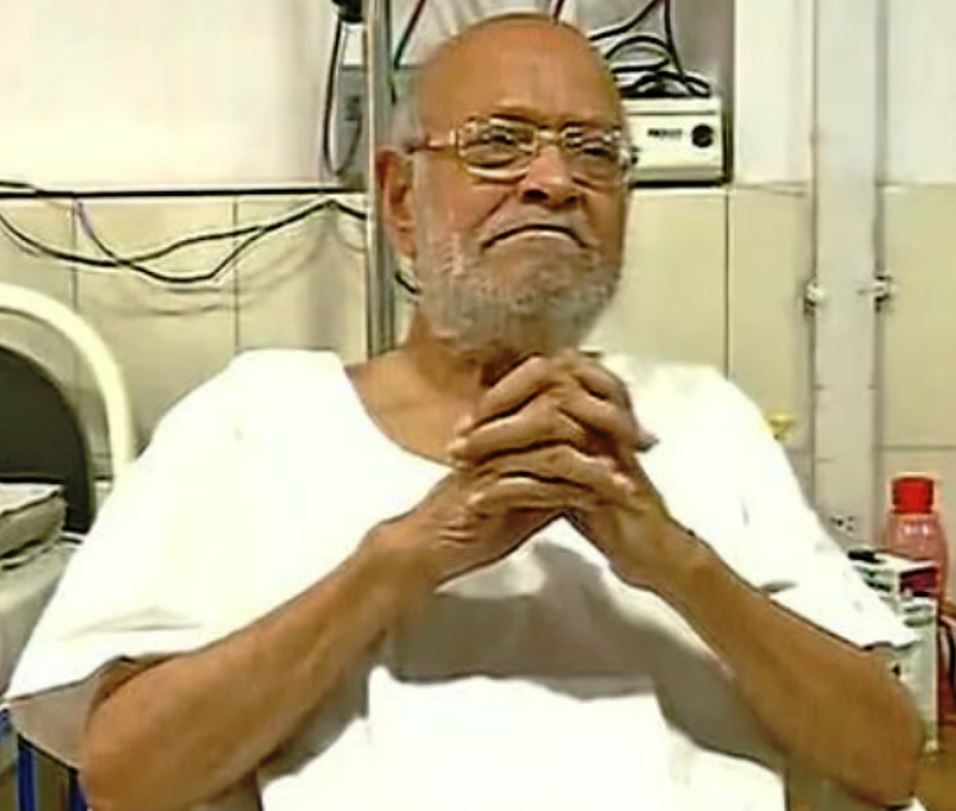
Kanu Gandhi (the younger, b.1928) became a scientist who worked in the US for NASA and the US Department of Defense on aircraft design.
-
Usha Gandhi had sons Anant and Sanjay; Anant’s sons Karan and Arjun represent another branch of Gandhi’s great‑grandchildren.
Ramdas was the son chosen to light Gandhi’s funeral pyre in 1948, fulfilling his father’s wish.
Devdas Gandhi (1900–1957) – the close companion and journalist
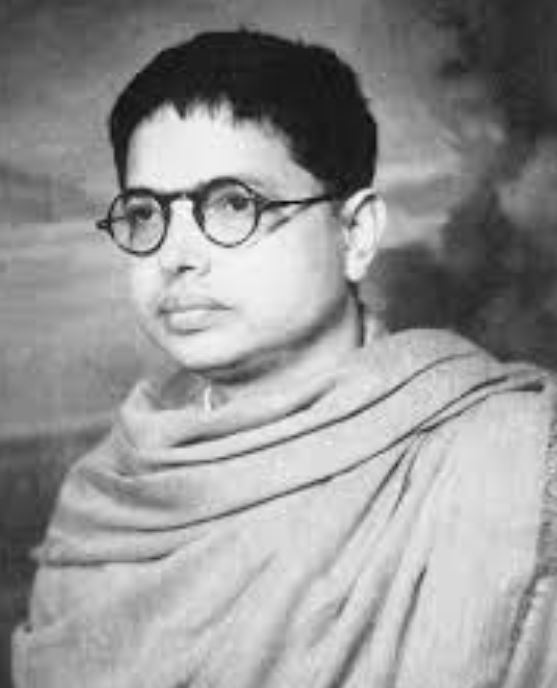
The youngest son, Devdas Mohandas Gandhi, was born in 1900 in the Colony of Natal (now in South Africa). He moved back to India as a young man and spent long periods at his father’s side, often serving as his secretary. Devdas became a prominent journalist, eventually editor of the Hindustan Times and a key figure in the spread of Hindi in South India.
In a story that mirrors Gandhi’s own caution about inter‑faith marriage, Devdas fell in love with Lakshmi, the daughter of C. Rajagopalachari (Rajaji), a close associate of Gandhi and later the last Governor‑General of India. Because Lakshmi was only 15 and Devdas 28, both fathers insisted they wait five years without meeting. They finally married in 1933, with full blessing on both sides.
Devdas and Lakshmi had four children:
-
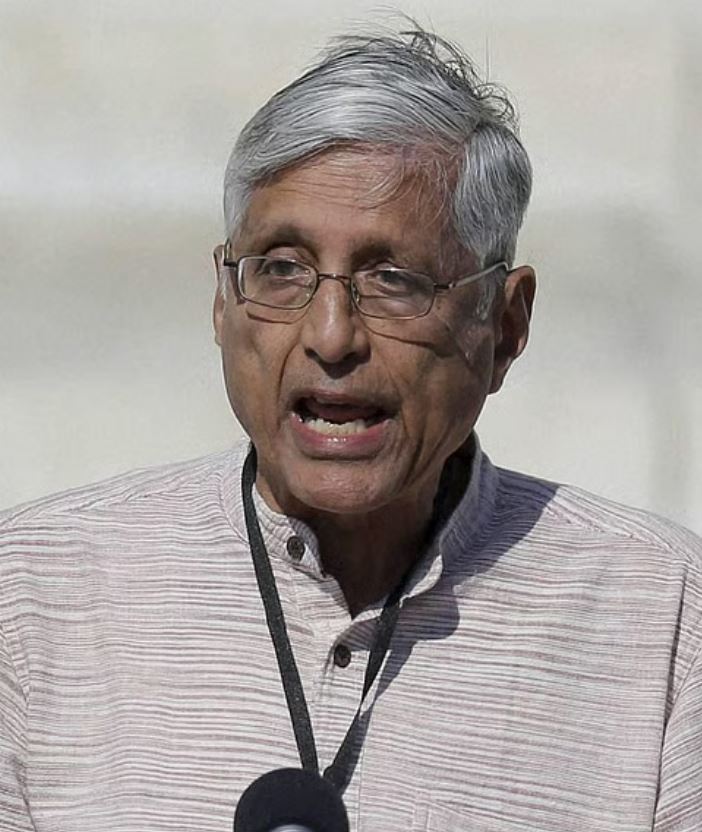
Rajmohan Gandhi (b. 1935) – historian, biographer, and peace activist who has written major works on Gandhi, Patel, Rajaji, and others, and served in the Rajya Sabha (1990–1992).
-
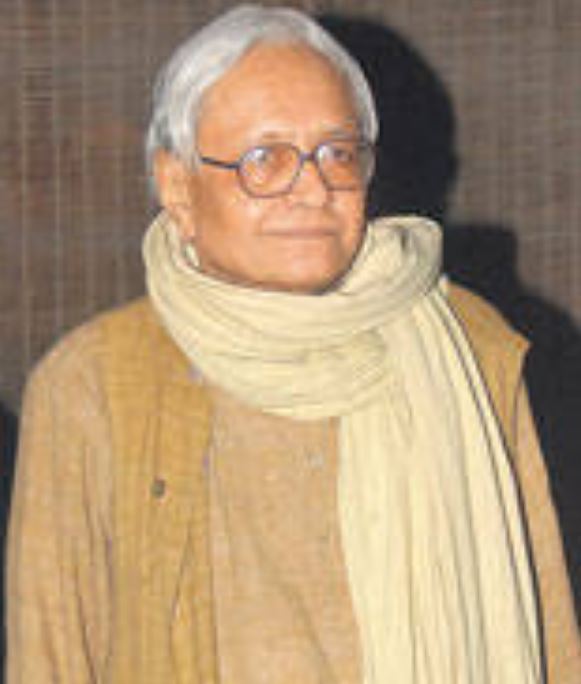
Ramchandra Gandhi (1937–2007) – philosopher who founded the philosophy department at the University of Hyderabad and taught at several Indian and international universities.
-
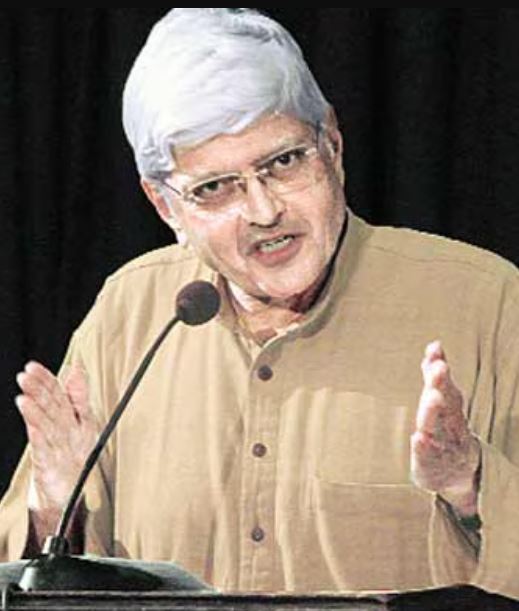
Gopalkrishna Gandhi (b. 1945) – diplomat and administrator; he served as India’s High Commissioner to South Africa and Sri Lanka, Secretary to the President of India, and later as the 22nd Governor of West Bengal (2004–2009).
-
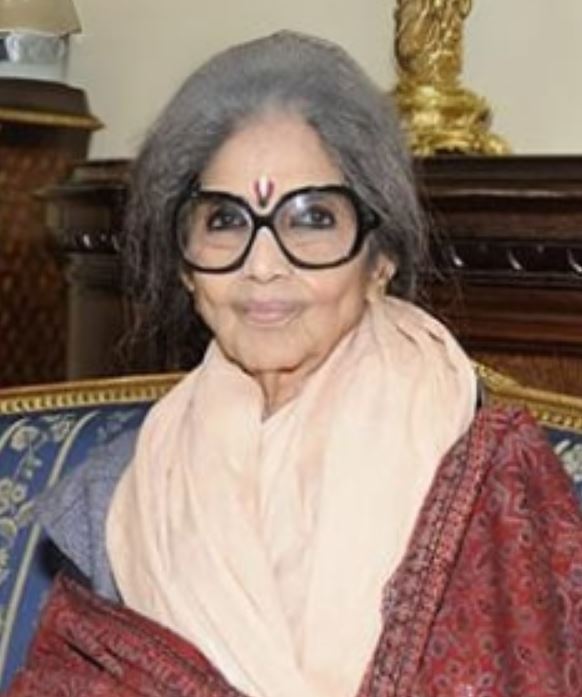
Tara Gandhi Bhattacharjee (b. 1934) – humanitarian and author who has devoted her life to Gandhi Smriti and Darshan Samiti, and to work with rural women and children through the Kasturba Gandhi National Memorial Trust.
The four sons at a glance
| Son | Birth–Death | Key role / location | Notable children / descendants (examples) |
|---|---|---|---|
| Harilal | 1888–1948 | Early satyagrahi, later rebellion & hardship in India | Son Kantilal; great‑grandson Dr. Shanti Gandhi, US heart surgeon & Kansas legislator |
| Manilal | 1892–1956 | Led Indian Opinion & activism in South Africa | Children Sita, Arun, Ela; great‑grandchildren Tushar Gandhi, Kirti Menon |
| Ramdas | 1897–1969 | Freedom movement, more private later life in India | Daughter Sumitra Gandhi Kulkarni (IAS, Rajya Sabha); son Kanu (scientist) |
| Devdas | 1900–1957 | Journalist, editor of Hindustan Times, close aide to Gandhi | Sons Rajmohan (historian), Gopalkrishna (Governor), Ramchandra (philosopher); daughter Tara |
Grandchildren and Great‑Grandchildren: Notable Figures
There are too many Gandhi descendants to list every individual, but a few branches are especially visible in public life. If you want to remember the tree, it helps to think in lines: Harilal’s, Manilal’s, Ramdas’s, and Devdas’s.
From Manilal’s line: South African activists and global peace workers
Arun Manilal Gandhi (1934–2023) grew up in South Africa and India and became a powerful voice for non‑violence. With his wife Sunanda, he co‑founded the M.K. Gandhi Institute for Nonviolence in Memphis in 1991, later moved to Rochester, New York. He led “Gandhi Legacy Tours” of India to introduce people from around the world to sites linked with Gandhi’s life. Arun’s work brought Gandhian ideas into American schools, churches, and community groups.
Arun and Sunanda had two children, Tushar and Archana.
-
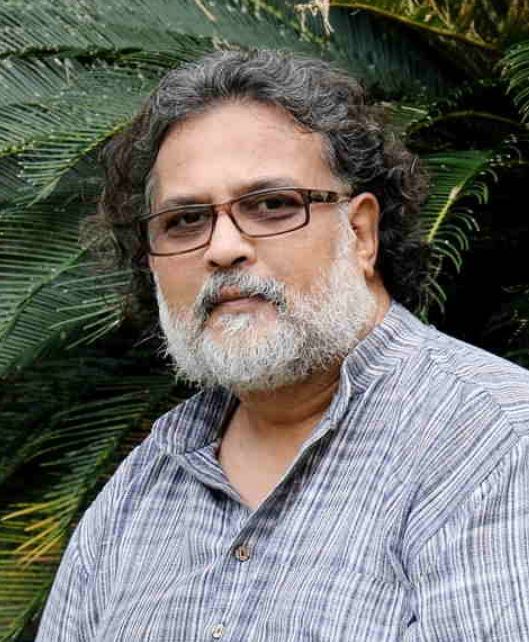
Tushar Arun Gandhi (b. 1960) lives in Mumbai. He is an author and activist, President of the Mahatma Gandhi Foundation, and Director of the Gandhi Research Foundation in Jalgaon. He led the 75th‑anniversary reenactment of the Dandi March in 2005 and has campaigned on issues like lynching, communal violence, and malnutrition. He wrote Let’s Kill Gandhi and The Lost Diary of Kastur, My Ba. Tushar and his wife Sonal have two children, Vivan and Kasturi, both raised in Mumbai.
-
Ela Gandhi (b. 1940) is one of the most respected Gandhian figures in South Africa. She was banned from political activity during apartheid and placed under house arrest for about nine years, yet continued underground activism. After 1994, she served as an ANC Member of Parliament for a decade and later founded the Gandhi Development Trust, working on non‑violence, community development, and inter‑faith dialogue.
Through Manilal’s daughter Sita, another strong public figure emerges:
-
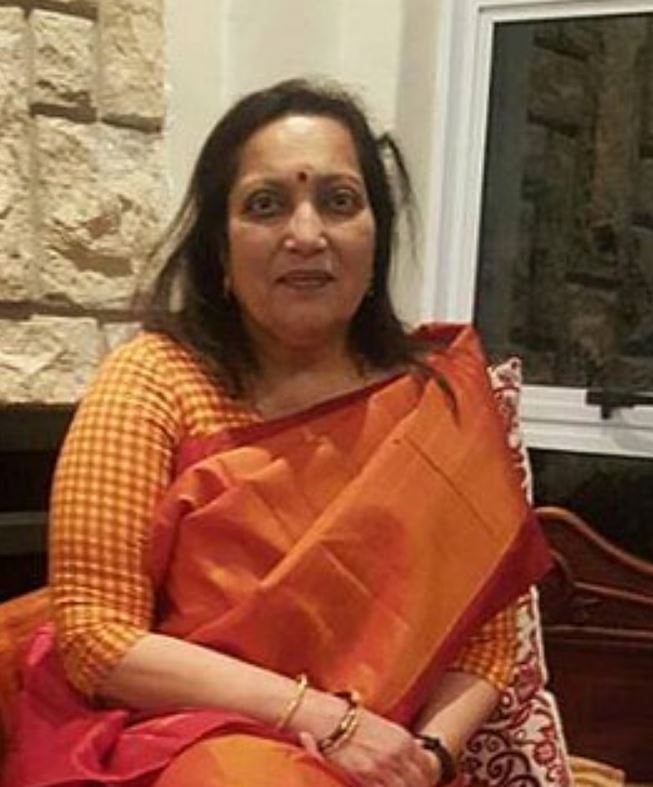
Kirti Menon (b. 1959), Sita’s daughter, is an educationist and reformer in South African higher education. She is Senior Director at the University of Johannesburg and chairs the Gandhi Centenary Committee. She has worked to shape national policy on quality and access in universities, carrying forward a Gandhian concern for education and equity.
From Devdas’s line: scholars, diplomats, and culture carriers
Devdas and Lakshmi’s children form perhaps the most academically and politically visible branch of the family.
-
Rajmohan Gandhi (b. 1935) is a historian, biographer, and peace activist. He has written acclaimed biographies of Gandhi, Vallabhbhai Patel, Rajaji, and others, and has taught at institutions such as the University of Illinois at Urbana‑Champaign and IIT Gandhinagar. He also served in the Rajya Sabha and has been involved in India–Pakistan reconciliation efforts.
-
Gopalkrishna Gandhi (b. 1945) served as a diplomat (High Commissioner to South Africa and Sri Lanka) and as Secretary to the President of India before becoming Governor of West Bengal (2004–2009). He has written widely on politics, ethics, and literature, and often reflects on his grandfather’s legacy in modern India.
-
Ramchandra Gandhi (1937–2007) was a philosopher who taught at several universities and founded the philosophy department at the University of Hyderabad. He explored ethics, religion, and the Indian philosophical tradition, often linking them back to Gandhi’s ideas.
-
Tara Gandhi Bhattacharjee (b. 1934) has dedicated decades of her life to Gandhi Smriti and Darshan Samiti and to the Kasturba Gandhi National Memorial Trust, focusing on rural women and children. She often speaks about Gandhi’s message in India and abroad, emphasising simplicity and compassion.
From Ramchandra’s line comes another globally known academic:
-
Leela Gandhi (b. 1966), Ramchandra’s daughter, is a leading literary and cultural theorist, best known for her work in postcolonial theory. She is John Hawkes Professor of Humanities and English and Director of the Pembroke Center at Brown University in the US. Her work explores ethics, friendship, and anti‑colonial thought, and she frequently reflects on how Gandhi’s ideas can be re‑read in a global context.
From Ramdas’s line: politics, administration, and business
Ramdas and Nirmala’s daughter Sumitra Gandhi Kulkarni (b. 1929) combined public service and politics. After studying history and law, she joined the Indian Administrative Service and later resigned to enter politics at the persuasion of Indira Gandhi. She served as a Rajya Sabha member from 1972 to 1978, later joining the Janata Party after the Emergency.
Sumitra married Gajanan Raghunath Kulkarni, a former dean of IIM Ahmedabad. They have twin sons, Shriram and Shrikrishna, and a daughter, Sonali.
-
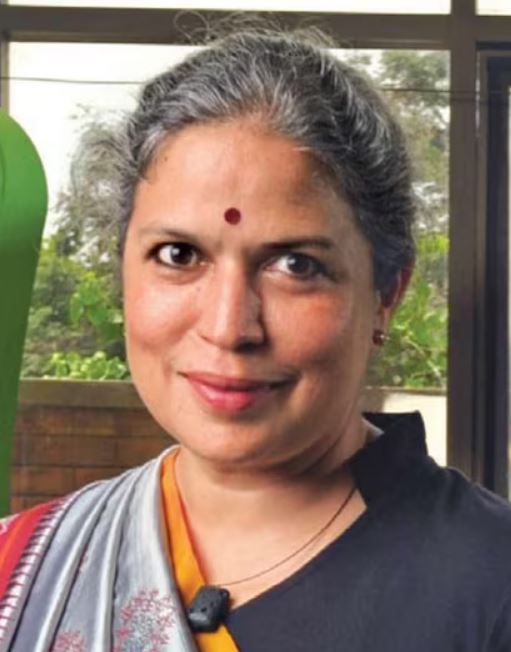
Sonali Kulkarni became CEO of FANUC India and married business leader Ravi Venkatesan.
-
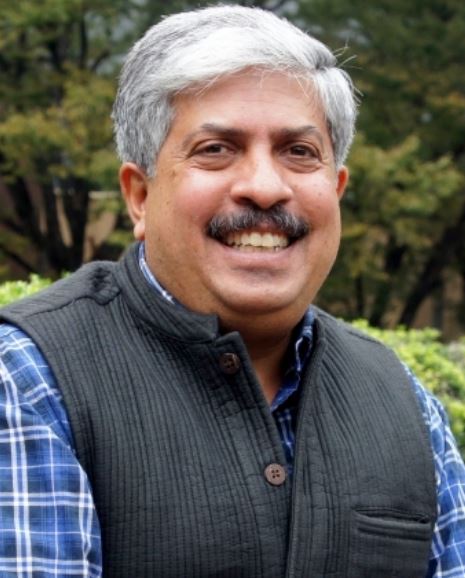
Shrikrishna Kulkarni has held senior roles such as COO of Panasonic India and director of Cybernetic Research Labs, and serves as chairperson of IIM Calcutta and trustee of Gujarat Vidyapith, the university Gandhi founded.
Ramdas’s son Kanu Gandhi (the scientist) worked in aerospace engineering in the US, contributing to projects for NASA and the US Department of Defense. Usha’s children and grandchildren continue the line mostly outside public attention.
From Harilal’s line: an American surgeon‑politician
From Gandhi’s troubled eldest son Harilal comes one particularly public great‑grandson:
-
Dr. Shanti Gandhi (b. 1940), son of Kantilal and Saraswati, migrated to the US in 1967, became a cardiovascular and thoracic surgeon, and later entered politics. He served as a Republican member of the Kansas House of Representatives (District 52) from 2013 to 2015. During his campaign, he even asked the media not to mention his connection to Gandhi, wanting to be judged as a doctor and neighbour, not as a famous man’s descendant.
This branch also includes lesser‑known grandchildren and great‑grandchildren living in India and abroad, many of whom lead completely ordinary, private lives far away from politics.
Great‑grandchildren carrying the Gandhian spirit
If you look at the great‑grandchildren and beyond, certain themes stand out: non‑violence, education, and public service.
-
Tushar Gandhi uses writing, activism, and public campaigns to apply Gandhian ethics to issues like hate speech, lynching, and communal violence.
-
Ela Gandhi runs programmes on non‑violence, inter‑faith dialogue, and community development in South Africa.
-
Leela Gandhi and other academics reinterpret Gandhi’s ideas for new generations of students worldwide.
-
Kirti Menon works on expanding access and quality in South African higher education.
-
Shrikrishna and Sonali Kulkarni operate in the corporate world but remain connected to institutions founded by or associated with Gandhi, such as Gujarat Vidyapith.
Through these varied careers, you can see how Gandhi’s legacy has moved from the battlefield of freedom struggle into classrooms, parliaments, boardrooms, NGOs, and universities.
Living Descendants Today & Global Legacy
As of the mid‑2020s, Gandhi’s descendants are scattered across the world:
-
In India: branches of the family live in Mumbai, Pune, Ahmedabad, Jalgaon, Delhi, and elsewhere. Tushar Gandhi and his family live in Mumbai; some of Devdas’s descendants are based in Delhi; the Kulkarni branch is active in Maharashtra and Gujarat.
-
In South Africa: Manilal’s and Sita’s lines, including Ela Gandhi and Kirti Menon, live mainly in Durban and Johannesburg, maintaining strong links to the Phoenix Settlement and Gandhi’s South African legacy.
-
In the US and UK: descendants such as the late Arun Gandhi and his children, as well as Dr. Shanti Gandhi and some of Kanu (scientist) Gandhi’s relatives, have spent significant portions of their lives in North America and Europe.
What are they doing now?
Many Gandhi descendants lead quiet professional lives, but a number remain publicly active:
-
Activism & social work: Tushar Gandhi (India), Ela Gandhi (South Africa), Tara Gandhi Bhattacharjee (India), and Kirti Menon (South Africa) all work on issues like non‑violence, education, social justice, and community development.
-
Academia & ideas: Rajmohan and Leela Gandhi write and teach on history, ethics, and postcolonial studies.
-
Public service & diplomacy: Gopalkrishna Gandhi’s diplomatic and gubernatorial career, as well as Sumitra Kulkarni’s time in Parliament and in the IAS, show another channel of service.
-
Business & management: Sonali and Shrikrishna Kulkarni occupy senior roles in Indian industry and institutional governance, linking Gandhian institutions with the modern economy.
The burden of the “Gandhi” name
Carrying Gandhi’s surname is both honour and weight. Many descendants have spoken openly about the pressure to “live up” to Bapu’s moral standards. For example, Vivan and Kasturi Gandhi — Tushar’s children — have described how classmates automatically turn to them whenever Gandhi is discussed in class, and how that makes them constantly reflect on their own choices.
Some descendants, like Shanti Gandhi, have chosen to underplay the connection in their public life, asking the media not to over‑highlight their ancestry. Others embrace it as a tool for advocacy or education. Almost all of them, however, insist that being a Gandhi does not make them morally superior; it simply gives them a legacy they feel responsible to handle carefully.
How many generations and how many people?
From the documented family tree, there are clear, named members from Gandhi’s grandparents (first generation in this counting) down to at least the sixth generation, and references to a seventh. With each generation, the family has become more geographically spread out and more diverse in profession and lifestyle.
There is no official public tally of living descendants, but between Harilal’s, Manilal’s, Ramdas’s, and Devdas’s lines — and the branches of Gandhi’s brothers and cousins — it is reasonable to say that the Gandhis now form a large extended clan, with many dozens of living descendants and likely well over a hundred worldwide. What unites many of them is not politics, but a quiet, personal effort to interpret Gandhi’s values in their own way.
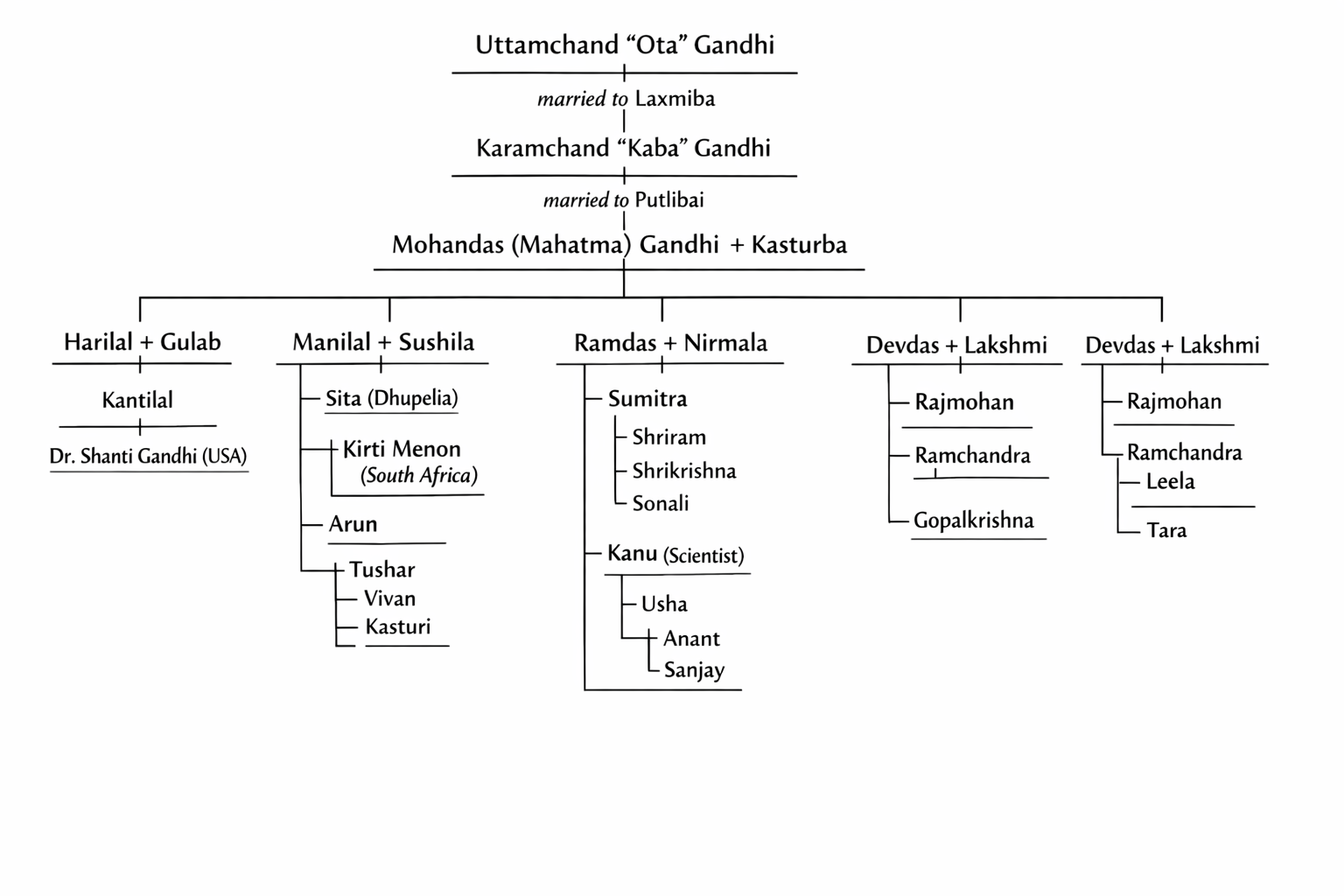
Visual Gandhi Family Tree
Gandhi’s Complex Relationship with His Family
Many people admire Gandhi as a moral giant, but when you look at his family life, the story becomes much more complicated — and, in some ways, painful.
Brahmacharya and emotional distance
From 1906 onwards, Gandhi committed himself to brahmacharya — celibacy — even though he was married and had young children. He saw this as necessary for his spiritual growth and for dedicating himself entirely to public service. For his family, it often meant a lack of normal warmth, privacy, and emotional time with their father.
Life in the ashrams was disciplined to the point of harshness: limited possessions, communal sleeping spaces, strict rules around diet, sex, and even clothing. Gandhi believed he had to apply the same rules to his sons that he applied to himself, refusing to make exceptions just because they were his children. His sons later spoke of resenting being treated more like disciples than like children.
Harilal’s rebellion
No relationship shows this tension more clearly than that with Harilal. Gandhi blocked his plan to study law in England, refused to use his influence to get him a job or a “comfortable” life, and publicly disapproved of his choices. Harilal, in turn, accused his father of loving the nation more than his own son.
Harilal’s later years — alcoholism, multiple arrests, conversion to Islam and return to Hinduism — became a kind of tragic mirror image of his father’s fame. Gandhi loved him deeply but often responded in a stern, principled way instead of with the soft support Harilal longed for. Gandhi’s granddaughter Nilam Parikh (Harilal’s granddaughter) later wrote Gandhiji’s Lost Jewel: Harilal Gandhi, trying to reclaim his lost dignity.
Sacrifices of Kasturba and the sons
Kasturba and the sons paid a heavy price for Gandhi’s public mission:
-
She spent long periods without him, raised children in austere conditions, and was jailed repeatedly.
-
The sons were denied formal higher education abroad, even though Gandhi himself had studied in London.
-
Many decisions about their lives — careers, marriages, where to live — were shaped by Gandhi’s ideals and public demands rather than by their own preferences.
Some descendants have openly said that, while they respect Bapu’s greatness, they would not wish his exact style of parenting on anyone today. This honesty makes the Gandhi story more human: he was capable of enormous love and sacrifice, but also of rigidity and emotional blind spots.
Adopted “daughters” and the ashram family
At the same time, Gandhi’s idea of family was wider than blood. He treated many young women and men at his ashrams as “sons” and “daughters”, sharing their work and struggles. Some of these relationships — especially his late‑life “brahmacharya experiments” involving close physical proximity and shared sleeping arrangements with female companions — remain controversial and painful even within the family.
For you as a reader, it is important to hold both sides together: Gandhi the loving, playful grandfather to many children, and Gandhi the demanding father whose ideals sometimes hurt those closest to him. His descendants today often speak about this complexity instead of hiding it.
Interesting Facts, Myths & FAQs (2026 Update)
Here are some quick answers you can reuse in your own writing or videos.
How many children did Mahatma Gandhi have?
Gandhi and Kasturba had four surviving sons:
-
Harilal (1888–1948)
-
Manilal (1892–1956)
-
Ramdas (1897–1969)
-
Devdas (1900–1957)
They also had an earlier child born in 1885 who died shortly after birth.
Is Rahul Gandhi related to Mahatma Gandhi?
No. Rahul Gandhi belongs to the Nehru–Gandhi family, descended from Jawaharlal Nehru. His grandfather Feroze Gandhi was originally Feroze Ghandy, who changed the spelling of his surname to “Gandhi”, but he has no blood or marital relation to Mahatma Gandhi’s family. The similarity of surnames often confuses people, especially outside India, but the two “Gandhi” families are separate.
Who is the eldest living descendant of Mahatma Gandhi?
There is no official public list of all living Gandhi descendants, so nobody can say with certainty who is the single eldest living member. Some of the oldest publicly known descendants in the mid‑2020s include:
-
Sumitra Gandhi Kulkarni (b. 1929), Ramdas Gandhi’s daughter and former Rajya Sabha member.
-
Tara Gandhi Bhattacharjee (b. 1934), Devdas Gandhi’s daughter and long‑time Gandhian worker.
However, there may be other, older relatives in branches that live privately and are not in the media.
What happened to Harilal Gandhi?
Harilal, Gandhi’s eldest son, initially joined the freedom struggle and went to jail several times as a satyagrahi. But after repeated clashes with his father, he broke ties with the family in 1911 and drifted into personal and financial trouble. He converted to Islam as “Abdullah Gandhi” in 1936 and later returned to Hinduism. His wife died of influenza in 1918, and two of his sons died young.
He struggled with alcoholism and illness, appeared in a very neglected state at Gandhi’s funeral, and died of tuberculosis in a Bombay municipal hospital on 18 June 1948. His story is now seen as a reminder that great public virtue does not automatically guarantee happiness at home.
Are there any Gandhi descendants in politics today?
Yes, though not on the same national scale as their famous grandfather. Examples include:
-
Ela Gandhi – served as a Member of Parliament in South Africa (1994–2004) with the African National Congress.
-
Sumitra Gandhi Kulkarni – served in the Rajya Sabha (1972–1978) and was earlier in the IAS.
-
Rajmohan Gandhi – served as a Rajya Sabha member and has been active in politics and civil society.
-
Dr. Shanti Gandhi – served as a Republican member of the Kansas House of Representatives (2013–2015).
Many others work in public‑facing roles in civil society, education, and business rather than electoral politics.
Conclusion: A Quiet but Powerful Legacy
When you step back and look at the full Gandhi family tree, you don’t see a single, perfectly “Gandhian” clan. You see something more real: a large, scattered family whose members have argued, stumbled, achieved, and grown in many different directions. There are painful stories, like Harilal’s; disciplined lives of service, like Manilal’s; and more “normal” modern paths in business, medicine, and academia.
Yet a few threads run strongly through this tree: honesty, public service, and a stubborn belief in the power of ideas. From Uttamchand’s bold left‑hand salute to the Nawab, to Tushar Gandhi’s campaigns against lynching, to Leela Gandhi’s classrooms at Brown University, the family keeps returning to questions of justice, dignity, and how human beings should treat one another.
If you want to go deeper, you can explore the writings and work of descendants themselves: Rajmohan Gandhi’s biographies, Leela Gandhi’s books on ethics and postcolonial thought, Tushar Gandhi’s Let’s Kill Gandhi, Ela Gandhi’s Gandhi Development Trust, Tara Gandhi’s talks, and the Gandhi Research Foundation in Jalgaon. That way, you are not just reading about “Bapu” as a statue or a slogan — you are seeing how his own family has struggled.