
Last updated on: June 4, 2026
The honest answer is that there is no single “best person in the world.” But when you look at hard data, history, philosophy, and psychology side by side, a small group of people clearly stand out – and even more important, the traits that made them great are traits you can start building in your own life today.
The Question That Has Obsessed Humanity
Imagine this: you are sitting in a quiet room with a door that can open into any moment in history.
A guide tells you, “You may meet one human being from all of time. You can ask them one question. Who do you choose?”
Do you pick a spiritual teacher like Jesus or the Prophet Muhammad, a scientist like Newton or Einstein, a moral hero like Gandhi or Mandela, or a creative mind like Leonardo da Vinci?
That simple “who” question hides something much bigger: what do you think greatness really is?
In 2026, this question feels more urgent than ever.
You live in an age of artificial intelligence, where machines can write essays, generate images, and even pass exams – but cannot love, forgive, or die for a cause. You live in a time of political polarization, where each side has its own “heroes” and “villains.” You live in a climate crisis, where the decisions of a few leaders and inventors shape the future of billions of people who never voted for them.
In this world, your choice of “the best person in the world” is also a mirror of your deepest values.
Searches and rankings try to answer this question with data.
MIT’s Pantheon project, which measures global fame using Wikipedia across many languages, currently ranks the Prophet Muhammad first in historical importance, followed by Gautama Buddha and Isaac Newton.
Computer scientists Steven Skiena and Charles Ward used a Google‑style method on Wikipedia pages and found Jesus Christ at number one, with Napoleon second and Muhammad fourth.
The classic book The 100: A Ranking of the Most Influential Persons in History by Michael H. Hart also places Muhammad first, ahead of Isaac Newton and Jesus.
But influence alone is not enough. Some of the “most influential” people in history spread terror, not compassion.
So, in this article, you and I will go deeper.
You will see:
-
A clear, simple model with 5 dimensions of greatness.
-
Real rankings and data tables from major sources.
-
Deep dives into 12 standout contenders for “greatest human being ever” across eras and cultures.
-
Psychology and philosophy that explain why these people moved the world.
-
A set of habits you can use to grow closer to your own best self.
By the end, you will not have a single name.
You will have something more practical: a path.
What Does “Best” Even Mean?
Before you can argue about who is the best person in the world, you and I have to agree on what “best” actually means.
If you only look at influence, Genghis Khan, Hitler, or other conquerors would rank very high.
If you only look at kindness, quiet caregivers who never appear in books might win.
So we need a model that can hold both impact and inner character.
Here is a simple 5‑dimensional way to think about greatness.
A 5‑Dimension Model of Greatness
| Dimension | What It Means in Plain Language | How We Can Measure It (imperfectly) | Examples of Metrics / Tools |
|---|---|---|---|
| Influence & Legacy | How far and how long a person’s impact spreads | Global fame, number of followers, mentions across cultures | Pantheon HPI, Wikipedia reach, books, followers |
| Moral Virtue | How deeply they tried to live with compassion, honesty, courage | Biographies, actions in times of power, how they treated opponents | Ethical analysis, testimonies, historical records |
| Intellectual Impact | How much they changed the way humans understand reality | Foundational ideas, theories, inventions, and their use today | Citations, scientific revolutions, core texts |
| Societal Transformation | How many lives improved or systems changed because of them | Laws, reforms, institutions, social movements | Independence movements, civil rights laws, public health data |
| Personal Resilience | How they responded to suffering, failure, and risk | Prison, exile, illness, rejection – and what they did next | Life histories, letters, recorded struggles |
This is not a “perfect formula.”
It is a simple map so you and I can talk with more clarity.
Backing it with Psychology
Modern positive psychology does not try to rank the best person in the world, but it does try to understand what a “good life” looks like.
Martin Seligman’s widely used PERMA model says lasting well‑being has five parts: Positive emotion, Engagement, Relationships, Meaning, and Accomplishment.
In plain words: feeling good, being deeply absorbed in what you do, having strong bonds with others, serving something bigger than yourself, and finishing things that matter.
If you look at the great figures we will explore, you will see PERMA again and again:
-
Positive emotion: capacity for hope, joy, or love, even under pressure.
-
Engagement: total focus on a mission or craft.
-
Relationships: loyal communities around them.
-
Meaning: a cause beyond self – justice, truth, God, liberation, knowledge.
-
Accomplishment: real, hard results in the world.
Personality research also shows that traits like empathy and conscientiousness – part of the “Big Five” model – strongly link to helping behavior and trust, while extreme dominance without empathy can lead to harm. (This point comes from a large body of psychology research, not just one study.)
Brain‑scan studies have found that when you see someone in pain and truly empathize, regions tied to feeling and social understanding light up, not just cold reasoning areas. (Again, many fMRI studies across social neuroscience show this pattern.)
In short: greatness is not only about what you do, but why and how you do it.
Culture Changes the Meaning of “Best”
There is another problem: cultures don’t agree on what a “great person” looks like.
-
In many Western societies, greatness is often tied to the bold individual – the lone genius, the strong leader, the entrepreneur.
-
In much of East Asia, greatness is more about harmony, duty, and fitting your role (your dharma or your place in the Tao) with grace.
-
In many African traditions, the philosophy of ubuntu – “I am because we are” – says a great person is great because they nourish the community, not because they stand above it.
So when you see a list of “most influential person in history,” remember: it usually reflects both data and the values of the people who built the model.
This is why most simple lists fail.
They focus only on influence and completely ignore moral virtue, resilience, or the question of whether people actually made life better or worse.
In the next section, you will see what the main rankings say – and what they miss.
The Hard Data: What Rankings Actually Reveal
Many teams have tried to answer “who is the most influential person in history?” using math and big data.
Here is what some of the most‑cited efforts show.
Key Ranking Systems at a Glance
-
Michael H. Hart – The 100: A 1978 book (later updated) where Hart ranks Muhammad as the most influential person ever, followed by Isaac Newton and Jesus.
-
MIT Pantheon Project: Uses a Historical Popularity Index (HPI) based on Wikipedia article length, language count, and long‑term page views to rank global historical figures; a 2025 snapshot lists Muhammad #1, Buddha #2, Isaac Newton #3, with modern political figures like Donald Trump also ranking very high.
-
Skiena & Ward – Who’s Bigger?: Uses a Google‑like ranking on the English Wikipedia and finds Jesus #1, Napoleon #2, Muhammad #4, with Abraham Lincoln, George Washington, Aristotle, and others in the top ten.
-
TIME “Person of the Century”: For the 20th century, Time magazine picked Albert Einstein as “Person of the Century,” with Gandhi and Franklin D. Roosevelt as runners‑up, stressing how science and mass politics shaped the modern era.
-
Gallup “Most Admired” Polls: Every year since 1946, Gallup has asked Americans which living man and woman they admire most; recent decades have often featured Barack Obama, Donald Trump, Hillary Clinton, and Michelle Obama at the top, reflecting contemporary political and cultural divides.
Master Table: How Top Names Repeat Across Sources
(This table focuses on historical figures, not only living ones.)
| Approx. Rank Range | Hart’s The 100 (Influence) | Skiena & Ward (Significance) | Pantheon HPI (2025 snapshot) | Poll / Media Highlights |
|---|---|---|---|---|
| #1 | Muhammad | Jesus | Muhammad | Jesus often tops religious impact lists; Einstein named Person of the Century. |
| Top 3 | Muhammad, Isaac Newton, Jesus | Jesus, Napoleon, Shakespeare | Muhammad, Buddha, Isaac Newton | Gandhi and Einstein often near the top in media “greatest” debates. |
| Top 10 (examples) | Buddha, Confucius, St. Paul, Gutenberg, Columbus, Einstein | Lincoln, Washington, Hitler, Aristotle, Alexander, Jefferson | Genghis Khan, Cleopatra, Gandhi, Pope Francis, Mary, Beethoven | Mandela, Mother Teresa, and others often rank high in magazine lists. |
Across these different methods, three patterns stand out:
-
Muhammad and Jesus appear in almost every top cluster.
Hart calls Muhammad “supremely successful” in both religious and secular leadership.
Skiena and Ward’s data place Jesus first, with over two billion followers cited as evidence of his long‑term cultural “signal.” -
Scientists rise in modern lists.
Hart places Isaac Newton second because his laws of motion and gravity reshaped all of science and technology.
Time names Einstein the “Person of the Century” to symbolize science’s huge role in the 1900s.
Pantheon’s top ranks also include Newton and other thinkers whose ideas power modern life. -
There is a huge gender gap.
Skiena and Ward note how few women appear in their top ranks and link this to centuries of gender inequality, not lack of ability.
When you shift from “fame over history” to “admiration today,” women like Michelle Obama and Hillary Clinton suddenly lead major polls, showing how social roles are changing.
Why Influence Alone Is Not Enough
These rankings are very useful, but they mainly answer a narrow question:
“Who has had the biggest, most traceable influence – for better or worse?”
-
Jesus, Muhammad, and Buddha changed the inner lives of billions and helped build entire civilizations.
-
Newton and Einstein rewrote our map of the universe.
-
Napoleon unified and divided Europe through war.
-
Figures like Hitler or Genghis Khan show that enormous influence can come with enormous harm.
If you asked only “who is the most influential person in history,” you might accept these methods.
But if you ask “who is the best person in the world,” then you have to weigh moral virtue, compassion, and the balance of good and harm.
That is why, in the next section, we will look at 12 standout contenders through a wider lens, and not pretend there is a single winner.
12 Standout Contenders
In this part, you will meet 12 people who often appear in serious debates about the greatest human being ever.
For each, you will see:
-
A short, clear life sketch.
-
Concrete signs of impact.
-
One surprising fact.
-
One criticism or controversy.
-
One quote.
-
One lesson you can use.
The goal is not to worship them, but to learn from them.
1. Prophet Muhammad (c. 570–632)
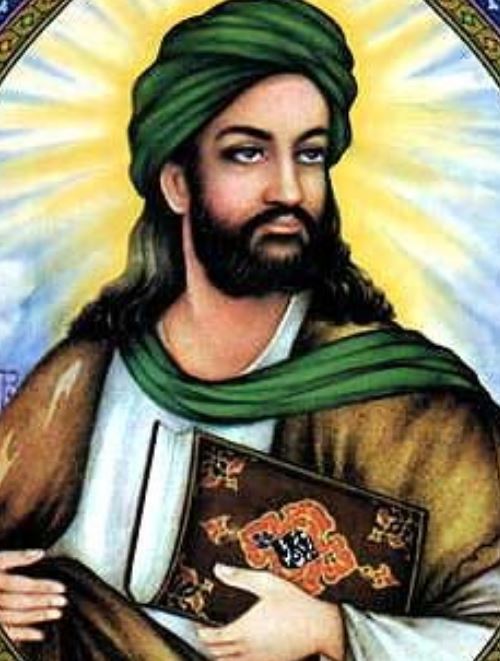
Muhammad ibn Abdullah, born in Mecca, is the founder of Islam and is believed by Muslims to be the final prophet in a long line that includes Abraham, Moses, and Jesus.
Within a few decades of his life, his message united much of the Arabian Peninsula, and over the centuries it inspired a global civilization stretching from Spain to Southeast Asia.
In Hart’s The 100, Muhammad is ranked as the most influential person in history, in part because he was both a religious and political leader, shaping law, culture, and spiritual life.
Pantheon’s HPI data also places him at the very top of global historical importance rankings.
Surprisingly, Hart was not a Muslim; he still chose Muhammad first because he saw a rare combination of spiritual and practical leadership.
At the same time, Muhammad’s life and legacy are often at the center of modern debates about religious law, women’s rights, and freedom of speech, especially when later followers use his name to justify violence.
A famous saying attributed to him is, “The best among you are those who have the best manners and character.”
The lesson for you: greatness is not just vision; it is the daily practice of self‑control, mercy, and justice in how you treat people around you.
2. Jesus Christ (c. 4 BCE–30 CE)
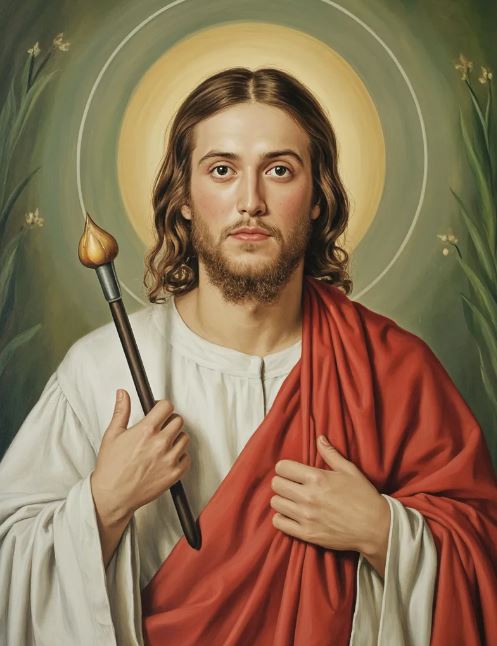
Jesus of Nazareth, a Jewish teacher in Roman‑occupied Palestine, is the central figure of Christianity, which today has over two billion followers worldwide.
His teachings on love of God and neighbor, forgiveness, and care for the poor shaped not only religion but also art, law, and ethics in many cultures.
Skiena and Ward’s analysis of Wikipedia data ranks Jesus as the most significant human figure ever, ahead of Napoleon and Shakespeare, largely because of his huge, long‑term cultural signal.
Even outside religious belief, historians agree that ideas loosely called “Christian ethics” reshaped norms about charity, human dignity, and the worth of the weak.
A surprising data point: in those same rankings, Muhammad appears just a few spots below Jesus, showing how both dominate global cultural history in different ways.
Critics point out that not all actions done in Jesus’ name – from forced conversions to colonialism – match his recorded teachings, raising the issue of how to separate a founder’s words from later institutions.
One of Jesus’ most famous lines is, “Love your enemies and pray for those who persecute you.”
The lesson for you: your “best self” shows not in how you treat your friends, but in how you respond to those who hurt or oppose you.
3. Gautama Buddha (c. 5th–4th century BCE)
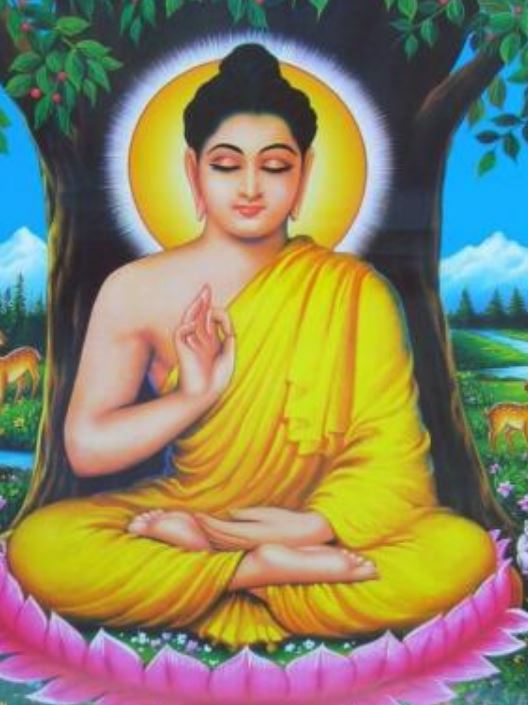
Siddhartha Gautama, later called the Buddha (“the awakened one”), was a prince who left his royal life after facing the reality of sickness, old age, and death.
He spent years seeking liberation from suffering and finally taught the Four Noble Truths and the Eightfold Path, offering a practical path to end inner suffering.
Pantheon’s rankings place Buddha second only to Muhammad in global historical importance, ahead of many kings and modern celebrities.
His teachings shaped the spiritual lives of hundreds of millions of people across Asia and, more recently, the West.
A surprising modern fact: one 2026 analysis of attention gaps found that in 2025, Buddha’s English Wikipedia page received far fewer views than modern entertainers like Arnold Schwarzenegger, even though Pantheon ranks the Buddha near the very top in importance.
This shows how online attention often ignores deep, long‑term influence.
Some critics say that in certain places, Buddhist institutions became passive in the face of social injustice, or even took part in ethnic tension, which seems far from the Buddha’s call to compassion.
A core saying from the Buddhist tradition is, “Hatred does not cease by hatred, but only by love; this is the eternal rule.”
The lesson for you: facing suffering honestly, instead of running from it, is the first step toward peace and wise action.
4. Mahatma Gandhi (1869–1948)
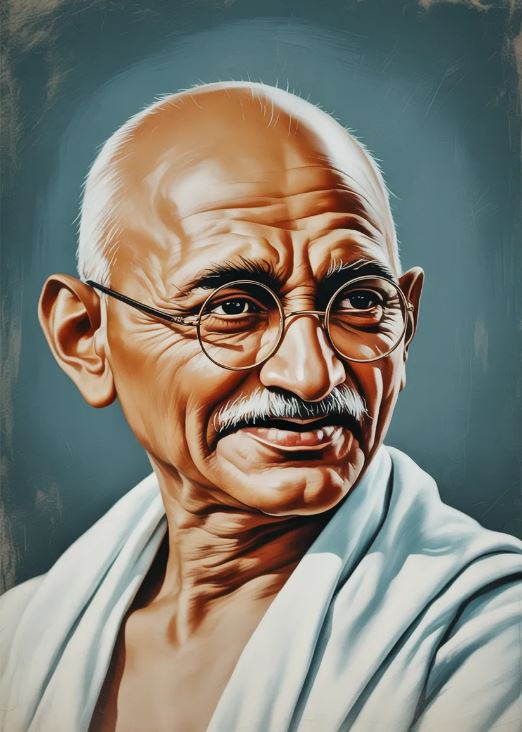
Mohandas Karamchand Gandhi, later called Mahatma (“great soul”), led India’s struggle for independence from the British Empire through non‑violent resistance.
He drew on Hindu, Jain, Christian, and other traditions to build a philosophy of satyagraha – “truth‑force” – that inspired civil rights movements across the world.
Gandhi often appears near the top of reader polls and magazine lists of “greatest leaders” or “most influential people” of the 20th century, and was one of Time’s runners‑up for Person of the Century.
His methods influenced leaders like Martin Luther King Jr. and Nelson Mandela.
A surprising fact is how simple his personal life became: he spun his own cloth, wore a basic dhoti, and tried to eat very plain food as a protest against excess and colonial exploitation.
Critics note his complex views on race in South Africa, his experiments in celibacy, and his sometimes harsh treatment of family and followers, reminding you that even icons have shadows.
One of his best‑known lines is, “Be the change that you wish to see in the world.” (The spirit of this quote matches his writings, even if the exact wording is debated.)
The lesson for you: moral power grows when your daily habits match your public words.
5. Isaac Newton (1642–1727)
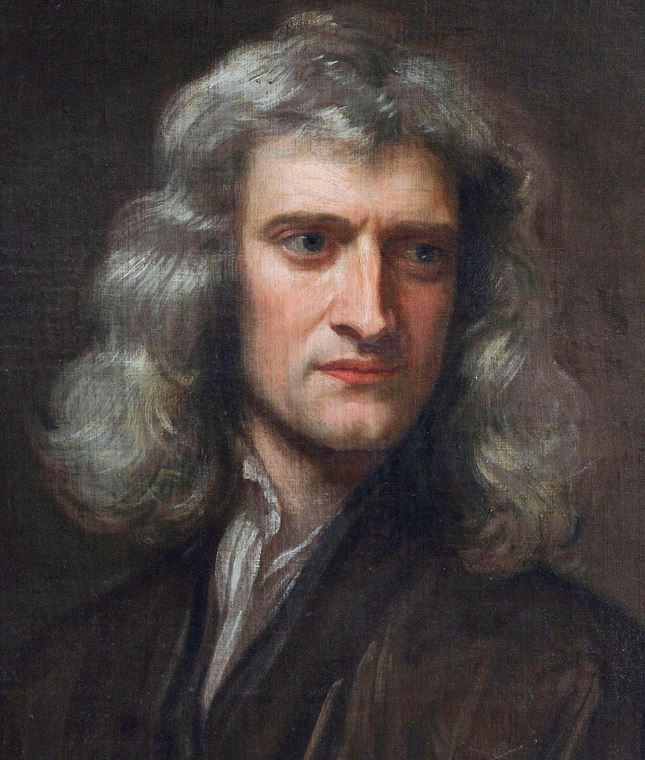
Isaac Newton, an English mathematician and physicist, laid the foundations of classical physics.
His laws of motion and universal gravitation explained how apples fall and planets move with the same simple rules.
Hart ranks Newton second in his list of the most influential people ever, just after Muhammad, arguing that Newton’s impact on science and technology is beyond measuring.
Pantheon and similar data‑driven rankings also place Newton among the very top scientists in history.
A surprising side of Newton is that he spent vast amounts of time on theology and alchemy, not only on physics, and worked as head of the Royal Mint chasing counterfeiters.
Critics note that he could be secretive and ruthless in disputes, as seen in his long conflict with Leibniz over invention of calculus.
A line often linked to Newton is, “If I have seen further it is by standing on the shoulders of giants.”
The lesson for you: deep breakthroughs often come from intense focus on one field, combined with humility about how much you owe to others.
6. Albert Einstein (1879–1955)
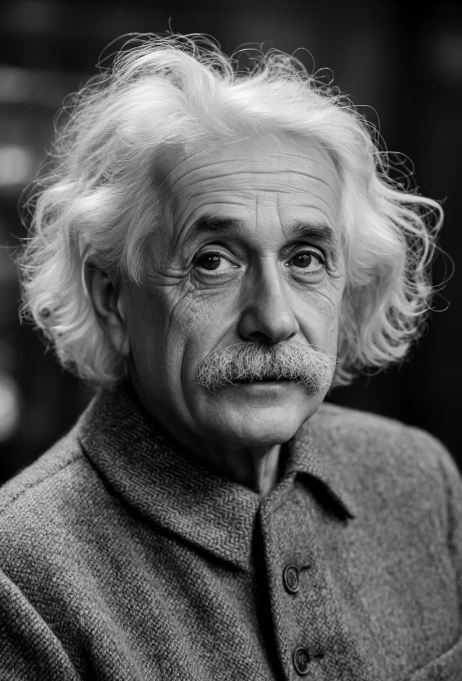
Albert Einstein, born in Germany, changed our picture of space, time, and energy through special and general relativity.
His work led to technologies from GPS to nuclear power.
Time magazine chose Einstein as its “Person of the Century,” calling him the symbol of a century shaped by science and technology.
In many popular lists of “most influential people in history,” Einstein appears inside the top 20, sometimes the top 10.
A surprising fact: Einstein once turned down the ceremonial role of President of Israel, feeling he lacked the experience for such a job.
Critics point out that while his scientific genius is clear, he struggled in some personal relationships and did not play a direct leadership role in politics, unlike Gandhi or Mandela.
One of his most quoted lines is, “Try not to become a man of success, but rather try to become a man of value.”
The lesson for you: being “smart” is not enough; asking what kind of value you create for others matters even more.
7. Aristotle (384–322 BCE)
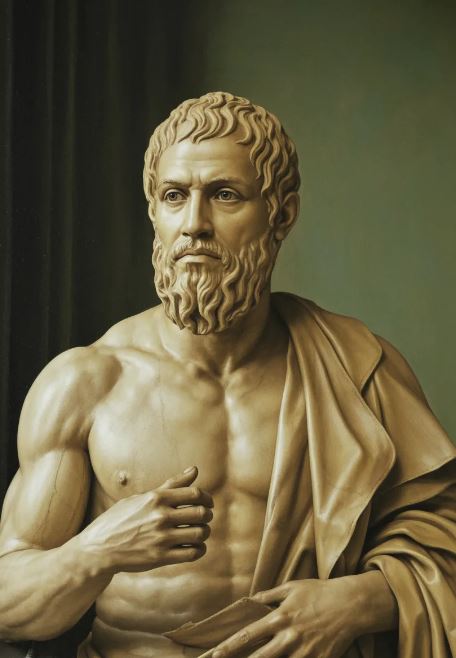
Aristotle, a student of Plato and tutor to Alexander the Great, wrote on logic, ethics, politics, biology, and more.
For centuries, his works were central texts in both the Islamic world and medieval Europe.
In Skiena and Ward’s rankings, Aristotle appears in the top ten most significant people ever, alongside Jesus, Napoleon, and Abraham Lincoln.
Pantheon and similar datasets also place him among the most important thinkers in all of history.
A surprising reach of Aristotle is that his logic shaped not only philosophy but also early computer science ideas, because formal reasoning is a root of programming.
Critics argue that some of his views – such as defending slavery in certain forms and seeing women as naturally inferior – are deeply at odds with modern ideas of equality.
In his ethics, Aristotle wrote, “We are what we repeatedly do. Excellence, then, is not an act, but a habit.”
The lesson for you: small choices, repeated daily, shape your character far more than big words.
8. Confucius (551–479 BCE)
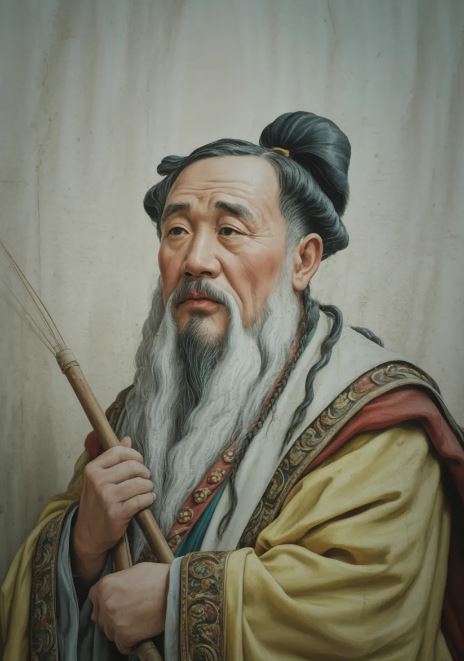
Confucius (Kongzi) was a Chinese teacher whose sayings on family duty, respect for elders, and proper conduct shaped East Asian culture for over two millennia.
His ideas stress harmony, ritual, and the moral duty of rulers to serve the people.
Hart’s list and other historical surveys rank Confucius among the most influential teachers in history, noting how his thought guided entire governments for centuries.
Skiena and Ward, as well as other data‑driven rankings, place him in the global top tier of significance.
A surprising modern detail: even after political moves against Confucianism in parts of the 20th century, there has been a revival of interest in his ideas in China and beyond.
Critics say that when Confucian teachings are used rigidly, they can support strict hierarchies and limit individual freedom, especially for women and younger people.
One famous Confucian line is, “Do not impose on others what you yourself do not desire.”
The lesson for you: greatness can also mean doing your duties with quiet integrity – to parents, children, colleagues, and community.
9. Nelson Mandela (1918–2013)
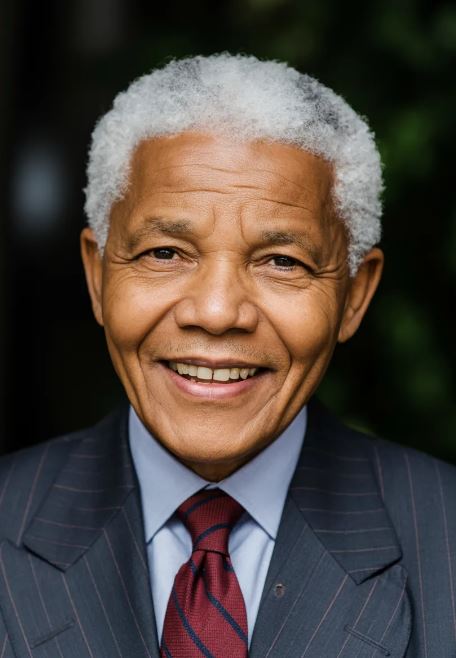
Nelson Mandela spent 27 years in prison for fighting apartheid in South Africa and later became the country’s first Black president.
He helped guide a peaceful transition away from a brutal racial system that had lasted for decades.
Mandela appears in Time’s list of the 100 most important people of the 20th century and is widely seen as one of the century’s moral leaders.
He combined political power with strong public gestures of forgiveness, such as inviting his former jailer to his presidential inauguration.
A surprising fact is how strongly Mandela used sports, especially rugby, as a tool of national unity, symbolized in the 1995 Rugby World Cup.
Critics point out that while political freedom expanded, deep economic inequality in South Africa remained and still causes pain today.
Mandela once said, “I learned that courage was not the absence of fear, but the triumph over it.”
The lesson for you: you don’t have to feel fearless to act bravely for justice.
10. Martin Luther King Jr. (1929–1968)
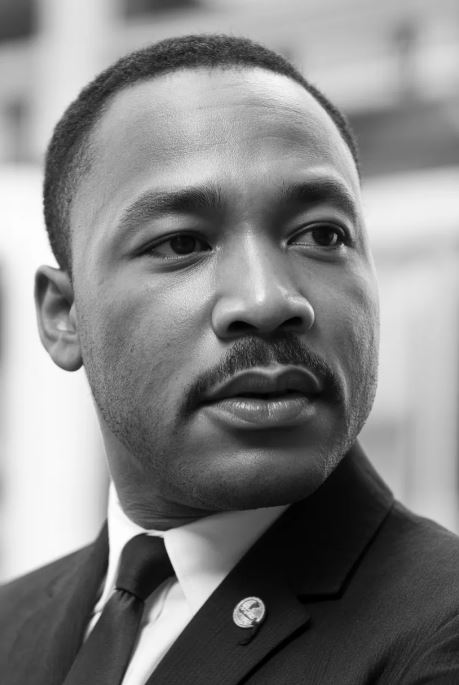
Martin Luther King Jr., a Baptist minister, led the U.S. civil‑rights movement through non‑violent protest, inspired by both Jesus and Gandhi.
He played a key role in major gains such as the Civil Rights Act and Voting Rights Act.
King is widely listed among the most respected figures of the 20th century and appears in Time’s 100 Persons of the Century.
His “I Have a Dream” speech and his letters from jail are now classic texts on justice and human dignity.
A surprising fact is that King was deeply unpopular with many Americans near the end of his life because of his strong opposition to the Vietnam War and poverty; admiration grew much more after his death.
Critics from different sides argued that he was either too radical or not radical enough, showing how hard it is to balance moral clarity with broad coalitions.
King said, “The arc of the moral universe is long, but it bends toward justice.”
The lesson for you: your role may be to bend the arc a little, even if you never see the finish line.
11. Malala Yousafzai (1997– )
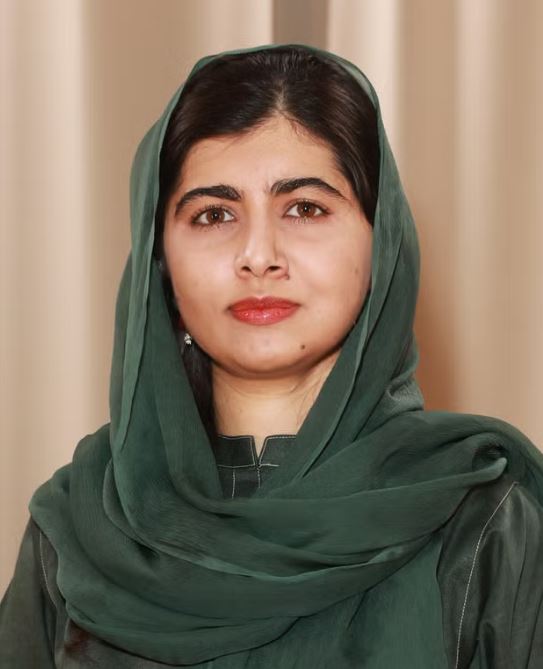
Malala Yousafzai is a Pakistani activist who survived a gunshot to the head by the Taliban at age 15 because she spoke up for girls’ right to education.
She later became the youngest‑ever Nobel Peace Prize laureate.
Gallup’s “most admired” data and other surveys have often listed Malala among the most admired women globally, alongside figures like Michelle Obama and Angela Merkel, even while she was still very young.
Her memoir and speeches have reached millions, turning one person’s story into a symbol for girls’ rights worldwide.
A surprising detail is that Malala has tried to live as a “normal” student during her university years, balancing activism with studying and friendships.
Critics from some communities accuse her of being used by Western media, or not speaking enough about certain conflicts, showing how even child survivors are pulled into global politics.
Malala has said, “One child, one teacher, one book, one pen can change the world.”
The lesson for you: you do not have to be old, rich, or powerful to defend what matters; courage can start in a classroom.
12. Leonardo da Vinci (1452–1519)
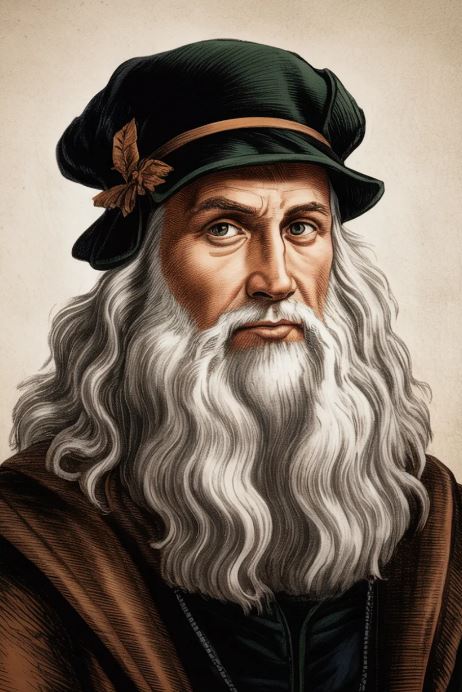
Leonardo da Vinci was a painter, engineer, anatomist, and inventor whose notebooks show a mind always asking, “How does this work?”
He painted the Mona Lisa and The Last Supper, but also sketched flying machines, war devices, and studies of the human body.
Leonardo appears in many “most influential” rankings as the symbol of the Renaissance human ideal, and Pantheon’s data places him among the top historical figures overall.
His work stands at the meeting point of art, science, and technology.
A surprising fact is that many of his engineering ideas were not built in his lifetime; they were more like thought experiments centuries ahead of their time.
Critics point out that he left some major works unfinished and could be unreliable as an employee, always jumping to the next curiosity.
Leonardo is credited with the simple line, “Learning never exhausts the mind.”
The lesson for you: greatness can come from child‑like curiosity kept alive all through adult life.
The Psychology and Philosophy of Greatness
So what unites these very different lives?
Aristotle’s “Flourishing” and Eastern “Way”
Aristotle did not talk about “success” as money or fame; he used the word eudaimonia, often translated as “flourishing” – living in a way where your character, actions, and purpose line up over a whole lifetime.
For him, the “best” human is not the richest one, but the one who practices virtues like courage, justice, and wisdom until they become habits.
Eastern ideas echo this in their own ways.
In Hindu and Buddhist thought, dharma is your right duty – living in line with truth and the order of things.
In Daoism, wu wei means “effortless action,” where you act in harmony with the flow of nature, not by forcing everything.
When you look at figures like Gandhi, Mandela, or Malala, you see this mix: deep inner conviction and a sense that they are obeying something larger than ego – God, truth, justice, compassion.
Modern Research: Mindset, Grit, and Service
Modern psychology adds some useful tools for you:
-
Growth mindset (popularized by Carol Dweck) is the belief that your abilities can grow with effort and feedback, rather than being fixed.
Many great figures showed this by treating failure as a teacher, not a final label. -
Grit (studied by Angela Duckworth) is the mix of passion and perseverance over long periods.
Long prison years for Mandela, years of study for Newton, or activism for MLK and Malala all show this trait. -
Servant leadership is the idea that the best leaders see themselves as servants first, using power to lift others, not themselves.
This is clear in people like Mother Teresa, Gandhi, or King – and also in many unsung community workers.
The Dark Side of “Greatness”
These same tools help you see why highly influential conquerors are rarely the “best person in the world” in a moral sense.
-
A general or dictator can have massive influence and even grit, but lack empathy or moral restraint.
-
Their “grandeur” often comes with deep harm – war, torture, genocide – that breaks the moral dimension of greatness.
So, the main lesson: you cannot separate any serious claim about the “greatest human being ever” from a deep look at ethics.
Cultural & Global Perspectives: Greatness Is Not One‑Size‑Fits‑All
When you ask people in different places, you hear very different names.
-
In the Indian subcontinent, Gandhi is a common choice, but so are B. R. Ambedkar (who fought caste discrimination), ancient sages, and religious figures from many faiths.
-
Across Africa, names like Nelson Mandela, Kwame Nkrumah, or spiritual elders appear, often linked to liberation, community, and ubuntu.
-
In Latin America, you see liberators like Simón Bolívar, human‑rights leaders, and religious figures honored for standing with the poor.
-
Indigenous communities often lift up elders who protect land, language, and tradition, even if they never appear in global rankings.
In 2026, social media and AI also change who you admire.
-
Viral content can make someone world‑famous in days, even if their long‑term impact is small.
-
Recommendation systems can trap you in bubbles where you only see “heroes” your group already agrees with.
-
AI tools, like the one you are reading now, surface names and facts that might expand your list beyond your own culture – but they can also reflect the biases of the data they learn from.
This is why your own judgment matters.
You should use rankings and polls as inputs, not final answers.
Lessons from the “Best”: How You Can Become Extraordinary
Instead of asking, “Who is the best person in the world?” you can ask a more useful question:
“What do the best people in history do that I can start doing, in my own small way?”
Seven Habits Distilled from the Greats
Here is a simple, practical model you can apply.
| Habit of Great People | Example Figure(s) | One Simple Practice for You |
|---|---|---|
| 1. Anchor your life in meaning | Buddha, Jesus, Muhammad, Gandhi | Write down in one sentence what you want your life to be for. Keep it where you can see it. |
| 2. Put people above ego | Mandela, King, Confucius | In your next argument, pause and ask, “How do we both walk away with dignity?” |
| 3. Practice daily courage | Malala, Mandela, MLK | Do one small, scary but right thing today – speak up, apologize, set a boundary. |
| 4. Build long‑term skills | Newton, Einstein, Leonardo | Study or practice one skill for 30 minutes every day for 30 days. No excuses. |
| 5. Turn pain into purpose | Gandhi, Buddha, Mandela | Take one hard experience in your life and ask, “Who else is facing this?” Then help one of them. |
| 6. Serve beyond your tribe | Jesus, Muhammad, King | Do something kind this week for someone outside your group, caste, class, or party. |
| 7. Protect truth and curiosity | Aristotle, Confucius, Einstein | Once a week, read someone you disagree with and try to honestly understand them. |
Your 5‑Dimension Self‑Check
Take the five dimensions we used earlier and give yourself a quiet, honest rating from 1 to 10 on each:
-
Influence & Legacy – How many lives do you touch now, and how might that grow?
-
Moral Virtue – How honest, kind, and fair are your actions, especially when nobody is watching?
-
Intellectual Impact – Are you learning and sharing ideas that help others think better?
-
Societal Transformation – Are you helping fix even one problem in your street, school, or city?
-
Personal Resilience – How do you respond to failure, illness, rejection, or loss?
Now, pick one dimension to improve in the next 30 days.
-
If you pick Moral Virtue, you might decide: “I will tell the truth kindly, even when it is uncomfortable.”
-
If you pick Societal Transformation, you might say: “I will join or start one small project – a cleanup drive, a tutoring group, a local support circle.”
Choose one figure from this article whose life speaks most to you, and copy one habit of theirs in a very small form.
Repeat that habit daily for a month.
This is how “greatness” stops being an idea and becomes a practice.
Why This Matters More in an AI World
As AI gets stronger, many tasks – writing, coding, basic design – will be done faster by machines.
But there are things AI cannot do:
-
It cannot feel real empathy when a child cries.
-
It cannot take a moral stand knowing it may die for it.
-
It cannot carry a trauma through time and turn it into healing for others.
The next “best people in the world” will be those who strengthen the most human traits: empathy, creativity, and ethical courage – and then use new tools, including AI, to serve, not to exploit.
There Is No Single Best — But There Is a Path
When you look at all the data and all the stories, the answer to “who is the best person in the world?” is both simple and demanding:
There is no one objective “best” human being.
But there are people whose lives shine so clearly that they help you see what the word “best” could mean.
Muhammad, Jesus, Buddha, Gandhi, Newton, Einstein, Aristotle, Confucius, Mandela, King, Malala, Leonardo – and many others not listed here – show different mixes of influence, virtue, insight, resilience, and service.
None is perfect. All are human.
But each one used their gifts to understand the universe more deeply and to lift other people, sometimes at great cost.
The best person in the world is not just someone in a book.
It is whoever, like these figures, chooses each day to use their mind, heart, and courage to make life better for others – starting with the people right next to them.
That can include you.
So here is your quiet challenge after reading this:
-
Pick one trait you admire most – compassion, courage, honesty, curiosity, or service.
-
Pick one small daily action that expresses that trait.
-
Do it for the next 30 days, and see who you start to become.
If you want to go deeper, you might like articles such as:
-
“Most Influential Person in History: What the Data Really Says”
-
“Gandhi vs. Mandela vs. King: Who Changed More Lives?”
-
“In an AI World, What Makes You Truly Human?”
And now I will end with a simple closing line, adapted from the spirit of many great lives:
The best person in the world is the one who, like the figures above, uses their gifts to understand the universe and to lift others — starting today, with the next small choice.
FAQs
Is Muhammad the best person in the world according to data?
Many influence‑based rankings put the Prophet Muhammad at or near the very top. Hart’s The 100 ranks him #1, and MIT’s Pantheon project lists him as the most important historical figure in its HPI index.
But these systems measure influence, not pure moral goodness, so they cannot by themselves answer who is morally “best.”
Who is the most influential person in history across rankings?
Across several major rankings, Jesus and Muhammad appear most often in the top few positions, with Buddha, Newton, and political figures like Napoleon or Lincoln also in the top tier.
Different methods give different #1 spots, which is why it is wiser to think in terms of a small “top cluster” than a single winner.
Who is the most admired living person as of the mid‑2020s?
Gallup’s long‑running “most admired man and woman” poll shows that, in recent years, people like Barack Obama, Donald Trump, Hillary Clinton, and Michelle Obama often appear at the top among Americans, while global admiration lists also highlight Malala Yousafzai, Pope Francis, and other leaders.
Results change year by year with politics and media.
Why are there so few women in historical “greatest ever” lists?
Skiena and Ward, as well as other researchers, note that women are under‑represented because for centuries many societies blocked women from formal power, education, and public life, and because sources like Wikipedia have more male editors.
When you look at modern admiration polls, many women appear at the top, which shows that as barriers fall, more women’s greatness becomes visible.
Can an “ordinary” person ever become one of the greatest human beings?
Every figure in this article started as an ordinary child in some family, somewhere.
While not everyone will change an entire civilization, the same building blocks – meaning, courage, compassion, steady effort – are available to you in daily life, and history shows that quiet, persistent people often have far more impact than they ever expected.