
Last updated on: February 10, 2026
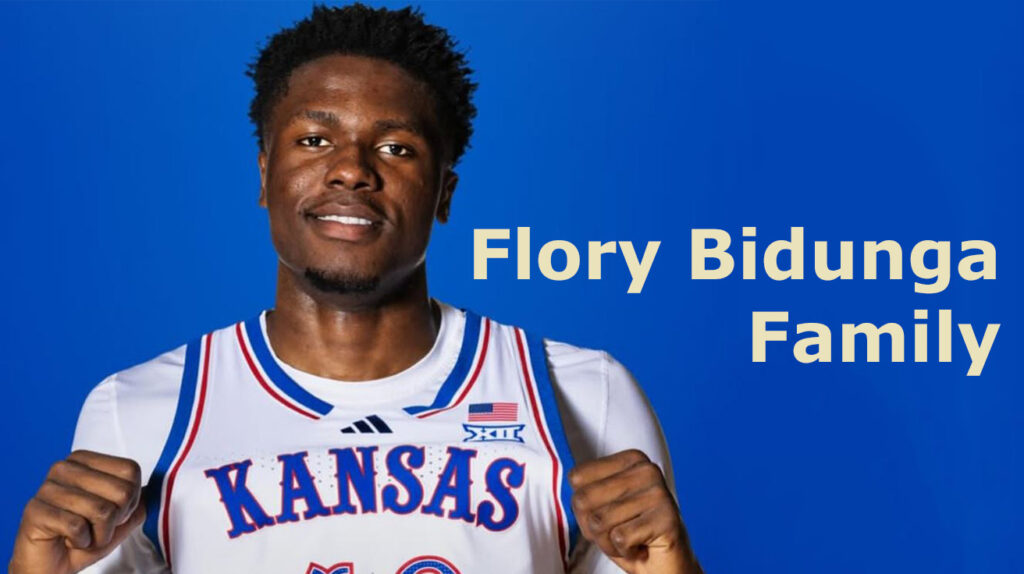
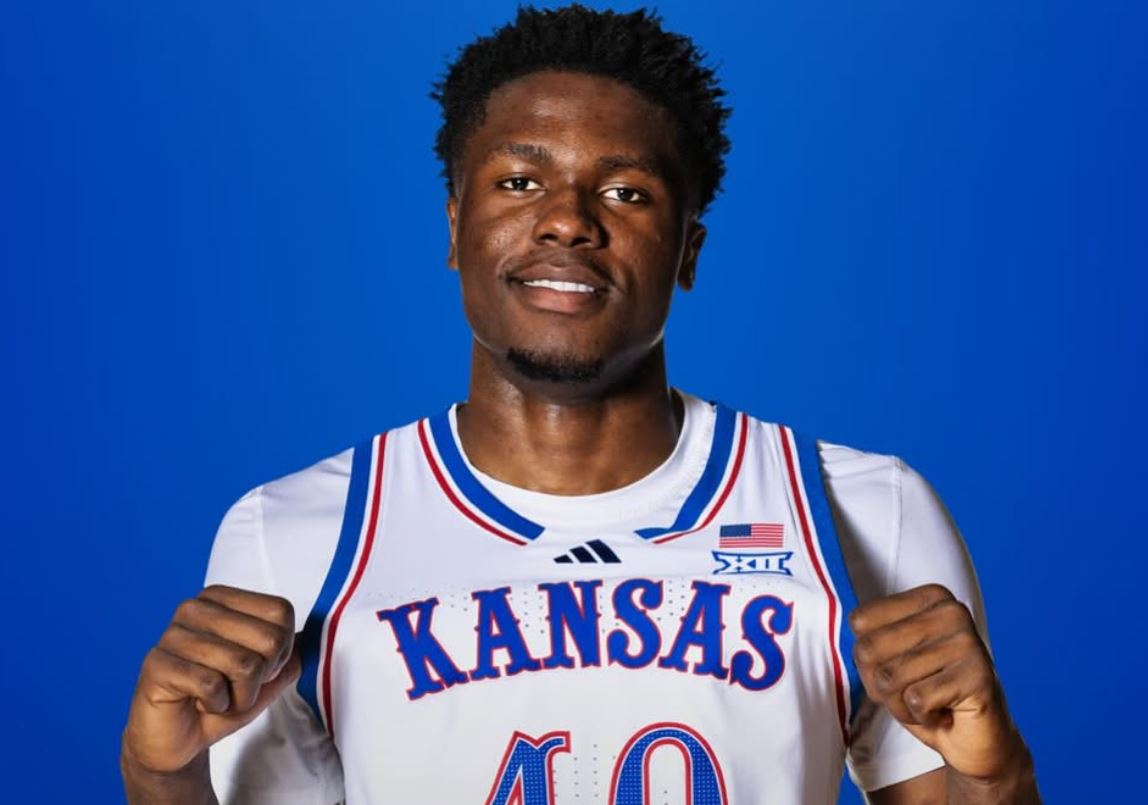
Flory Bidunga is in the middle of the kind of season that turns a prospect into a future NBA big man. As a sophomore for Kansas in 2025–26, the 6‑10 forward is averaging around 15 points, 9 rebounds and close to 3 blocks a game while shooting well over 65% from the field. He is still the same player you see in clips: flying in for dunks, erasing shots at the rim, and sprinting the floor like a wing. In Big 12 play alone, one recent stretch had him putting up about 14 points, 8+ boards and over 3 blocks per night on elite efficiency.
His breakout moment so far came when No. 9 Kansas handed No. 1 Arizona its first loss of the season, 82–78. In that game, Flory put together a huge double‑double: 23 points on 8‑for‑11 shooting and 10 rebounds, including a personal 7‑0 scoring run late that pushed Kansas ahead for good. A week earlier, he dropped 21 points and 10 rebounds on rival Kansas State. If you only watched those games, you would see the highlights and the smile. It is easy to forget that not long ago, he was a teenager in Kinshasa who had barely touched a basketball.
Flory’s journey runs from a crowded capital city in the Democratic Republic of Congo, through Kokomo High School in Indiana, to the blue‑blood pressure cooker of Kansas. Along the way he has lived in two families at once: his biological family back in Congo, and his host/guardian family in Indiana and now Kansas — Dillon and Makenna (often reported as Craft, now Schrader). If you want to understand his story, you need to understand both branches of that family tree and how they shaped him.
Early Life in Kinshasa, Democratic Republic of Congo
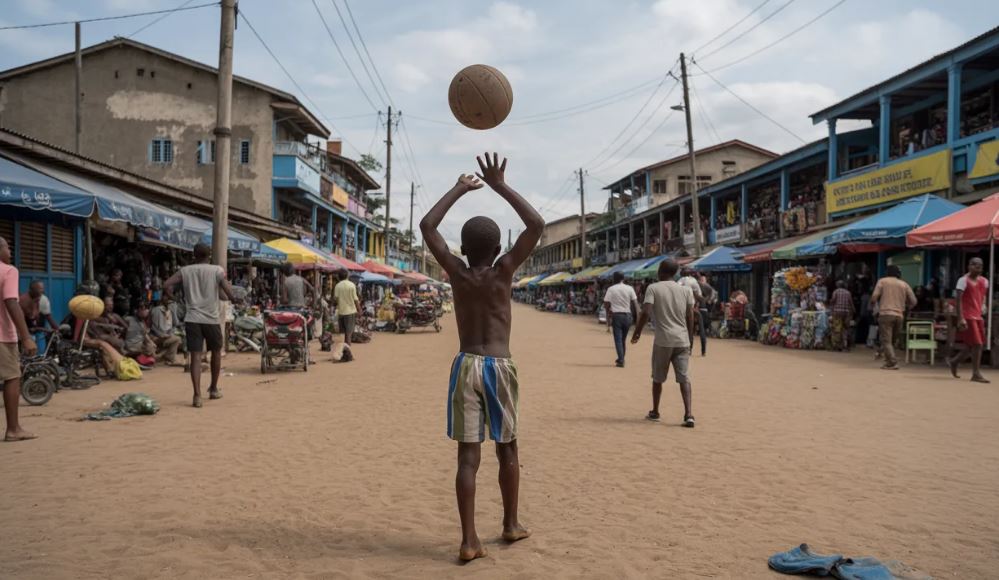
Flory Bidunga was born on May 20, 2005, in Kinshasa, the capital of the Democratic Republic of Congo. Kinshasa is a huge, noisy city where football (soccer) rules the streets. Like many kids there, Flory did not grow up dreaming about NCAA gyms or the NBA. His first dream was to become a professional soccer player in Europe. He has said that as a boy he imagined himself playing for a club like Real Madrid.
Family has always sat at the center of his life. In a Q&A with Kansas, when he was asked who pushed him toward basketball, he did not point to a coach or a scout. He said his biggest influence was his family, “especially my mother,” and that she “really pushed” him to try basketball after a stranger on the street suggested it when he was about 14. That small moment — a stranger asking if he played basketball — changed the entire path of his life.
Public details about his father and possible siblings are very limited. Reputable profiles of Flory repeatedly note that little is known about his biological parents beyond his own comments, and they avoid naming or describing his father or any brothers or sisters. Out of respect for their privacy, and because they have chosen to stay out of the spotlight, this article will do the same. What you do see in public is Flory’s deep respect for his family and the way he talks about them as his biggest source of strength.
Like most kids in Kinshasa, Flory’s first sport was soccer. Basketball came late — around age 13 or 14. He only started playing seriously in 2019, yet almost immediately people noticed his size, speed, and motor. In one later interview, he remembered being approached by that stranger who simply said, “You should play basketball,” and from there he “started” and never really looked back.
Growing up in Congo also meant dealing with things that do not show up on a box score: unreliable infrastructure, political tension, and limited access to high‑level coaching or facilities compared to what you see in the United States. That context makes what happened next — leaving his family and country at 15 to chase a sport he had only just discovered — even more remarkable.
The Move to America and Challenges
At about 15 years old, Flory left Kinshasa for Kokomo, Indiana, more than 7,000 miles away, to enroll at Kokomo High School through its International Baccalaureate (IB) program for international students. His parents supported the move and helped choose Kokomo’s IB track as the path that could open doors for both education and sport.
When he arrived, he knew very little English. A local TV feature on him at Kokomo highlighted that he was taking college‑prep classes, learning a new language, and adjusting to a completely different culture, all while just discovering how good he could be at basketball. Kokomo High’s IB program is demanding by design, with heavy reading and writing in English. That made the start especially hard.
On the court, the transition was much faster. In his first season at Kokomo, as a sophomore, he averaged 17.5 points, 13.3 rebounds and 5.3 blocks per game on incredibly high shooting percentages. Within two years he became Indiana’s Gatorade Player of the Year, and by his senior season he was not only back‑to‑back Gatorade winner but also Indiana Mr. Basketball, finishing his high school career with 1,609 points.
Off the court, the harder work was daily life:
-
Learning English well enough to follow complex IB lessons.
-
Adapting to American food, weather, and social rules.
-
Dealing with homesickness while being a teenager far from his parents.
That is where his host family stepped in — first as temporary hosts, then as full legal guardians, and eventually as the people he calls “mom” and “dad” in America.
Flory Bidunga’s Host Family: Dillon and Makenna Craft (Core Section)
When you look at Flory’s family story, this is the heart of it: the Crafts. Some stories now list Makenna’s last name as Schrader (after marriage), but local coverage and recruiting pieces most often refer to them as Dillon and Makenna Craft, his host parents and later guardians.
Who are Dillon and Makenna Craft?
Flory came to Kokomo through an international student program. During that time, Dillon and Makenna stepped up as his host family, and later became his legal guardians. An Indiana feature on Flory’s Mr. Basketball award describes Makenna Schrader as his “guardian,” and quotes her speaking not as a distant caretaker but as a proud parent, saying that he works extremely hard every day in school and practice and that she and her husband, Dillon, are “so incredibly proud” of him.
In a television feature produced after he committed to Kansas, reporter crews traveled to Kokomo and sat down with the Crafts. The piece states very clearly:
“Dillon and Makenna Kraft became his host family and later his guardians.”
Makenna mentions in that same segment that she speaks Spanish fluently but not French, which meant she and Flory had no common language at first. You can feel the humor and warmth in how she and Dillon talk — they are the kind of people who decide to open their home to a teenager from another continent and then figure the rest out as they go.
Another IndyStar soccer feature, which focused on how rare it is to see a 6‑9 five‑star basketball recruit playing high school soccer, refers to “host parent” Makenna Craft and notes that she and her husband Dillon, support him in playing both sports because “it’s what he loves.” That shows you how they thought of their role: not just steering him toward basketball, but letting him be a complete teenager.
How they first connected
Local reporting does not spell out every step of how they met, but the path is fairly clear. Flory arrives in Kokomo as part of the school’s international and IB program. The program often works with host families. At some point in that process, Dillon and Makenna are matched with him and agree to bring a 15‑year‑old from Congo into their home.
In the Kansas TV feature, the reporter explains that the first time they all went out to eat together, communication was almost entirely through Google Translate. Makenna jokes that despite the language barrier, “he definitely knew what a burger was” — he ordered a barbecue burger that first night, and later the segment teases him for loving McDonald’s cheeseburgers and Quarter Pounders.
Those small moments — a shared joke over a burger, fumbling through translate apps at the table — were their “first parenting experience” with an almost grown teenager. They were engaged at the time, not yet married, and suddenly they were responsible for school forms, rides, homework support, and emotional ups and downs for a 17‑year‑old from another continent.
What the Crafts actually did for him day‑to‑day
If you strip away the excitement around five‑star recruits, a host family’s daily life is simple but heavy:
-
Language and school: Makenna helped Flory push through English as a second language. She speaks Spanish and has experience learning and working across languages, so she understood what it felt like to be lost in class discussion. She became one of the key adults helping him make sense of assignments and conversations.
-
Emotional support: Coaches and reporters describe Flory as humble and quiet, sometimes reluctant to talk about himself. Having two adults in the house who encouraged him, enforced basic structure, and gave him space to relax mattered as much as any workout. Makenna has talked about his “humbleness, sense of humor, and humility in a potentially very overwhelming atmosphere” and says they feel “blessed to have him as part of our lives.”
-
Basketball and decisions: As he turned from a raw prospect into one of the top centers in the 2024 class, the Crafts were with him through every step — big AAU events, scholarship offers, and picks between Kansas, Duke, Auburn and Michigan. Before he committed to Kansas, they joined him on visits and were involved in conversations with both college staffs and his mother back in Congo.
When he later briefly entered the transfer portal after his freshman year at Kansas, his guardian Dillon explained to reporters that Kansas was still very much an option and that the decision was not driven by NIL money. He framed it as Flory exploring what was best for his development. A few days later, Flory chose to return to Kansas, with Dillon saying that Flory “wants to finish what he started” there. That is not just a basketball update; it is a clear sign of how seriously Dillon takes his role in guiding big career choices.
How they became “Mom and Dad”
Over time, the relationship shifted from “host family” to “family,” full stop. The Kansas TV story shows how the Kokomo community rallies around him and how people talk about him as “just a great kid” who “loves Kokomo and we love him.” Within that community, the Crafts are the constant presence: the ones he goes home with after games, the people who sit in the stands for both basketball and soccer, and the adults quoted over and over as his guardians.
Makenna describes being proud of him not just for points and blocks, but for how he stays grounded and kind through all the attention. That is how a parent talks. When you combine that with how he talks about his respect for his mother back in Kinshasa, what you get is a young man who has learned to live with two sets of parents: the mother and family who sent him out into the world, and the American couple who caught him when he landed.
Biological Family Details & Connections
Almost every serious profile of Flory makes the same point: there is very little public information about his biological parents. One detailed look at his family background says directly that “little public information is available about his biological parents,” while stressing that “family has remained central to his life.”
Here is what is known and what you can say honestly:
-
His mother as his main influence. In Kansas’s official bio, Flory says that when a stranger in Congo suggested he try basketball, his “family has been my biggest influence, especially my mother,” and that she “really pushed me to do it.” That is as close as you will get to hearing about her, but it tells you a lot.
-
Ongoing emotional connection. Articles that dig into his story describe family as a constant source of motivation even after he moved away at 15, and note that he continues to speak about them with gratitude and respect.
-
Father and siblings. There is no reliable reporting that names his father, confirms his occupation, or lists any siblings. Some recruiting pieces and fan chatter speculate, but credible outlets stay away from it. Instead, they use phrases like “little is known about whether his biological family has a sports background” and leave it there.
From a distance, you might want more detail. But if you are writing a world‑class article that respects him, you lean into what is confirmed and you say openly where the public record ends. That honesty is part of what will set your piece apart from lower‑quality rumor‑driven content.
Themes to highlight here:
-
Sacrifice: His parents allowed a 15‑year‑old to move across an ocean for school and basketball.
-
Trust: They worked with Kokomo’s IB program and, later, with the Crafts to make sure he was cared for.
-
Dual‑family support: Today he plays with one family watching on TV from Kinshasa and another cheering in person in Kansas and Indiana.
Flory Bidunga Family Tree
Biological Family (Congo)
-
Mother Bidunga – Name not public. Described by Flory as his biggest supporter and the person who pushed him into basketball.
-
Father – Name and details not public. No verified information on profession or sports background.
How Family Shaped His Basketball Success & Milestones
When you zoom out, you can see how each branch of his family fed into the player you watch now at Kansas.
From Congo: discipline, hunger, and late‑starter energy
Flory’s mother did not just say “yes” to basketball; she pushed him into it and kept him going. Starting late — at 13 or 14 — meant he had to absorb years of skill work in a short time. That late‑starter urgency shows in how coaches talk about him: they constantly mention his coachability and how quickly he adds new things to his game.
Growing up in Kinshasa, soccer‑first culture gave him great footwork and stamina. Kansas describes him as “an elite athlete” who “moves exceptionally well” and “plays with a high motor,” notes that he grew up playing soccer and only started basketball four years before signing, and highlights how quickly he rose from unknown to a top‑10 recruit. That work ethic did not come out of nowhere; it traces back to the expectations set at home.
From the Crafts: stability, language, and guidance in America
In Kokomo, the Crafts gave him what every high‑level prospect needs but not all of them get: a safe base. While his on‑court numbers exploded — 17.5 points, 13.3 rebounds, 5.3 blocks as a sophomore, then 20.2 points, 13.8 rebounds, 4.5 blocks as a junior, then 19 points per game as a senior and Indiana Mr. Basketball — they handled rides, homework checks, culture shock, and days when the pressure of being a five‑star teenager felt heavy.
His high‑school coach praised his willingness to learn, saying that even when his English “was not great,” he would correct a mistake once and never repeat it. That kind of learning curve is only possible when the adults in your life — teachers, host parents, coaches — are all pulling in the same direction.
When it came time to choose a college, he picked Kansas over Duke, Auburn and Michigan, saying he believed Bill Self would “push” him, “develop my talent,” and help him not just reach, but stay in the NBA. The Crafts were part of those discussions, talking with him, with Kansas staff, and with his mother in Congo. Later, when he did a brief transfer‑portal test, Dillon helped present options and ultimately backed his decision to return and “finish what [he] started” at Kansas.
At Kansas: carrying two families with him
At Kansas, Flory’s freshman year (2024–25) was about learning and efficiency: 5.9 points, 5.4 rebounds, and 1.6 blocks in just 16.3 minutes per game, with a record 69.8% field‑goal percentage for a Kansas freshman and 54 total blocks. By his sophomore year, he had taken over the starting center job and nearly tripled his scoring to around 15 points a game, with 9 rebounds and almost 3 blocks, while still flirting with 70% from the field.
Those leaps in production look like pure talent from the outside. But on the inside, they are the product of a player who carries his Congo roots and his Indiana / Kansas guardians everywhere he goes. After a big win, he often credits not just coaches or teammates, but also the people who believed in him early and the community in Kokomo that “feels behind me,” as one IndyStar feature put it.
Flory Bidunga Personal Life Today
If you meet Flory, you notice the smile before the stats. Local and national pieces, from TV features to long‑form stories, all mention his easy grin and gentle personality. People around him describe him as funny, silly in private, and deeply kind. His guardians talk about his “humbleness” and “sense of humor” off the court, even as the recruiting rankings and cameras piled up.
Languages
Flory is multilingual. Reports from Kokomo noted that he spoke up to five languages as a high‑school student. Kansas lists him as speaking multiple languages, “mainly English and French.” In a video feature, he mentions a childhood nickname in Lingala — “Moa,” which he explains translates roughly as “killer” — showing another layer of his language background and culture. Put simply, by the time you watch him in Lawrence, he has gone from knowing little English to doing full interviews in it in just a few years.
Off‑court interests and values
Even while becoming one of the top basketball recruits in the country, Flory kept playing soccer. He not only grew up with the game in Congo but returned to it in Kokomo, suiting up as a tall, dangerous forward for Kokomo’s high‑school soccer team during his senior year. A long IndyStar feature on his soccer season quoted opponents marveling at how a player that size could move and dribble like that, and noted that he chose to play simply because he loves the game and wanted to enjoy his last year.
Guardians and coaches say that away from sports he enjoys video games, hanging out with friends, and relaxing with his girlfriend. He is not someone who seeks the spotlight — in fact, a Kansas TV reporter said one of the hardest parts of doing a feature on him was getting him to talk about himself, because he would rather talk about the people of Kokomo than about Flory.
On values, you see three clear threads:
-
Gratitude: He consistently thanks his family in Congo, the Crafts in Indiana, and the Kokomo community.
-
Joy: He talks about “having fun” as a key part of sports, not just competing.
-
Service by example: Kokomo’s coach has said the local youth programs will “benefit 10 to 15 years” from what Flory has done to re‑energize kids about basketball.
FAQs
1. Who are Flory Bidunga’s parents?
Public sources confirm that Flory’s parents are Congolese and that he grew up with them in Kinshasa, Democratic Republic of Congo. He has spoken especially about his mother as his biggest supporter and the person who pushed him to try basketball after a stranger suggested it when he was a teenager. Their names and personal details are not widely shared, and reputable outlets respect their privacy.
2. What is Flory Bidunga’s family background?
Flory was born in 2005 in Kinshasa, DRC, and raised in a football‑mad culture where he played soccer long before he ever picked up a basketball. At 15, with his parents’ support, he moved to Kokomo, Indiana to attend Kokomo High School’s International Baccalaureate program and pursue better educational and sports opportunities. His life since then has been shaped by both his biological family in Congo and his host/guardian family in Indiana.
3. Who are Dillon and Makenna Craft (Schrader) to Flory Bidunga?
Dillon and Makenna are Flory’s host parents and legal guardians in the United States. They first took him in as a host family through Kokomo’s international program, then later became his guardians as his basketball profile exploded. Local features and team bios refer to Makenna as his guardian and describe both of them as deeply involved in his schooling, language learning, and college decisions.
4. Does Flory Bidunga have siblings?
There is no verified public information about whether Flory has brothers or sisters.
5. Where is Flory Bidunga’s biological family now?
His biological family remains in the Democratic Republic of Congo, while Flory lives and plays in the United States. Articles about his background emphasize that family remains central to him and that he speaks about them with gratitude, but they do not track their day‑to‑day lives — again, out of respect for privacy.
6. How did Flory Bidunga end up in Indiana?
Flory came to the United States around age 15 to enroll at Kokomo High School in Indiana through its International Baccalaureate/international student program. His parents agreed to the move, and that decision placed him in a setting where he could develop quickly as both a student and a basketball player. Once there, he joined Kokomo’s basketball team and almost immediately became one of the most dominant players in the state.
7. What role did his host family play in his career?
The Crafts gave him a home base in Indiana. They helped him learn English, navigate the U.S. school system, manage the attention that comes with being a five‑star recruit, and sort through major choices like his college commitment to Kansas and his brief exploration of the transfer portal. They also supported him playing soccer in high school simply “because it’s what he loves,” not just what might best serve his basketball résumé.
8. Why is there so little information about his father?
The lack of detail about his father is mostly by design. Responsible outlets and team sites choose not to publish names, jobs, or personal history about family members who have not asked to be public figures.
9. What languages does Flory Bidunga speak?
Flory speaks multiple languages. Reports from his Kokomo days say he spoke as many as five languages. Kansas lists his main languages as English and French, and in a video interview he talks about a childhood nickname in Lingala, a major language in Congo. When he first arrived in Indiana, he spoke very little English, but within a few years he was doing full interviews in it.
10. How good was Flory Bidunga in high school?
He was one of the most dominant big men in the country. At Kokomo High School he averaged 17.5 points, 13.3 rebounds and 5.3 blocks as a sophomore, then 20.2 points, 13.8 rebounds and 4.5 blocks as a junior, earning Indiana Gatorade Player of the Year. As a senior he averaged 19 points per game, repeated as Gatorade Player of the Year, and was voted Indiana Mr. Basketball, finishing with 1,609 career points. He was also a McDonald’s All‑American and a consensus five‑star recruit.
11. What are Flory Bidunga’s college stats at Kansas?
As a freshman in 2024–25, Flory played in all 34 games, averaging 5.9 points, 5.4 rebounds and 1.6 blocks in 16.3 minutes, while setting a Kansas freshman record with 69.8% shooting from the field. By his sophomore season (2025–26), he had grown into a full‑time starter, averaging roughly 15 points, 9 rebounds and close to 3 blocks per game at around 68–69% from the floor, including standout performances like 23 points and 10 rebounds in an upset of No. 1 Arizona.
12. How did his soccer background affect his basketball?
Soccer shaped his footwork, balance, and stamina. Flory grew up playing soccer in Congo and kept playing in Kokomo, even suiting up as a forward on Kokomo High’s soccer team while already being a five‑star basketball recruit. Coaches and scouts often point out how fluidly he runs the floor and how quick his second jump is — traits that match his years of running and cutting on a soccer pitch.
13. Did his family support his move to Kansas?
Yes. When he first committed to Kansas, Flory talked about telling his family and especially his mother about the decision and emphasized that they were supportive of him pursuing the best situation for his career. On the U.S. side, his guardians Dillon and Makenna spoke publicly about how proud they were of his choice and how they believed Kansas and Bill Self would help him grow.
14. What is Flory Bidunga’s long‑term goal?
Flory has openly said his dream is not just to reach the NBA but to stay there. When he committed to Kansas, he said he believed the staff would develop him and help him with that goal of having a long NBA career. His work habits, rapid improvement, and production at Kansas line up with that goal.
15. How can fans follow and support Flory Bidunga?
You can follow Flory on social media (including Instagram at @flory_bidunga, as widely referenced in fan spaces), watch Kansas games throughout the Big 12 schedule, and support both Congo‑based and Kokomo‑based youth programs that benefit from his rising platform. Check Kansas’ official athletics site and his verified accounts for the latest updates and appearances.
Conclusion
When you watch Flory Bidunga today — swatting shots, finishing lobs, grinning after big plays — you are not just seeing a 6‑10 athlete having fun. You are seeing the product of two homes at once. One is in Kinshasa, where a mother pushed her son to chase a sport he barely knew and then trusted him enough to send him across an ocean. The other is in Indiana and now Kansas, where Dillon and Makenna Craft/Schrader opened their door to a quiet 15‑year‑old and slowly became his American “mom and dad.”
His story is not just about rankings and stat lines; it is about a cross‑continental support system that allowed a late‑starting kid to turn into one of college basketball’s most efficient big men. His Congo roots gave him hunger and toughness. His host family and Kokomo community gave him stability, language, and love. Kansas gave him a stage big enough for all of that to show.
If you want to stay close to this story as it keeps unfolding, you can:
-
Follow him on Instagram at @flory_bidunga for a look at life behind the highlights.
-
Watch Kansas games and pay attention not only to his dunks and blocks, but to how often he points to the bench or the stands after a big play.