
Last updated on: January 10, 2026
If you’re anything like me, you’ve probably seen those “What Models Eat in a Day” videos and wondered, Is that even real? Do people survive on this? Could I do it?
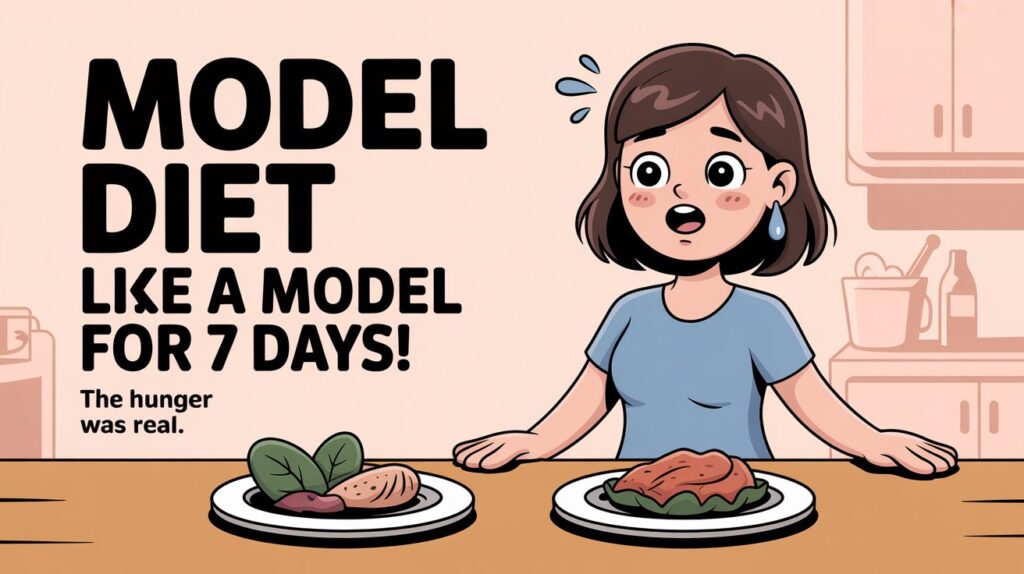
Well, curiosity finally got the best of me. So, for one full week, I decided to eat like a model — the smoothies, the salads, the tiny portions, the endless water, all of it.
I didn’t do it because I wanted to lose weight. I did it because I wanted to understand what this lifestyle actually feels like. You hear so much about “model diets,” but what does it really take to eat like one? How does it impact your body, mood, energy, and your sanity?
Let me tell you… the hunger was real.
But so were the lessons.
What Model Eating Usually Looks Like
Before I started, I did a quick deep dive into how many models eat — especially during shoot weeks or runway prep. And honestly, it’s not surprising:
-
Lots of greens
-
Lots of water
-
Lean protein
-
Very little sugar
-
Almost no carbs
-
No processed “fun” food
-
No mindless snacking
It’s very clean. Very careful. Very controlled. And — let’s be honest — very unrealistic for most of us who aren’t being paid to look camera-ready 24/7.
Still, I made a grocery list, stocked up on spinach, lemons, egg whites, salmon, berries, almond milk, and green tea. And then my little experiment began.
Day 1: The Shock Is Real
I started the morning with a green smoothie. It looked healthy. It tasted healthy. Too healthy.
By 10 a.m., I was hungry again.
Lunch was grilled chicken on a bed of greens. It was small but fine. But by evening, I realized something important: models must snack so carefully because once you start eating, you want more. And more. And more.
Dinner was fish and veggies. I went to bed a little hungry but proud of myself.
Day 1 mood: “I got this!”
My stomach: “No, you don’t.”
Day 2: The Cravings Hit Hard
This was the day my body realized something weird was happening.
Suddenly everything looked tempting — toast, cookies, even the crackers I normally ignore.
I googled “model-approved snacks” and ended up eating 12 almonds, very slowly, like they were luxury chocolates. I told myself I was fine. I was not fine.
By evening, I was irritable, tired, and whispering “Just one bite” to every food item in my kitchen.
But I didn’t give in.
Day 3: The Routine Kicks In
This day surprised me.
My hunger settled a little.
I felt lighter — not physically, but mentally.
There’s something about eating clean that makes you feel like you’re taking care of yourself. My digestion felt calm. My skin looked a bit brighter. Or maybe I was just imagining it. But it still felt good.
I drank more water than ever. I went to the bathroom like 14 times. I wasn’t even annoyed — I saw it as part of the “model life experience.”
Day 4: I Almost Break
On Day 4, the glamour cracked.
I woke up exhausted. I felt low-energy. I wanted bread so badly I swear I could smell imaginary toast. I sat on my bed asking myself, Why am I doing this to myself?
Every part of me wanted to quit.
But I made a huge cup of green tea, took a deep breath, and kept going.
This was the day I truly realized: eating like a model is not just a diet — it’s discipline. And it’s hard.
Day 5: The Adaptation Feeling
By Day 5, something shifted again.
I finally felt… okay. Not full, never full, but okay.
My cravings were still there, but they weren’t screaming. More like whispering. I could ignore them.
My body felt lighter. My skin had an actual glow. But I also felt like I was thinking about food constantly. It was like I had to plan every bite so carefully that it became a part-time job.
Day 6: The Real Challenge — Social Life
This was the hardest day emotionally.
A friend asked me to go out for brunch. Do you know how painful it is to sit there while everyone eats pancakes and you sip on black coffee like a sad plant?
That’s when I realized:
This lifestyle affects more than your body — it affects your social life, your mood, and your joy.
Models often have to say no to a lot of things. And honestly, it’s not easy.
Day 7: The Final Stretch
By Day 7, I was proud of myself.
Not because I felt perfect, but because I stuck with something so strict for a whole week.
I had a simple breakfast, a small lunch, and a clean dinner — and I finally took a moment to really think about what I learned.
I felt cleaner inside, but also tired. My mind felt sharp but also stressed. And my relationship with food felt… controlled. Maybe too controlled.
What I Actually Ate Each Day
Here’s the kind of menu I followed:
Breakfast
-
Green smoothie or
-
Egg-white omelet or
-
Greek yogurt with berries
Lunch
-
Chicken or fish on greens
-
Sometimes veggie soup
-
Occasionally a quinoa bowl
Snacks
-
10–12 almonds
-
Celery with hummus
-
Green tea
Dinner
-
Grilled fish or chicken
-
Steamed veggies
Drinks
-
2–3 liters of water
-
Herbal tea
-
No alcohol
Simple. Clean. Repetitive.
And very model-like.
How My Body Reacted
By the end of the week:
-
I felt less bloated
-
My face looked a bit brighter
-
My stomach felt flatter
-
I slept slightly better
But I also:
-
Had low energy on some days
-
Felt hungry often
-
Thought about food nonstop
-
Missed the freedom to enjoy meals
So yes — I noticed changes, but they came with a cost.
How My Mind Reacted
This part surprised me the most.
When you eat like a model, food becomes a job. A calculation. A schedule.
You can’t just grab something because you feel like it. You think before every bite.
And honestly? It gets tiring.
Models don’t just eat differently. They live differently. They plan their meals. They avoid temptations. They take care of their skin, sleep, and hydration like it’s part of their job — because it is.
For the rest of us, it feels like pressure.
The Honest Takeaways
Here’s what I learned from this little experiment:
1. Models don’t eat this way because it’s easy.
It’s hard. It’s strict. It’s a lifestyle they maintain because their jobs depend on it.
2. It’s not sustainable for most people.
It takes time, focus, and constant discipline.
3. BUT — there are things worth keeping.
-
Drinking more water
-
Eating more greens
-
Cutting down on processed snacks
-
Being mindful about portion sizes
These small habits actually made me feel good.
4. You don’t need to eat tiny portions to feel healthy.
You can eat balanced meals and still feel great.
Would I Do It Again?
Not fully.
Not strictly.
Not in a way that leaves me craving toast like it’s gold.
BUT — I will keep some parts of it.
I will drink more water.
I will include more greens.
I will eat more mindfully.
Just not at the cost of living.
Final Thoughts
Eating like a model for a week taught me something I didn’t expect:
Well-being isn’t about perfection.
It’s about balance, joy, and listening to your body.
Models eat a certain way because they have to.
You and I deserve to eat in a way that supports our lives, not restricts them.
If you ever try this experiment, do it for curiosity — not pressure.
And be kind to yourself, always.