
Last updated on: November 11, 2025
If you’ve ever tried changing a comfort food you’ve eaten your whole life, you’ll know it’s not just about food — it’s about feelings.
For me, rice was comfort. It was warm, familiar, and went with everything. But after reading about how quinoa is packed with protein, fiber, and nutrients, I decided to see if this “super grain” really lives up to the hype. So, I made a bold promise to myself: no rice for 30 days — only quinoa.
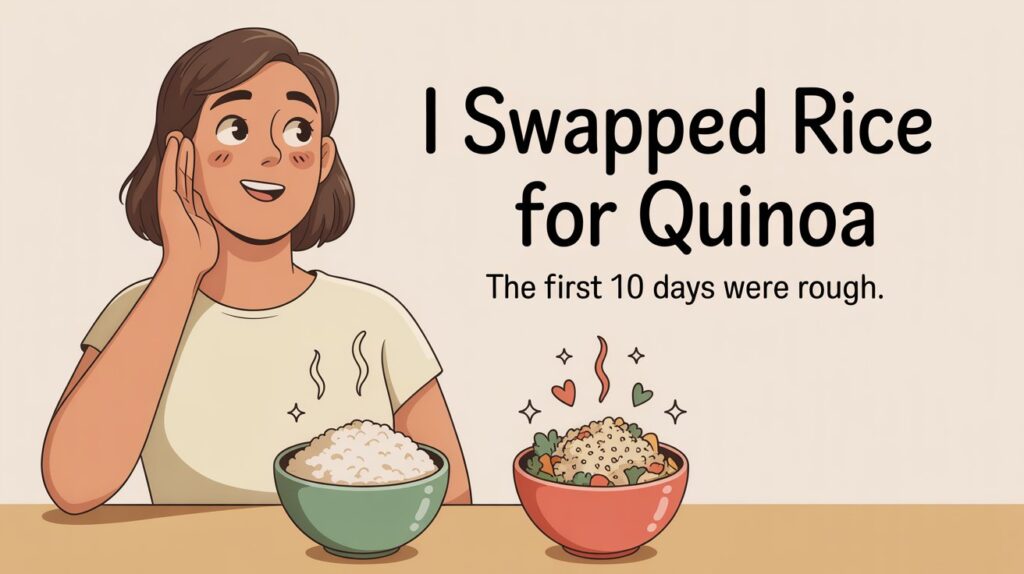
I thought it would be easy. It wasn’t. The first ten days? Honestly, rough.
Why I Decided to Switch
I’ve always been pretty health-conscious, but I’m not one to give up carbs. I love my bowls, my stir-fries, and my cozy rice dinners. Still, I was curious — could swapping rice for quinoa make me feel lighter, more energized, or maybe even help with digestion and bloating?
Everywhere I looked online, people were praising quinoa like it was magic: gluten-free, full of protein, good for your gut. It sounded like something my body might thank me for later. So, I told myself, Let’s try it.
What I didn’t realize was how much I’d miss rice — not just the taste, but the comfort that came with it.
Days 1–3: The Quinoa Struggle Is Real
The first few days felt… weird.
Quinoa doesn’t taste bad — it just doesn’t taste like rice. The texture is nutty, almost crunchy, and it doesn’t go with every dish. I tried to make it work with my usual stir-fry and curries, but something always felt off. My brain kept saying, “This isn’t rice.”
By day three, I was frustrated. My stomach felt bloated, and I kept craving the simple satisfaction of a fluffy rice bowl. I even found myself staring at the rice section in the grocery store like it was an ex I wasn’t over yet.
But I kept going.
Days 4–7: Cravings, Creativity, and Some Hope
By the fourth day, I started experimenting. I realized quinoa needs flavor — lots of it. When I cooked it with vegetable broth instead of plain water, added roasted veggies, olive oil, and a sprinkle of feta, it finally felt more enjoyable.
That’s when I had a small breakthrough: quinoa isn’t meant to replace rice exactly — it’s its own thing. Once I stopped expecting it to taste like rice, I started enjoying it more.
Still, my body was adjusting. I was hungrier than usual at first, probably because quinoa is higher in fiber, and my digestion wasn’t used to it. But by the end of week one, something shifted — I started feeling a little lighter. Less sluggish after meals.
What My Body Was Telling Me
The first 10 days taught me that your body speaks — and it’s loud when you change something it’s used to.
At first, I felt gassy and uncomfortable. Turns out quinoa is rich in fiber, which can make your gut work harder before it gets better. I also noticed I was thirstier — I needed more water to digest it properly.
But after a few days, things started to settle. My digestion actually improved, and my energy levels got steadier. I didn’t crash in the afternoon the way I sometimes did after a heavy rice lunch.
My skin even felt clearer — though I can’t say for sure it was the quinoa, I wasn’t complaining.
Days 8–10: The Turning Point
By the eighth day, quinoa didn’t feel like a chore anymore. I started looking forward to my meals again.
I made a breakfast quinoa bowl with almond milk, cinnamon, and berries — it was like a warm, nutty oatmeal and so satisfying. I tried quinoa-stuffed peppers for dinner one night, and suddenly I wasn’t missing rice as much.
Something else happened too: I started feeling proud of myself. Not just because I stuck with it, but because I was paying attention to my body and trying something new.
The cravings for rice? They were fading.
Quick Nutrition Comparison: Rice vs. Quinoa
| Nutrient (per 1 cup cooked) | White Rice | Quinoa |
|---|---|---|
| Calories | 205 | 222 |
| Protein | 4g | 8g |
| Fiber | 0.6g | 5g |
| Iron | 2% DV | 15% DV |
| Magnesium | 3% DV | 30% DV |
| Glycemic Index | 73 (high) | 53 (low) |
You can see why quinoa is called a “super grain.” It’s higher in protein and fiber, which helps you stay full longer and keeps your blood sugar more stable. For women especially, the magnesium and iron boost can be great for energy, sleep, and hormone balance.
But here’s the truth: quinoa isn’t better than rice — it’s just different.
What I Learned (And What You Should Know If You Try This)
1. Take it slow.
If you eat rice daily, your body might need time to adjust. Try replacing just one meal a day with quinoa at first.
2. Flavor is everything.
Cook quinoa with broth, seasonings, or herbs — plain quinoa can taste bland, and that’s when you’ll miss rice the most.
3. Your gut needs time.
The extra fiber can cause bloating at first, but it usually improves within a week or two. Drink plenty of water.
4. Food is emotional.
Don’t underestimate how much comfort food holds. It’s okay to miss the taste, the smell, even the feeling of eating rice.
5. Balance is key.
You don’t have to give up rice forever. You can enjoy both — maybe quinoa for lunches and rice for cozy dinners.
Would I Go Back to Rice?
Yes… and no.
Rice will always have a place in my kitchen — especially when I want something comforting. But quinoa? It’s staying too. It’s become part of my breakfast bowls, my salad bases, and my “I need energy but don’t want to feel heavy” lunches.
This little experiment taught me more than I expected. It wasn’t just about nutrition — it was about listening to my body, breaking habits, and realizing that change doesn’t always feel good at first… but it can lead to something better.
Final Thoughts
If you’re thinking about swapping rice for quinoa, go for it — but give yourself grace. The first 10 days might be rough, but your body will adjust, and you might just discover new flavors and energy you didn’t know you were missing.
Wellness isn’t about perfection. It’s about paying attention — to what makes you feel good, what fuels you, and what gives you comfort. Sometimes, that’s quinoa. And sometimes, it’s still a warm bowl of rice.