

Last updated on: December 30, 2025
The truth is, most dating apps don’t fail—you just use the wrong one.
Seriously. Every single day, thousands of Reddit threads blow up with people asking, “Is Hinge actually better than Tinder?” or “Should I finally delete Bumble?” And you know why these threads explode? Because the standard “best dating app” article you’ve probably read is completely useless.
They all say the same thing: “Tinder is fun, Bumble empowers women, Hinge is for serious relationships.” That’s technically true, but it misses everything that actually matters. They don’t tell you why your profile is getting ignored. They don’t explain why you matched with someone perfect, had great conversations, then got ghosted. They don’t help you understand that the app you’re using might be designed for exactly the opposite of what you want.
The real answer to “what’s the best dating app?” has never been about downloads or hype. It’s always been about three things:
-
Whether the app’s algorithm rewards what you’re actually looking for
-
Whether it attracts people with the same intention as you
-
Whether the app makes it easy to actually connect, or if it sabotages you with design choices
In 2026, dating apps have gotten smarter but also more divided. Some are thriving (Hinge is quietly crushing it with 25% revenue growth). Others are bleeding users (Bumble lost millions in paying subscribers in a single quarter). And some apps are still charging $60 a week while showing you fake profiles and people who aren’t even active.
This guide is different because we’re not going to tell you to just “pick the most popular one.” We’re going to walk you through exactly how each major app works, where they succeed, where they fail, and most importantly—which one matches your actual dating goal.
How Dating Apps Have Changed by 2026
If you haven’t opened a dating app in a few years, you might not realize how much has shifted.
The algorithm-first era is here. In 2023, most dating apps were still happy if you swiped 100 profiles a day. Now? The best apps have learned that endless swiping is what kills retention. Hinge stopped letting you swipe mindlessly—it caps your daily interactions. Coffee Meets Bagel shows you just one curated match per day. Even Tinder is moving away from its famous swipe model. Why? Because research shows people who swipe endlessly don’t match better—they just burn out faster.
You’re now paying for visibility, not just for features. In 2024, if you wanted to see who liked you on Tinder, that was a premium feature. In 2026, it’s not just a feature—it’s become a necessity if you want to be seen. Without paying, your profile gets buried. This is the “pay-to-be-visible” reality that nobody talks about. Free users still see matches, but they’re shown to fewer people. It’s not malicious—it’s just how the business works.
Intent-based matching is the new frontier. The top apps now explicitly ask: Are you looking for something casual or serious? Are you open to relationships with kids? Do you want something that could lead to marriage? Apps used to be vague about this. Now they’re categorizing users and showing you people with your stated intent. This sounds obvious, but it’s changed everything. You’re less likely to match with someone who wants the opposite of what you want.
“Most downloads” doesn’t mean “best results” anymore. Tinder is still installed on more phones than Hinge. But Hinge’s users spend more time messaging, go on more dates, and actually delete the app because they found someone. That’s the opposite of Tinder’s game, where the goal is to keep you engaged and swiping forever. Match Group (which owns Tinder, Hinge, Match, and OkCupid) has figured out that subscription revenue comes from serious apps, not swipe apps.
The apps that are thriving in 2026 are the ones that admit a hard truth: The best dating app experience is one where you delete the app because you found someone.

What Makes a Dating App Actually Work
Before we rank specific apps, you need to understand what separates a genuinely useful dating app from one that’s just designed to addict you.
User Intent Alignment
This is the #1 factor nobody talks about, and it’s why you keep failing on apps.
You can be the most charming person alive, but if you’re on Tinder (which skews casual) looking for marriage, you’re playing against the algorithm. The app doesn’t punish you—it just shows you profiles of people who swiped right for the same reasons you did. If most people on Tinder are swiping for casual connections, that’s what you’ll see.
The best apps now force you to state your intention clearly in your profile or during signup. eHarmony makes you sit through a 30-minute questionnaire partly to filter out people who aren’t serious. Hinge asks explicitly, “What are you looking for?” Bumble asks if you want something casual or serious. This means when you match, you’re at least starting from the same page.
Match Quality vs. Match Quantity
Here’s where the algorithms differ dramatically.
Tinder’s algorithm is built on engagement. It looks at who you swipe right on, who swipes right on you, and it learns your pattern. Then it shows you more profiles that match that pattern. The goal? Keep you swiping. You might get 100 matches a week on Tinder—but how many lead to conversations?
Hinge’s algorithm (based on the Gale-Shapley algorithm, which won a Nobel Prize) is built on compatibility. It tries to find matches that are mutually optimal, meaning both people are likely to message first. You might get 5 matches a week on Hinge—but more of them will actually respond to your first message.
eHarmony’s algorithm is psychometric. They think they can predict compatibility based on personality tests. You answer 30+ questions, they deliver you a handful of matches daily that they think are perfect for you. The philosophy: quality over quantity.
What works for you depends on your goal. If you want maximum options, Tinder still wins. If you want higher-quality matches with shorter time to conversation, Hinge and Coffee Meets Bagel win.
Messaging Friction (The Ghosting Problem)
Most dating apps have a silent killer: messaging friction.
You match, but then… nothing happens. The person never messages. Or they message once and disappear. Why? Sometimes it’s not interest—it’s friction.
On Bumble, women have 24 hours to message. Sounds good for reducing harassment. But here’s the downside: women get so many matches that many expire before they even see them. Then there’s the psychological pressure of that 24-hour timer. It’s active, deliberate friction.
On Tinder, you can message immediately after matching. Friction is low—but so is response rate, partly because people match with 50 people and pick one to message.
On Hinge, messaging is built directly into the profile interaction. You can comment on specific profile elements, which creates a natural conversation starter. Less friction, more actual conversations.
The apps with the lower messaging friction see more conversations per match. The apps with high friction—even if intentional—see more ghosting.
Gender Ratio Balance
An imbalanced app is a broken app.
Most dating apps skew male-heavy (around 70% men, 30% women nationally). This creates two problems:
-
For men: Extreme competition. Your message gets buried among 50 others.
-
For women: Lower quality matches. You’re getting messages from people with low intent.
Bumble and Hinge do better here partly because of design. Bumble forces women to message first, which filters for some engagement. Hinge attracts serious daters, which tends to balance the gender ratio slightly. Tinder is notoriously skewed, especially in smaller cities.
Monetization Pressure
Here’s a hard truth: the more a dating app needs your money, the worse your experience gets.
Apps that rely heavily on premium subscriptions (The League, for example) have a perverse incentive: keep the free experience bad so people upgrade. Apps that have diversified revenue (ads, partnerships, in-app purchases) have less pressure to make the free experience feel broken.
Tinder, Bumble, and Hinge all use the freemium model. You can use them free, but premium features cost $10-$50/month. The trick is that they price premium features in a way that makes you feel like they’re valuable (seeing who liked you, unlimited swipes). Whether they actually improve your results is debatable.
Apps like OkCupid are generous with free features, which attracts users and lowers the perceived paywall. eHarmony has high paywall from the start, which filters out casual users.
Location Effectiveness
Dating apps live or die on having enough active users near you.
In a major city (NYC, LA, San Francisco), almost every dating app works great. You have options. In a city of 200K people, the app that works matters a lot. In a small town? You’re probably using Facebook Dating or meetup groups instead of apps.
Tinder and Bumble have enough scale that they work almost everywhere. Hinge works well in mid-sized cities and up. The League only works in major metros. Specialized apps (niche communities, specific religions) work best in concentrated areas.
The app with the “best algorithm” is useless if there’s nobody around you using it.
Dating Apps That Work in 2026 (Ranked by Use Case)
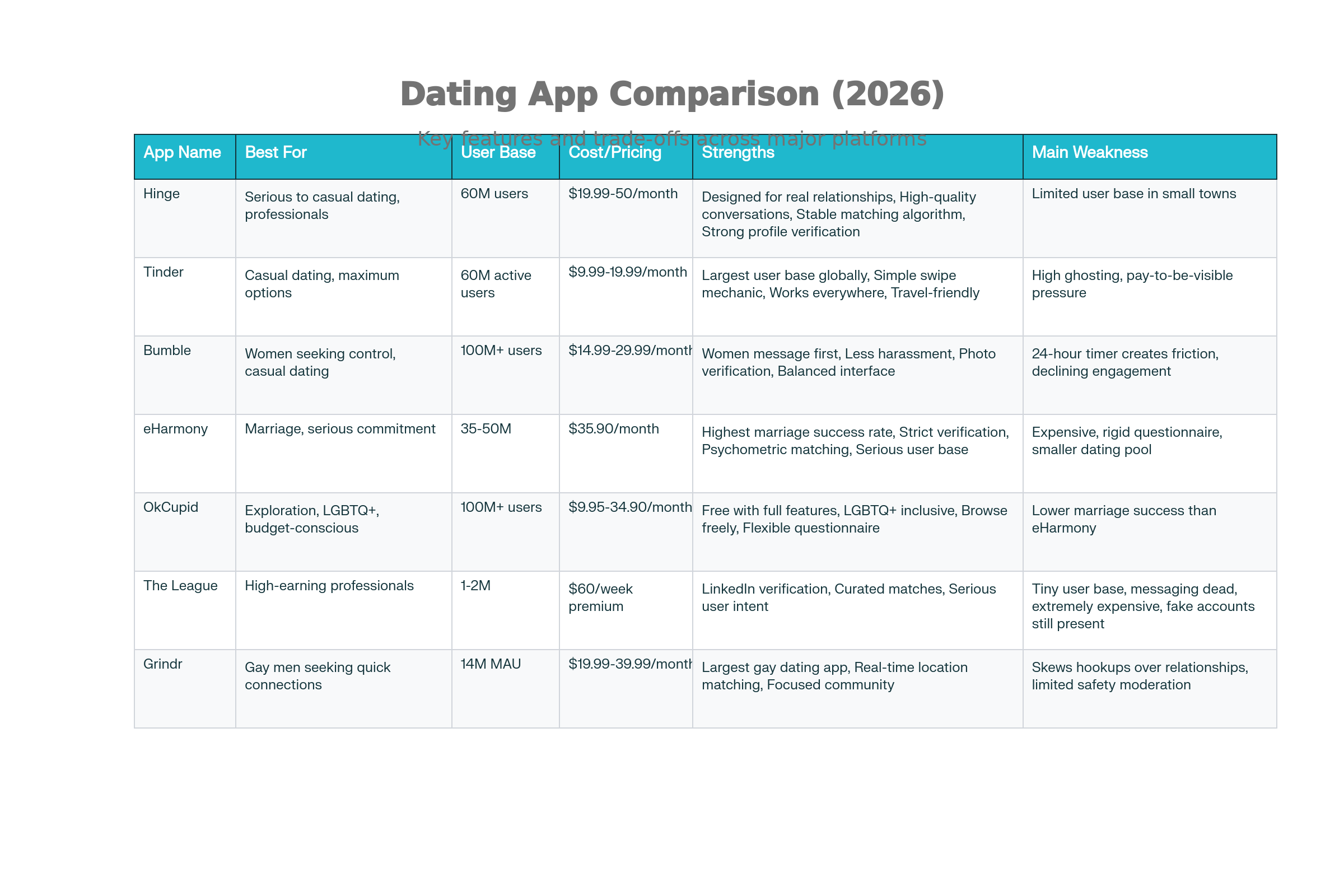
Best Overall Dating App: Hinge
Why it works: Hinge is the only major app that seems to be genuinely optimizing for actual dating, not engagement metrics.
The design philosophy is baked into the marketing: “The dating app designed to be deleted.” That’s not catchy—it’s honest. Hinge doesn’t want you as a lifetime user. It wants you to find someone, go on dates, and get out.
Here’s how it works:
-
Instead of swiping, you comment on specific profile elements. This creates built-in conversation starters.
-
The algorithm learns from your interactions and gets smarter about who to show you.
-
You get limited daily likes (3 free, unlimited with premium), which forces intentionality.
-
The vibe attracts people looking for something serious or at least intentional.
Who it’s best for: If you’re genuinely looking for a relationship (casual or serious), want meaningful conversations, and are willing to engage thoughtfully, Hinge works better than anything else right now. It also works well if you’re over 25 and tired of swiping. The user base skews slightly older and more educated than Tinder.
Where it fails:
-
Smaller cities: User base is smaller than Tinder or Bumble, so options are limited outside major metros.
-
If you want maximum options: You can’t swipe endlessly. Some people hate that constraint.
-
Cost: Premium features start at $19.99/month, which is pricey for basic functionality.
The data: Hinge’s revenue grew 25% year-over-year in 2025. Users spend an average of 13+ minutes per session (higher than Tinder). Most importantly, higher percentage of users actually go on dates.
Best for Casual Dating: Tinder
Why it works: Tinder works for casual dating because the design is optimized for quick, low-friction matching.
Swipe right if you’re attracted. Swipe left if you’re not. Match if it’s mutual. Done. The simplicity is why it’s still #1 by downloads despite losing users.
Tinder also still has the most international acceptance. If you’re traveling, there’s probably someone on Tinder. The brand recognition means even non-regular daters know it exists.
Who it’s best for: Younger people (under 35), travelers, people who want maximum options and don’t care about in-depth matching, and yes, people looking for hookups. Tinder doesn’t hide this.
Where it fails:
-
Ghosting is rampant: Because matching is low-friction, conversations are low-friction too. People match and disappear constantly.
-
Pay-to-be-visible: Without premium, your profile gets buried. This is increasingly frustrating for free users.
-
Swipe fatigue: 100 swipes a day is possible but meaningless. You match with fewer people than you swipe on, then most matches go nowhere.
-
Declining engagement: Tinder lost 600K UK users in 2024-2025. Revenue is down 3% year-over-year. The app is feeling stale.
Honest take: Tinder still works for casual dating, but it’s not the best anymore. The experience has degraded as monetization pressure increased. If you want casual dating, Bumble (despite its problems) or even Hinge is more likely to lead to actual dates.
Best for Women-Led Conversations: Bumble
Why it works: Bumble’s core feature—women message first—actually does reduce unwanted harassment and creates a filter for engagement.
When a woman matches with a man on Bumble, she can choose to message or let it expire. This means:
-
She’s filtering for people she’s actually interested in talking to
-
Men know the woman was interested enough to message first
-
There’s less “hey” spam because women are in control of the initial tone.
The feature works. Women report fewer creepy opening messages on Bumble than on Tinder.
Who it’s best for: Women who are tired of fishing through hundreds of low-effort messages. People (any gender) who want matches with engagement intent already signaled. Bumble also has BFF and Bizz modes if you want to network or find friends.
Common frustrations:
-
The 24-hour timer: You match and have 24 hours (or 48 for extended) to message, or it expires. This sounds fine until you realize women get matched with 50+ people at a time. Most expire unwatched.
-
Limited options for men: Men can’t message first, which some enjoy, but it means less control. You match and wait for a message that might never come.
-
Declining user engagement: Bumble lost 8.7% of paying users in Q2 2025. The app is stalling.
-
Design friction: The app feels slightly clunky compared to Hinge or even Tinder.
Best for Serious Relationships: eHarmony and OkCupid (Different Approaches)
These two apps approach serious dating from opposite angles, so pick based on your style.
eHarmony:
-
The setup is intense: 30-minute personality questionnaire, lots of invasive questions about values, religion, family goals, money.
-
The matching is algorithmic: You don’t browse. The app shows you matches it thinks are highly compatible.
-
The paywall is real: eHarmony isn’t free. Subscriptions start at $35.90/month.
-
The results: eHarmony has the highest marriage-success reputation of any app. If you’re looking to get married, the data says eHarmony works.
Who it’s best for: People ready to commit serious time and money, people over 30, people who know what they want (or at least are willing to spend 30 minutes thinking about it).
OkCupid:
-
The setup is flexible: Basic signup, optional questions, as many or as few as you want.
-
The matching is exploratory: You can browse freely, search, filter, and find your own matches.
-
There’s no paywall to start: OkCupid is free (with premium features available).
-
The results: OkCupid has a huge user base and more diverse users, but lower marriage-success rates than eHarmony. What it does better is inclusivity (LGBTQ+, non-traditional relationships).
Who it’s best for: People who want exploration and control, people on a budget, people who are non-heteronormative, people in their 20s or open to casual-to-serious on the same app.
The comparison: eHarmony is “quality over quantity.” OkCupid is “quantity with filters.” eHarmony is more likely to lead to marriage. OkCupid is more likely to lead to dates, friendships, and casual connections.
Best for Professionals/Busy People: The League
The marketing promise: Exclusive community of high-achieving singles. LinkedIn-verified profiles. Curated matches so you don’t waste time.
The reality: It’s mostly hype with significant problems.
Why it’s positioned as best for professionals:
-
The barrier is intentional: You link your LinkedIn, verify your education, connect your social media. Fake profiles are hard to create.
-
The matches are curated: You get 3-5 matches per day, not 500 to scroll through.
-
No endless swiping: Busy people appreciate that you’re not supposed to spend hours on it.
Where it catastrophically fails:
-
Tiny user base: The League is exclusive by design, but this means in smaller cities you run out of matches in weeks. Users report getting the same 15 matches repeatedly.
-
Messaging is dead: Matches happen, but people don’t respond. Users suspect it’s because the app shows profiles to non-paying members too (who can’t see messages).
-
Pricing is insane: $60 for one week of premium. $130+ for a month. This is 2-3x more expensive than any other app, with worse results.
-
Fake profiles still exist: Despite all the verification, users report encountering inactive accounts and outdated profiles.
-
The concierge doesn’t help: The League charges you extra for a “concierge” service but then doesn’t respond to messages.
Real user feedback: One user reported using The League for 8 months and getting 15 matches with only 1 actual date. On Facebook Dating (free), they got 60 matches with 5 dates.
Verdict: The League is what happens when an app prioritizes exclusivity over functionality. It sounds good (verified professionals, curated matches) but feels dead (no engagement, high cost, small user pool). Skip it unless you’re in a major metro and have unlimited budget to burn.
Dating Apps That Mostly Don’t Work (And Why)
Not every app deserves a place in 2026. Here’s why some apps are dead weight:
Apps with low intent clarity:
Many free apps don’t ask you what you’re looking for. Without intent filtering, you match with people wanting totally different things. This kills engagement.
Apps flooded with inactive profiles:
If 30% of profiles haven’t logged in in 6 months, you’re wasting swipes. Apps like Plenty of Fish and some regional apps have this problem. You match with nobody because they’re not using it.
Apps that push endless swiping with no outcomes:
Old-school apps (Badoo, some regional apps) still think engagement = swipes. They show you endless profiles but don’t optimize for actual matching or messaging. Result: high swipe count, low match count, zero dates.
“Looks-only” platforms:
Apps like BeReal or pure-visual apps where you’re just rating attractive people look fun at first but offer zero pathways to actual connection. They’re entertainment, not dating apps.
Niche apps with ghost towns:
A religious app, a profession-specific app, or a hobby-based app that doesn’t have critical mass in your area is useless. You can have the perfect matching algorithm, but if there’s nobody to match with, it’s dead.
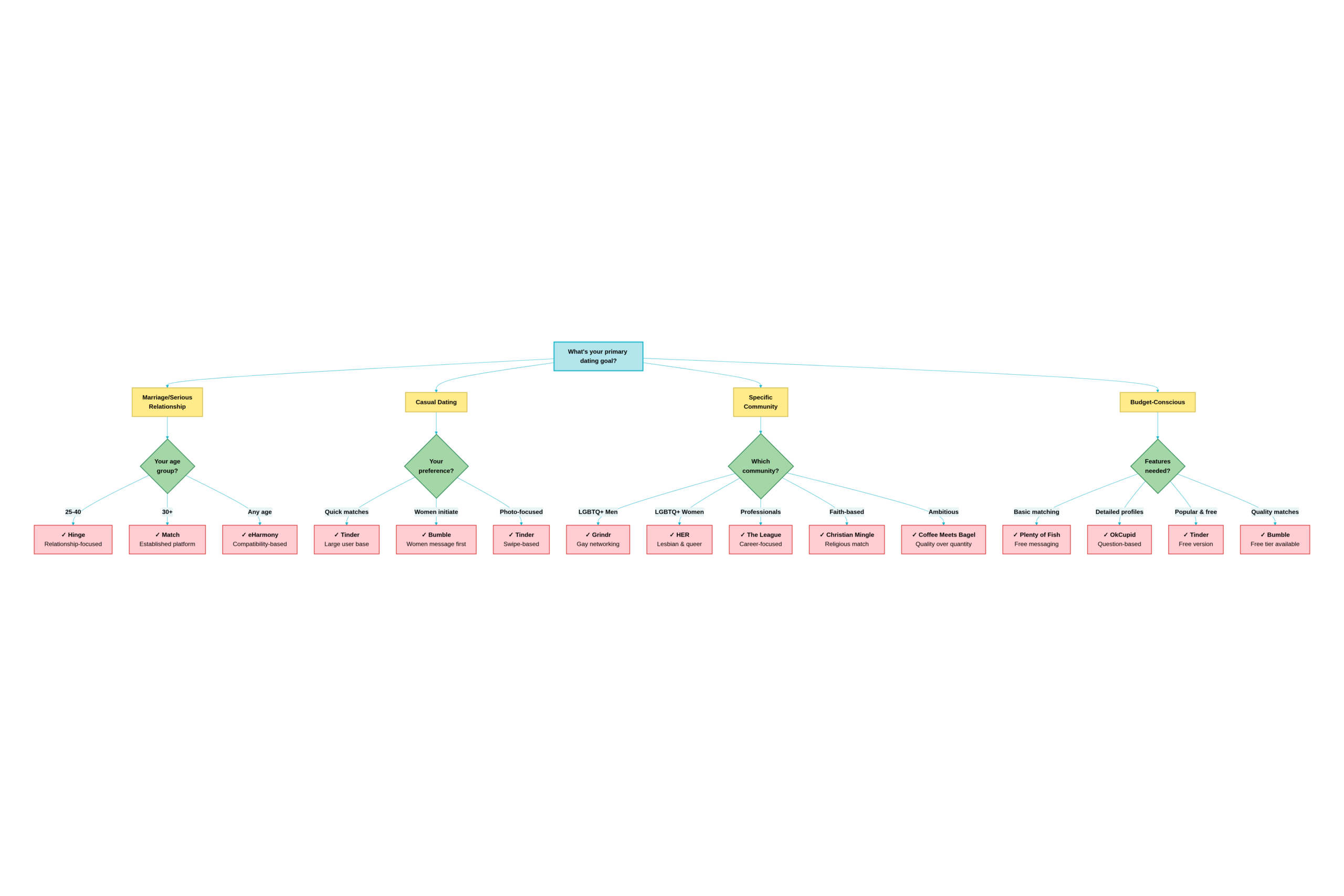
Best Dating App Based on Your Goal
Pick your scenario:
If you want marriage:
→ eHarmony (expensive, serious, algorithmic)
→ OkCupid (free, exploratory, also works but less specialized)
If you want casual dating or hookups:
→ Tinder (still works, biggest user base for casual)
→ Bumble (better messaging quality than Tinder despite design friction)
If you’re tired of ghosting:
→ Hinge (built-in conversation starters, serious user base)
→ Coffee Meets Bagel (fewer matches but more engaged users)
If you’re introverted or anxious about dating:
→ Hinge (comment-based interaction feels less pushy)
→ OkCupid (free, less pressure, no 24-hour timers)
If you’re over 30:
→ Hinge (attracts slightly older, more serious users)
→ eHarmony (the classic choice, designed for this demographic)
→ Match.com (underrated, solid algorithm, comparable to Hinge)
If you’re LGBTQ+:
→ OkCupid (best inclusivity, tons of non-heteronormative users)
→ Hinge (increasingly inclusive, good for serious relationships)
→ Grindr (if you’re a gay man, despite its hookup reputation, it’s the largest community)
If you’re broke:
→ OkCupid (genuinely good free experience)
→ Bumble or Tinder free version (limited but functional)
→ Facebook Dating (completely free, surprisingly functional)
If you want maximum options:
→ Tinder (biggest user base globally)
→ Bumble (second-biggest, many of the same users)
If you’re in a small town:
→ Tinder or Bumble (only apps with enough distributed users)
→ Facebook Dating (reaches people who don’t identify as “dating app users”)
If you want verified, safer profiles:
→ Hinge (photo verification, serious vetting)
→ Bumble (strong verification)
→ eHarmony (rigorous verification, small user base means safer)
Why Most People Fail on Dating Apps (Not the App’s Fault)
Here’s the hard truth that most guides won’t tell you: most people fail on dating apps not because of the app. It’s user error.
Profile Mistakes
Your profile is boring or vague. “I like hiking, travel, and good food” tells me nothing. 1 in 10 profiles say this exact thing. It’s invisible.
You have bad photos. One blurry selfie from 2019. Or five photos with different people (are you the tall one?). Or only gym selfies. Low-effort photos = low matches.
You’re negative. “Don’t message me if you’re not over 6 feet.” “I’m not looking for players.” Negativity is the #1 profile red flag. People run from it.
Messaging Habits
You send “hey.” That’s it. No conversation starter. A man who messages “hey” to 50 women gets maybe 2 responses. A man who comments on her profile gets maybe 8 responses.
You’re too formal. “Hello, I find you to be an attractive and interesting person. Would you be interested in going out?” This sounds like a corporate email. It kills attraction.
You don’t follow up. She gives one-word responses, so you give up. Maybe she’s busy, or maybe you didn’t ask an interesting question.
Unrealistic Expectations
You expect perfection. You’re looking for someone who’s attractive, successful, emotionally available, wants exactly what you want, lives exactly where you want to live, and has never made a mistake. That person doesn’t exist.
You expect instant chemistry. If the first message doesn’t spark fireworks, you unmatch. But texting chemistry is different from in-person chemistry. Most great relationships started with a mediocre text conversation.
You’re swiping with decision fatigue. After swiping 200 profiles, your brain is exhausted and you’re just swiping left on everyone. Stop after 20-30. Take a break.
Algorithm Misunderstanding
You don’t realize the algorithm rewards certain behaviors. On Tinder, if you swipe right on 90% of profiles, the algorithm learns you have low standards and shows you to fewer people. On eHarmony, if you skip matches without reading them, the algorithm learns you’re not engaged and stops trying.
On Hinge, if you never respond to messages, people stop messaging you first. On Bumble, if you let matches expire without messaging, women see you’re not serious.
Algorithms aren’t magic. They’re pattern recognition. If your pattern is “not engaged,” the app treats you accordingly.
The Real Answer: Is There One “Best” Dating App?
No. There isn’t.
The best dating app is the one that matches:
-
Your actual goal (casual, serious, marriage)
-
Your location (major city vs small town)
-
Your demographic (age, orientation, life stage)
-
Your tolerance for monetization pressure
-
Your preferred interaction style (swipe vs. browse vs. curated)
For most people in 2026, Hinge is the best overall app because it works for casual-to-serious dating, has good user quality, doesn’t rely on pure monetization tricks, and actually leads to dates. But Hinge doesn’t work in small towns, and it’s not cheap.
For casual dating, Tinder still wins on scale, but Bumble is arguably better experience.
For marriage, eHarmony still has the reputation, though OkCupid works better for most people because it’s free, less intimidating, and equally effective.
The real answer: Best app = best fit. Not best downloads, not best marketing, not best user base. Best fit for what you’re actually doing.
Why Switching Apps Strategically Matters
Many successful daters use multiple apps simultaneously. Here’s why:
-
Different apps attract different people
-
Different algorithms mean different matches
-
Different designs suit different moods
-
Rotation prevents burnout
If you’re serious about dating in 2026, consider this approach:
-
Main app: Hinge (best overall, most intentional)
-
Secondary app: OkCupid (most free features, broadest user base)
-
If casual: Add Tinder or Bumble for volume
This takes maybe 20 minutes a week and dramatically increases your options.
FAQs
Which dating app is best in 2026?
Hinge, for most people. It balances user quality, serious intent, good algorithm, and actual dating outcomes. But “best” depends on your goal. Read section 6 for your specific scenario.
Do dating apps still work?
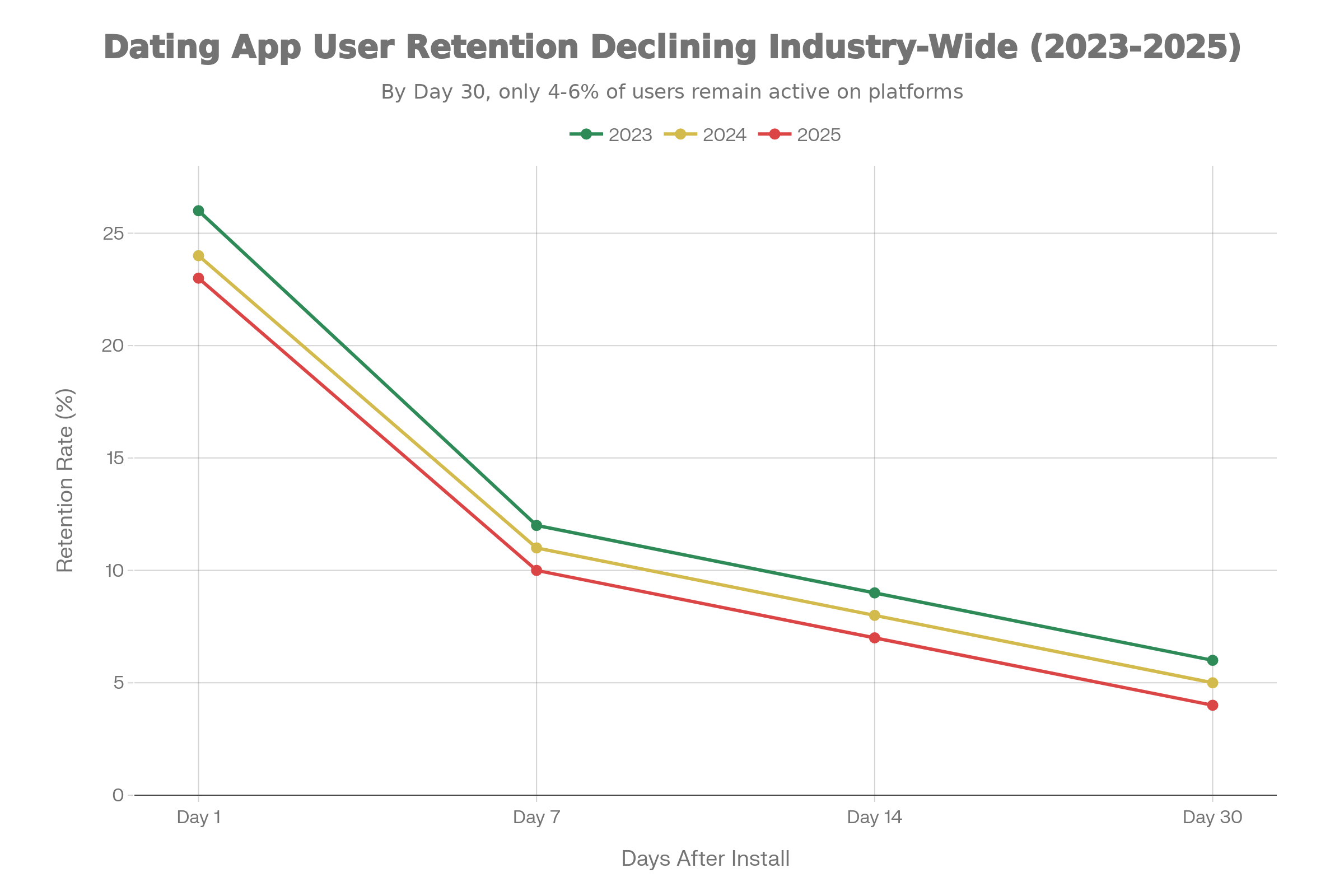
Yes, but with caveats. 65-69% of people delete dating apps within a month. Most quit because of user error (bad profile, low effort, burnout) not app failure. If you’re doing it right, dating apps work better than other methods. If you’re doing it wrong, they’re frustrating.
Which app leads to real relationships?
eHarmony has the highest marriage success rate. Hinge has the best casual-to-serious success rate. OkCupid has the broadest success but less documented. Tinder works for relationships too—people just use it expecting casual first.
Are paid dating apps worth it?
Sometimes. Premium features ($10-$50/month) can help in two ways:
-
Visibility: Your profile gets shown to more people
-
Tools: Seeing who liked you, advanced filters, unlimited likes
But they’re not magic. A better profile + better messages > paid features. If you’re paying and not getting matches, the problem isn’t the paid feature—it’s your profile or expectations.
The most helpful premium feature is usually “see who liked you” because it removes guesswork. Most other premium features are nice-to-have.
Why do people ghost so much on dating apps?
Three reasons:
-
Low friction: Matching is so easy that people match casually without intention
-
Paradox of choice: So many options that people keep looking for someone “better”
-
Depersonalization: Texting feels less real than in-person, so people feel less guilty disappearing
The apps with the highest ghosting (Tinder, Bumble) are the ones with the easiest matching. Apps with higher friction matching (Hinge, eHarmony, Coffee Meets Bagel) have less ghosting.
Is there a dating app for [specific demographic]?
- For LGBTQ+: OkCupid, Hinge, Grindr (if gay men)
- For religious people: Bumble/Hinge filter by religion, but also JDate (Jewish), Christian Mingle, Catholic Match
- For professionals: LinkedIn events, IRL networking. The League is too expensive/broken. Bumble filters by profession.
- For older people: Match.com, eHarmony, OurTime
- For travel: Tinder (global, most travelers on it)
- For introverts: Hinge, OkCupid, Coffee Meets Bagel (less swiping, more substance)
Should I use my real photos or edit them?
Use real, recent photos. Edited photos build false expectations. Use good lighting, clear face shot, full-body shot, maybe one action shot. That’s it. People can tell when you’ve Facetune’d yourself into oblivion.
How long should I try an app before switching?
Give it 3-4 weeks of real effort. Bad profile + low effort + 1 week = of course you got no matches. Good profile + regular usage + 3 weeks = you’ll know if the app works for you.
Can I use multiple apps at the same time?
Yes, most people do. The social stigma is gone. Using Hinge + OkCupid + Bumble simultaneously is normal and smart.
Final Thought
Dating apps in 2026 aren’t magic. They’re tools. Some tools are better designed than others. Some attract different people. Some cost money. Some waste your time.
The best dating app is the one you actually use, that fits your goal, where your profile represents your real self, where you send thoughtful messages, and where you’re willing to go on actual dates with real people.
Everything else is just marketing.
Now go find someone.