
Last updated on: March 20, 2026
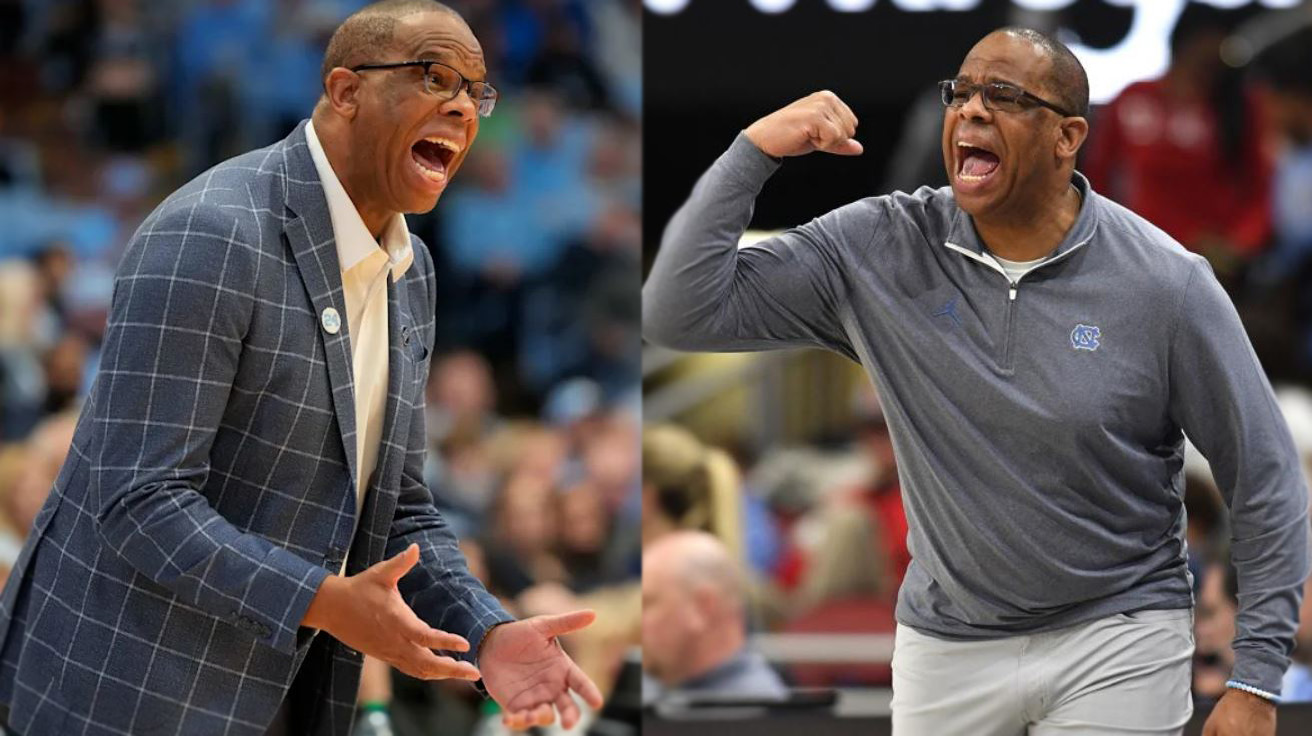
Hubert Ira Davis Jr. is the head coach of the North Carolina Tar Heels men’s basketball program and one of the most influential modern figures in UNC basketball. A former Tar Heel guard and long‑time NBA sharpshooter, he became the first Black head coach in the history of UNC men’s basketball when he was promoted in 2021 following Roy Williams’ retirement. As of the end of the 2025–26 season, Davis has guided North Carolina to a 125–54 overall record, including a trip to the 2022 national championship game, an ACC regular‑season title in 2024, and five straight 20‑plus‑win seasons to begin his tenure.
Davis’ story stretches from Winston‑Salem, North Carolina, through a standout high school career in Virginia, four years under Dean Smith at UNC, twelve seasons in the NBA, and nearly a decade as an ESPN analyst before returning to Chapel Hill as a coach. His reputation as an elite three‑point shooter and as the nephew of Tar Heel legend Walter Davis gives him deep roots in the Carolina basketball family. In 2025–26, his fifth year as head coach, he led a rebuilt, size‑heavy roster to a 24–9 finish and an NCAA tournament berth, while again facing scrutiny over postseason inconsistency after a dramatic first‑round loss to VCU.
Quick facts
Recent context: 2025–26 season
In 2025–26, Davis’ fifth season, North Carolina finished 24–9 overall and 12–6 in the ACC, tying for fourth in a deep expanded conference. The Tar Heels opened non‑conference play 12–1, with signature wins over Kansas, Michigan State and Kentucky, signaling that a largely new roster built around size and interior scoring could still contend nationally. However, after a solid but uneven ACC campaign and a quarterfinal loss to Clemson in the league tournament, UNC entered the NCAA tournament as a No. 6 seed and suffered a stunning first‑round overtime collapse to No. 11 seed VCU, blowing a 19‑point second‑half lead and losing 82–78 in Greenville, South Carolina. The result continued a pattern of strong regular seasons but frustratingly early postseason exits since the 2022 title‑game run.
Early life and high school career
Hubert Davis was born in Winston‑Salem, North Carolina, on May 17, 1970, into a basketball family that already included his uncle Walter Davis, a six‑time NBA All‑Star and former Tar Heel great. His family later moved to Burke, Virginia, a northern Virginia suburb of Washington, D.C., where he attended Lake Braddock Secondary School and developed into one of the area’s best shooters. Davis’ mother, Bobbie Webb Davis, died of cancer while he was in high school, a loss he has often described as shaping both his work ethic and his deep emphasis on family.
At Lake Braddock, Davis was a standout in both basketball and football, but it was on the hardwood where he became a local legend. As a senior he averaged 28.0 points per game, drawing intense defensive attention from opponents and establishing himself as one of the top scorers in northern Virginia history. Coaches and writers from the region still recall his combination of shooting range, poise and toughness, even as he dealt with personal tragedy at home.
Davis’ recruiting story is a classic Dean Smith tale. According to UNC accounts, Smith and assistant Roy Williams initially doubted whether the slender guard was athletic enough to play right away in the ACC and did not immediately offer a scholarship. Davis, however, asked simply for a chance, and his persistence convinced the staff to bring him to Chapel Hill, where he would eventually become one of the program’s all‑time great perimeter shooters.
College career at North Carolina (1988–1992)
Development under Dean Smith
Davis played four seasons at North Carolina from 1988–89 through 1991–92 under Hall of Fame coach Dean Smith, wearing jersey No. 40. He arrived as a lightly regarded freshman who played only 7.1 minutes per game and scored 3.3 points per outing, but his role and production expanded each year as he grew into a starter and go‑to scorer. By his senior season he averaged 21.4 points per game, one of the highest single‑season marks in UNC history, while remaining an efficient shooter from the field, from three and from the free‑throw line.
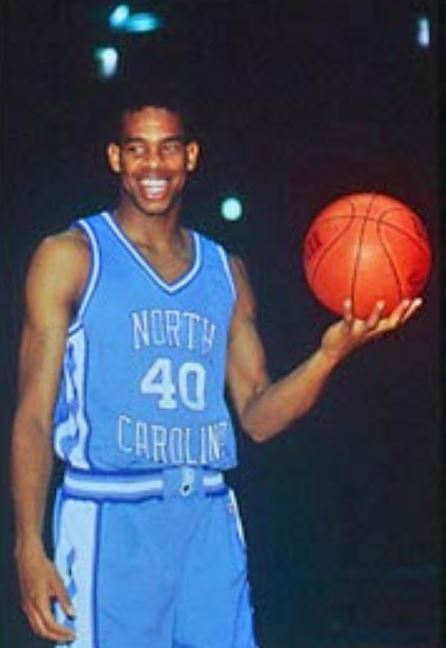
UNC’s team success mirrored his rise. As a junior in 1990–91, Davis helped lead the Tar Heels back to the Final Four for the first time since 1982, averaging 13.3 points per game and hitting nearly 49 percent from three. In the national semifinal against Kansas, he scored 25 points in a losing effort against the Jayhawks and their coach Roy Williams, who would later become his boss and mentor in Chapel Hill. Across his four‑year career, North Carolina went 102–37 and won two ACC tournament titles.
Shooting records and honors
By the time he graduated, Davis owned the best career three‑point percentage in UNC history among players with at least 50 made threes, hitting 43.5 percent (197 of 453) over 137 games. He finished with 1,615 career points (11.8 per game), 557 made field goals and 304 made free throws, while shooting nearly 50 percent overall and 82 percent at the foul line. His efficiency and volume from deep helped reshape how UNC used perimeter shooting in its offense.
In 1991–92, his senior season, Davis averaged 21.4 points per game and made 85 of 198 three‑pointers (42.9 percent), ranking among the best single‑season three‑point shooting seasons in school history. He earned second‑team All‑ACC honors, made the All‑ACC tournament team in both 1991 and 1992, and was selected to the NCAA East Regional all‑tournament team for his 1991 Final Four run.
Season‑by‑season UNC stats
Davis completed his degree in Criminal Justice in 1992, something he often cites as a foundation for his later work with players and his emphasis on education and character.
NBA playing career (1992–2004)
Draft and early years with the Knicks
The New York Knicks selected Davis with the 20th overall pick in the first round of the 1992 NBA draft, betting that his UNC shooting would translate to the professional three‑point line. He quickly established himself as a reliable rotation guard. In 1993–94 he averaged 11.0 points per game for New York, shooting 47.1 percent from the field and 40.2 percent from three. During the 1994 Eastern Conference semifinals he hit two free throws in the final seconds of Game 5 against the Chicago Bulls after a controversial foul call on Scottie Pippen, sealing an 87–86 win in a pivotal moment of the series.
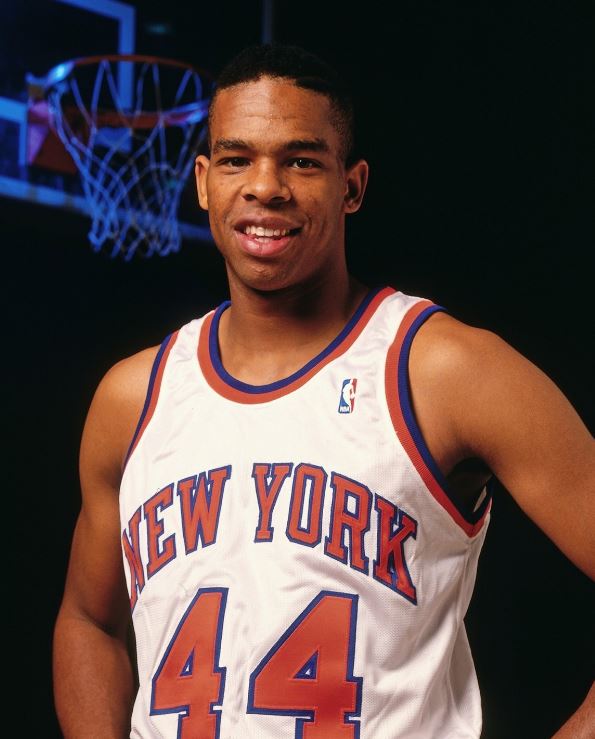
Over four seasons with the Knicks, Davis set franchise records for both single‑season and career three‑point shooting percentage, hitting 47.6 percent from deep in 1995–96 and 44.9 percent for his New York tenure. His quick release and accuracy coming off screens or spotting up made him one of the league’s most feared shooters despite modest usage.
Journeyman sharpshooter and three‑point records
After being traded to the Toronto Raptors before the 1996–97 season, Davis’ role fluctuated, but his shooting touch remained elite. His peak statistical season came with the Dallas Mavericks in 1997–98, when he averaged 11.1 points, 2.1 rebounds and 1.9 assists while shooting 43.9 percent from three in nearly 30 minutes per game. In 1999–2000 he hit 49.1 percent of his threes for Dallas, setting the Mavericks’ single‑season three‑point percentage record and also owning their career mark at 45.4 percent from beyond the arc.
Over 12 NBA seasons with the Knicks, Raptors, Mavericks, Wizards, Pistons and Nets, Davis played in 685 regular‑season games, averaging 8.2 points, 1.5 rebounds and 1.7 assists in 22.1 minutes per game. He shot 45.8 percent from the field, 44.1 percent from three and 83.7 percent from the free‑throw line, ranking second in league history in career three‑point percentage behind Steve Kerr among qualified shooters.
Year‑by‑year NBA snapshot
Davis’ efficient shooting, calm demeanor and professionalism made him a valued veteran presence in multiple locker rooms. Even though he was never a primary star, his ability to space the floor and punish defensive mistakes helped extend his career into the early 2000s.
Transition to broadcasting
Following his retirement from playing in 2004, Davis joined ESPN as a college basketball analyst for the 2007–08 season. He spent seven years with the network, appearing on studio shows and serving as a panelist on College GameDay, where he gained national visibility and honed his skills as a communicator and teacher of the game. In 2012, Roy Williams recruited him back to Chapel Hill to join the UNC staff, ending his full‑time broadcasting stint.
Coaching career at UNC
Assistant and JV head coach (2012–2021)
Roy Williams hired Davis as an assistant coach prior to the 2012–13 season, valuing his NBA experience, UNC background and ability to connect with players. In addition to his duties as a full‑time assistant, Davis was also named head coach of UNC’s junior varsity team, one of the few remaining JV programs in college basketball, giving him hands‑on experience running practices, making in‑game adjustments and developing end‑of‑bench players.
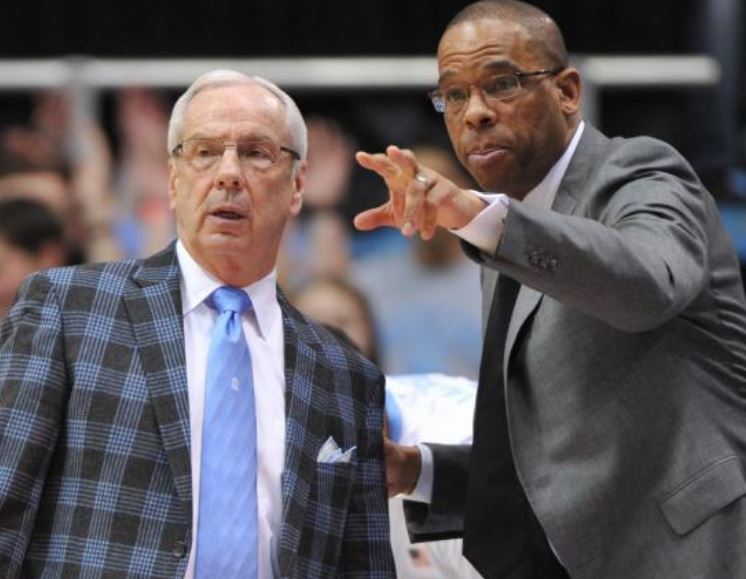
As an assistant, Davis handled recruiting, scouting reports, on‑court player development and clinics. He was on the bench for UNC’s 2017 national championship run and multiple deep NCAA tournament appearances, helping nurture guards and wings in Williams’ up‑tempo, secondary‑break system. Colleagues have described him as detail‑oriented, relational and relentless in upholding the standards of the “Carolina family.”
Promotion to head coach (2021)
After Roy Williams announced his retirement in April 2021, UNC conducted a national search but ultimately promoted from within, naming Davis the 19th head coach in program history on April 5, 2021. The hire was widely seen as both a continuation of the Dean Smith–Roy Williams coaching tree and a historic moment, as Davis became the first Black head coach of the men’s basketball program and only the fourth Black head coach in any sport in UNC history at the time.
At his introductory press conference, Davis acknowledged the significance of his race and UNC’s history, saying it was “significant that I’m African‑American and I’m the head coach here” while also making widely discussed comments about being proud that his wife is white and that their children are a combination of the two. He framed his mission as leading the program with excellence on the court while prioritizing faith, family and academics.
Head‑coaching record and timeline
In his first season (2021–22), Davis led an up‑and‑down UNC team on a remarkable March run from an 8‑seed to the national championship game, highlighted by a dramatic upset of Duke in Mike Krzyzewski’s final home game and a rematch win over the Blue Devils in the Final Four before losing to Kansas 72–69 in the title game. Subsequent seasons have included an NCAA miss, a Sweet 16, and back‑to‑back first‑round exits, underscoring both his high ceiling and ongoing questions about consistency.
Season‑by‑season head‑coaching results
Across his first four seasons, Davis won 101 games and became the first UNC head coach ever to win at least 20 games in each of his first four years. By March 2025 he had reached 100 career victories in 143 games, the third‑fastest pace in program history behind Roy Williams and Frank McGuire. During the 2025–26 season, a Carolina Basketball Stats & Info update noted that he extended that 20‑plus‑wins streak to a fifth straight year, making him the only UNC coach to start his tenure with five such seasons.
Coaching style and philosophy
Davis’ coaching style reflects both his background as an elite shooter and his personal priorities.
-
Offense and shooting: He values floor spacing, ball movement and versatile lineups that can shoot from multiple positions, encouraging big men to be skilled passers and face‑up threats while still attacking the paint. His teams have often emphasized transition offense, similar to Roy Williams’ approach, but with more structured pick‑and‑roll and modern spacing.
-
Defense and rebounding: Davis stresses defensive accountability and rebounding, frequently talking about “energy and effort” plays determining close games. UNC’s best stretches under him have featured connected half‑court defense and strong defensive rebounding, while some of the program’s most painful losses — including the 2026 VCU game — came when those standards slipped late.
-
Relationships and values: By his own description and the testimony of players, Davis centers his program on faith, family and relationships. His Instagram bio — “Love Jesus, Love my family, Love UNC!!! Ephesians 5:20” — is a public statement of that priority. Players and media often mention his habit of talking about gratitude, character, and life beyond basketball alongside tactics and schemes.
Head‑coaching record at UNC: deeper look
Consistent regular seasons, mixed postseasons
Davis’ 125–54 record through five seasons equates to a winning percentage just under 70 percent, placing him in strong company among UNC coaches historically. His teams have reached at least 20 wins every year, won an outright ACC regular‑season title in 2023–24 and earned four NCAA tournament bids in five seasons.
Yet the postseason picture is more volatile. After the magical 2022 Final Four run, UNC missed the NCAA tournament entirely in 2023, declined an NIT invite, and then followed a No. 1 seed and Sweet 16 in 2024 with back‑to‑back first‑round exits in 2025 and 2026. Advanced metrics on Quadrant 1 games have highlighted the inconsistency: one analysis logged UNC at 26–42 in Quad 1 contests across Davis’ first five seasons, including rough 1–12 and 6–8 marks in 2024–25 and 2025–26 respectively.
The 2026 loss to VCU became a flashpoint. North Carolina led by 19 points in the second half before the Rams stormed back and ultimately won 82–78 in overtime behind a 34‑point performance from Terrence Hill Jr., marking the largest first‑round comeback in NCAA tournament history. Critics pointed to late‑game offense, defensive lapses and substitution patterns, while supporters noted the youth and turnover on the roster and emphasized the difficulty of sustaining deep runs every March.
2025–26 roster construction and style
The 2025–26 team illustrated Davis’ recent roster philosophy: adding size and versatility through the transfer portal and international recruiting while leaning on one or two high‑end freshmen. UNC aggressively reloaded after losing virtually its entire 2024–25 core, including star guard RJ Davis and multiple rotation players to graduation, the NBA or the transfer portal. Additions included seven‑footer Henri Veesaar (Arizona transfer), forward Jarin Stevenson (Alabama), Croatian center Ivan Matlekovic (High Point), Montenegrin guard Luka Bogavac and point guard Kyan Evans, alongside five‑star freshman forward Caleb Wilson.
This roster produced a 12–1 non‑conference start with marquee wins over Kansas, Michigan State and Kentucky, driven by Wilson’s scoring, Veesaar’s size and shooting, and improved depth on the perimeter. However, ACC play revealed growing pains, with road losses to SMU, Stanford, California and NC State offset by key wins over Duke and Virginia. By season’s end, UNC’s profile reflected Davis’ broader tenure: capable of elite peaks, vulnerable to lapses, and still searching for consistent excellence in March.
Personal life and family
Hubert Davis is widely described as a family‑centered coach whose personal story is deeply tied to UNC and to his Christian faith. He met his future wife, Leslie, when they were teenagers at Lake Braddock Secondary School; both later attended UNC, and their friendship eventually turned into a relationship after college. The couple has been married for more than two decades.
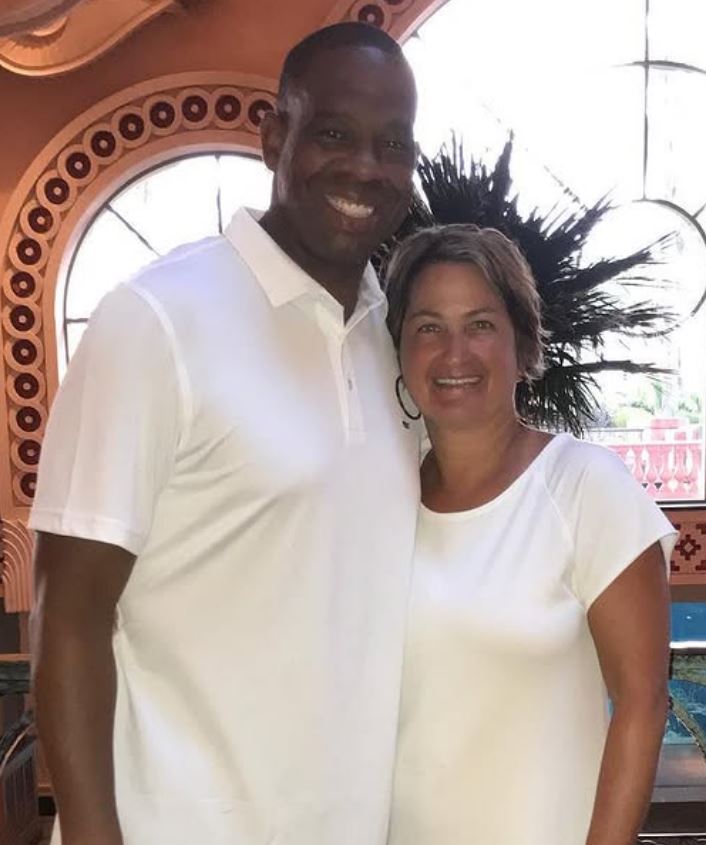
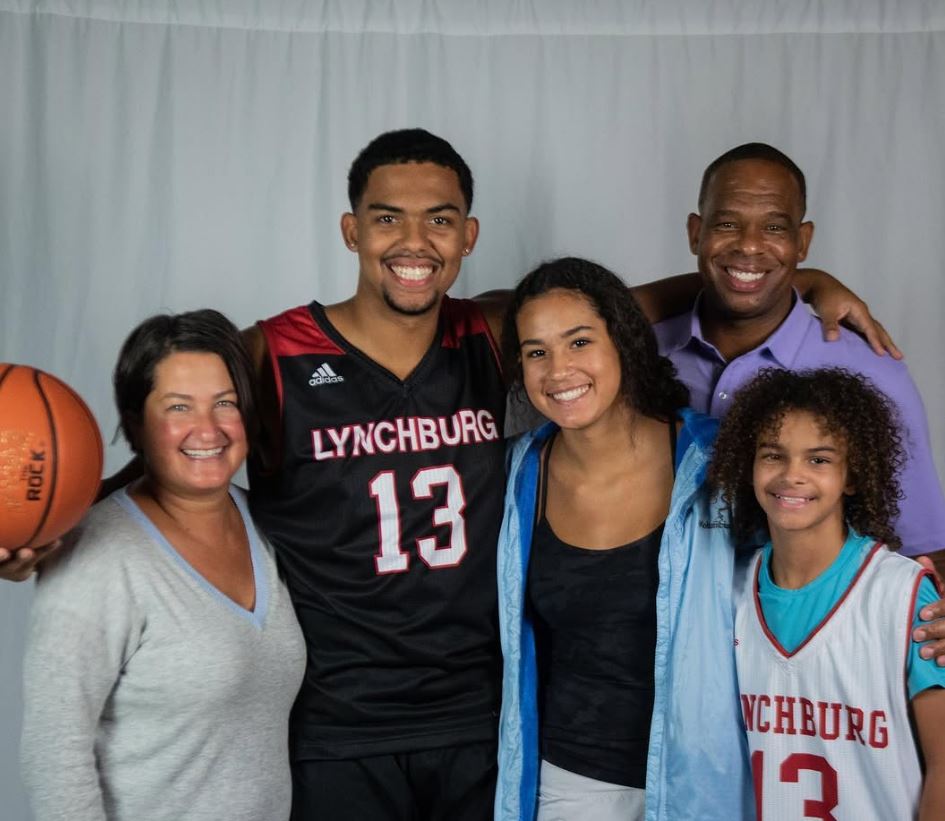
Davis and Leslie have three children: sons Elijah and Micah, and daughter Bobbie Grace (often called Gracie). Elijah followed his father into college basketball, playing at the University of Lynchburg before transferring into the UNC program as a walk‑on for the 2025–26 season, where he appeared on the roster coached by his father. The family has spoken publicly about their close‑knit home life in Chapel Hill and the desire to give the children space to pursue their own interests, whether in sports or other fields.
Faith is central to Davis’ identity. In media interviews and on social media, he frequently references his relationship with Jesus, gratitude and the biblical call to give thanks in all circumstances, citing passages such as Ephesians 5:20. Christian sports outlets have profiled him as a coach who openly sees Christ as his foundation and attempts to integrate that perspective into how he leads, treats players and processes wins and losses.
The historic nature of his role as UNC’s first Black men’s basketball head coach also intersects with his family story. In his introductory remarks he noted both the significance of being African‑American in a job that long excluded Black coaches and his pride in his interracial family, comments that generated national discussion about race, representation and identity in college sports.
Awards and honors
As a player
-
Second‑team All‑ACC (1992)
-
All‑ACC Tournament Team (1991, 1992)
-
NCAA East Regional All‑Tournament Team (1991)
-
Butch Bennett Award (UNC freshman who exemplifies determination, sportsmanship and sacrifice), 1988–89
-
Key member of UNC’s 1991 Final Four team and two ACC tournament champions
As a coach
-
John McLendon Award – National Coach of the Year (2022), recognizing his first‑year run to the national title game
-
Multiple National Coach‑of‑the‑Year recognitions and watch‑list appearances from outlets and trophy organizations after the 2021–22 and 2023–24 seasons
-
ACC Coach of the Year (2023–24), after leading UNC to a 25–6 regular season, 17–3 ACC record and outright league title
-
Numerous team and program milestones, including overseeing UNC’s record‑tying 17 ACC regular‑season wins in 2023–24 and the program’s 30th all‑time Sweet 16 appearance
Legacy and impact at UNC
Comparisons to Dean Smith and Roy Williams
Any UNC head coach is inevitably compared to Dean Smith and Roy Williams, who combined for five national titles and decades of elite success. Davis’ tenure is still relatively young, but several themes have already emerged.
-
Continuity of culture: Davis is a direct link in the Carolina family chain: recruited by Smith, mentored by Williams as an assistant, and now leading the program himself. Like his predecessors, he emphasizes academics, player development and a family atmosphere.
-
Modernization of style: While maintaining UNC staples such as the secondary break and emphasis on big‑man play, Davis has leaned more into three‑point shooting and modern spacing concepts, reflecting his own background as a perimeter specialist.
-
Results: In win percentage and achievements — a Final Four, an ACC title, four NCAA bids in five years — his early resume compares favorably with many blue‑blood peers, though not yet with Smith or Williams over full careers.
Recruiting and player development
Recruiting under Davis has had swings. He has landed several high‑profile high school prospects and impact transfers but has also faced criticism for missing on some elite in‑state targets and for roster churn via the transfer portal. Articles in early 2026 described him as perhaps “turning the corner” on the trail by adding more size, shooting and defensive versatility, but stressed that sustained results were still needed to quiet doubts.
On the development side, Davis’ staff has overseen major growth in players such as RJ Davis, Armando Bacot and others who blossomed into All‑ACC performers and All‑America candidates, especially during the 2023–24 turnaround season. His guard‑friendly system and emphasis on shooting have helped some players thrive, though critics argue that others have stagnated or struggled to find defined roles amid lineup changes.
Ongoing challenges
The primary challenge for Davis’ legacy is postseason consistency. The 2022 Final Four run and 2024 No. 1 seed showcase a high ceiling, but missing the 2023 NCAA tournament and back‑to‑back first‑round exits in 2025 and 2026 fuel debates among fans and media. Quad 1 record issues, blown leads and uneven offensive execution in pressure moments have all been recurring talking points.
Still, Davis’ deep ties to UNC, commitment to its values, and track record of regular‑season success leave him well positioned to shape the next chapter of Tar Heel basketball if he can translate more of that into consistent March success.
Recent news and 2025–26 updates
Key 2025–26 results and storylines
Several themes defined the 2025–26 season under Davis:
-
Fast non‑conference start: UNC opened 12–1, beating Kansas, St. Bonaventure, Michigan State, Kentucky, Georgetown and Ohio State, with only a neutral‑site loss to Michigan State in the Fort Myers Tip‑Off.
-
ACC ups and downs: The Tar Heels went 12–6 in league play, with a signature home win over No. 4 Duke but damaging road losses to SMU, Stanford, California and NC State that kept them out of the title race.
-
ACC tournament: As the No. 4 seed, UNC fell to Clemson 80–79 in the quarterfinals despite a 28‑point, 17‑rebound night from Veesaar.
-
NCAA tournament upset: The first‑round overtime loss to VCU after leading by 19 points became one of the defining early narratives of March Madness 2026 and a painful chapter in Davis’ postseason record.
Roster notes and emphasis on size
Media coverage frequently noted that Davis made size and rim protection a priority in roster building heading into 2025–26. With seven‑footers Veesaar and Matlekovic plus a group of tall forwards and wings, UNC fielded one of its longest teams in years, aiming to improve defense and rebounding after smaller lineups in prior seasons. Freshman star Caleb Wilson emerged as a focal point, combining scoring and playmaking from the forward spot, while returner Seth Trimble provided leadership and perimeter defense.
At the same time, heavy reliance on new pieces produced chemistry challenges. Articles and podcasts throughout the winter and early spring questioned whether Davis had found the optimal guard rotation and late‑game offensive identity for this roster, particularly after the collapse against VCU.
FAQs
How old is Hubert Davis?
Hubert Davis was born on May 17, 1970, making him 55 years old during the 2025–26 season and set to turn 56 in May 2026.
Who is Hubert Davis’ wife and family?
He is married to Leslie Davis, whom he first met in high school in Virginia and later reconnected with at UNC; they have three children — Elijah, Bobbie Grace and Micah.
What is Hubert Davis’ coaching record at UNC?
Through the end of the 2025–26 season, Davis has an overall head‑coaching record of 125–54 at North Carolina, with a 68–30 mark in ACC play, one Final Four appearance and one ACC regular‑season championship.
Is Hubert Davis related to Walter Davis?
Yes. Hubert Davis is the nephew of Walter Davis, a former UNC All‑American and six‑time NBA All‑Star with the Phoenix Suns.
What is Hubert Davis’ religion or faith?
Davis is an outspoken Christian. He publicly describes his relationship with Jesus as the foundation of his life and coaching and uses his Instagram bio to declare, “Love Jesus, Love my family, Love UNC!!! Ephesians 5:20.”